Textbook Question
The intermediates for the oxidation of isopropanol to acetone are shown. Calculate oxidation numbers for the indicated atoms, then use them to determine in which step oxidation occurs.
(e)
1
views

 Mullins 1st EditionCh. 13 - Alcohols, Ethers and Related Compounds: Substitution and EliminationProblem 54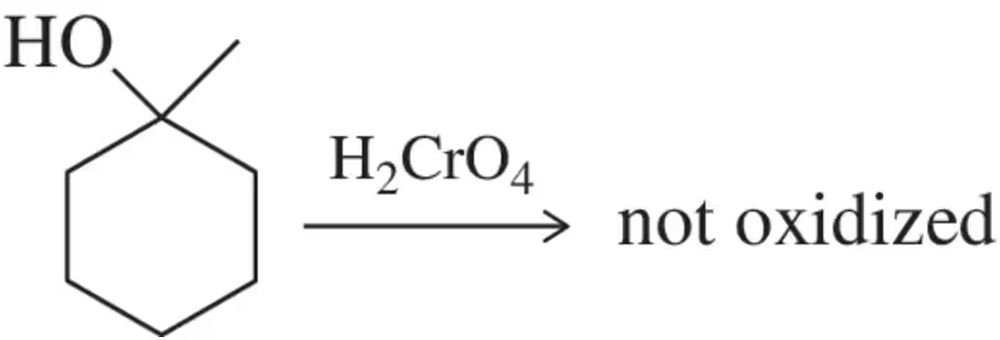
 Verified step by step guidance
 05:53
05:53
 2:07 05:53
The intermediates for the oxidation of isopropanol to acetone are shown. Calculate oxidation numbers for the indicated atoms, then use them to determine in which step oxidation occurs.
(e)
Fill in the missing reactant, reagent, or product for each of the following oxidation reactions.
(a)
Predict the product of the oxidation reactions shown.
(a)
If there is no water present, the hydrate of an aldehyde cannot form. Could an aldehyde itself (not the hydrate) be oxidized to a carboxylic acid? Why?
Predict the product of the oxidation reactions shown.
(b)
Though ketones, like aldehydes, are in equilibrium with a hydrated form, they cannot be further oxidized. Why?