Ch. 2 - Functions and Graphs
Blitzer - College Algebra 8th Edition
Blitzer8th EditionCollege AlgebraISBN: 9780136970514Not the one you use?Change textbook
Chapter 3, Problem 61ab

Find a. (fog) (x) b. (go f) (x). f(x) = √x, g(x) = x − 1

Verified step by step guidance
1
Step 1: Understand the problem. You are tasked with finding two composite functions: (f ∘ g)(x) and (g ∘ f)(x). Composite functions involve substituting one function into another. Specifically, (f ∘ g)(x) means substituting g(x) into f(x), and (g ∘ f)(x) means substituting f(x) into g(x).
Step 2: Write the given functions. The problem provides f(x) = √x and g(x) = x − 1. These will be used to compute the composite functions.
Step 3: Compute (f ∘ g)(x). Substitute g(x) = x − 1 into f(x). This means replacing the input of f(x) with g(x). The result is f(g(x)) = f(x − 1) = √(x − 1).
Step 4: Compute (g ∘ f)(x). Substitute f(x) = √x into g(x). This means replacing the input of g(x) with f(x). The result is g(f(x)) = g(√x) = (√x) − 1.
Step 5: Summarize the results. The composite functions are (f ∘ g)(x) = √(x − 1) and (g ∘ f)(x) = √x − 1. These are the simplified forms of the compositions.

Verified video answer for a similar problem:

This video solution was recommended by our tutors as helpful for the problem above.
Video duration:
1m
Was this helpful?

Key Concepts

Here are the essential concepts you must grasp in order to answer the question correctly.

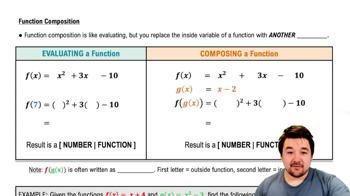
Function Composition

Function composition involves combining two functions to create a new function. If f(x) and g(x) are two functions, the composition (fog)(x) means applying g first and then applying f to the result, expressed as f(g(x)). Conversely, (go f)(x) means applying f first and then g, written as g(f(x)). Understanding this concept is crucial for solving the given problem.
Recommended video:
4:56
Function Composition

Square Root Function

The square root function, denoted as f(x) = √x, returns the non-negative value whose square is x. This function is defined only for non-negative x values, meaning its domain is [0, ∞). Recognizing the properties of the square root function is essential for evaluating compositions involving it, especially when determining the output of (fog)(x) and (go f)(x).
Recommended video:
02:20
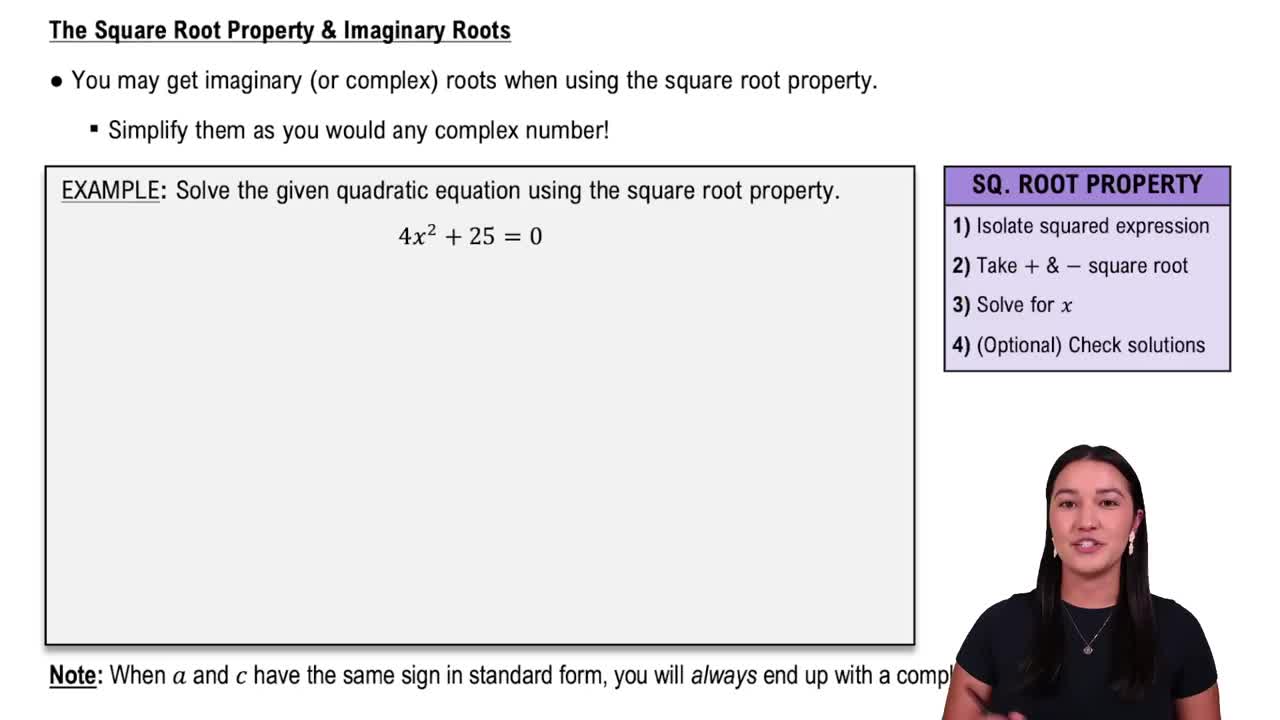
Imaginary Roots with the Square Root Property

Linear Function

A linear function, such as g(x) = x - 1, represents a straight line when graphed and has a constant rate of change. Its domain is all real numbers, and it can be evaluated for any x value. Understanding linear functions is important for analyzing their compositions with other functions, as they can affect the overall behavior and output of the composed functions.
Recommended video:
06:07
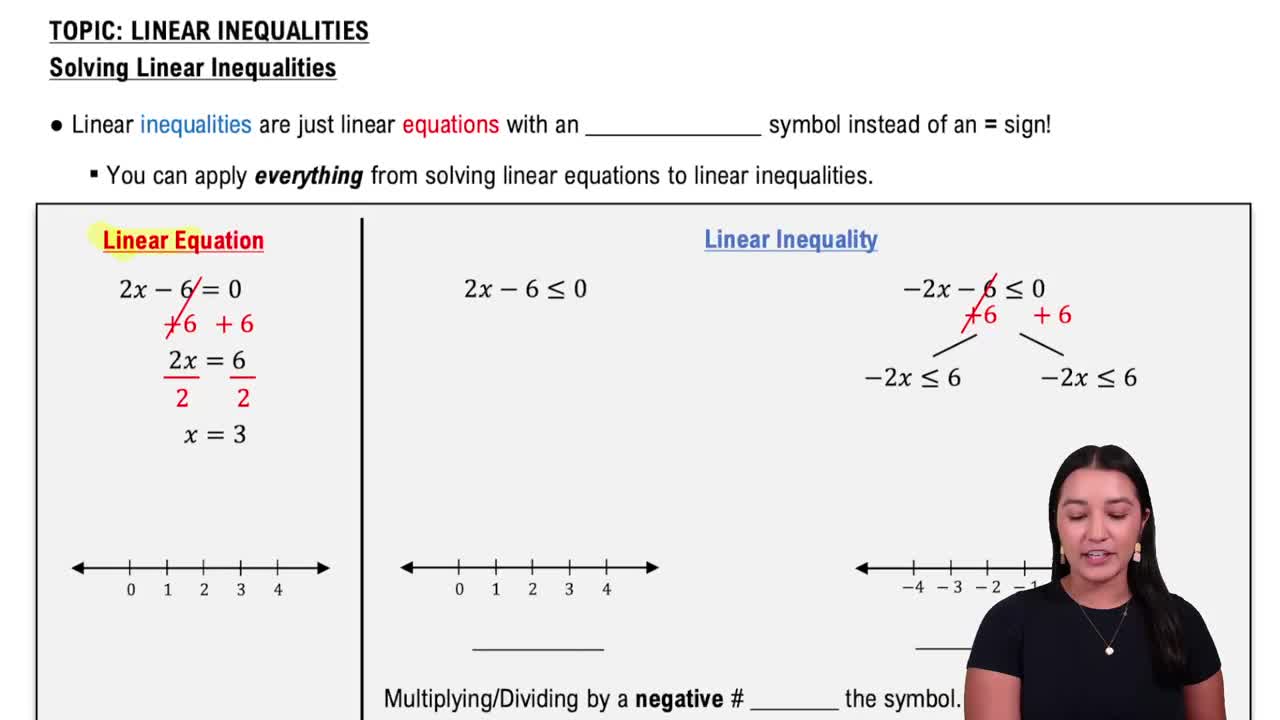
Linear Inequalities