
Textbook Question
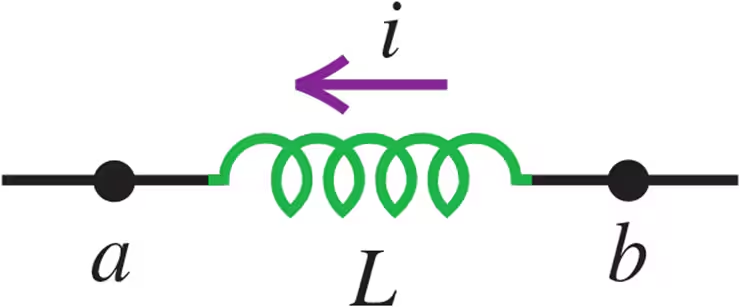
An air-filled toroidal solenoid has a mean radius of 15.0 cm and a cross-sectional area of 5.00 cm2. When the current is 12.0 A, the energy stored is 0.390 J. How many turns does the winding have?

 Verified step by step guidance
 12:59
12:59
 09:57
09:57 07:04
07:04An air-filled toroidal solenoid has a mean radius of 15.0 cm and a cross-sectional area of 5.00 cm2. When the current is 12.0 A, the energy stored is 0.390 J. How many turns does the winding have?
At the instant when the current in an inductor is increasing at a rate of 0.0640 A/s, the magnitude of the self-induced emf is 0.0160 V. What is the inductance of the inductor?
At the instant when the current in an inductor is increasing at a rate of 0.0640 A/s, the magnitude of the self-induced emf is 0.0160 V. If the inductor is a solenoid with 400 turns, what is the average magnetic flux through each turn when the current is 0.720 A?
When the current in a toroidal solenoid is changing at a rate of 0.0260 A/s, the magnitude of the induced emf is 12.6 mV. When the current equals 1.40 A, the average flux through each turn of the solenoid is 0.00285 Wb. How many turns does the solenoid have?
A long, straight solenoid has 800 turns. When the current in the solenoid is 2.90 A, the average flux through each turn of the solenoid is 3.25 × 10⁻³ Wb. What must be the magnitude of the rate of change of the current in order for the self-induced emf to equal 6.20 mV?
Inductance of a Solenoid. A metallic laboratory spring is typically 5.00 cm long and 0.150 cm in diameter and has 50 coils. If you connect such a spring in an electric circuit, how much self-inductance must you include for it if you model it as an ideal solenoid?