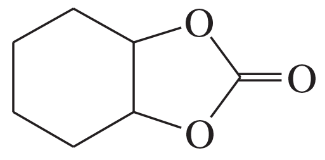
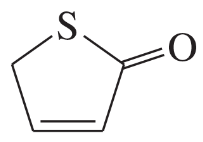
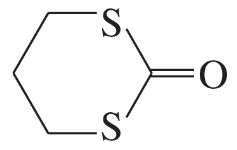
For each heterocyclic compound, (i) explain what type of acid derivative is present. (a) (b) (c)
Verified step by step guidance
1
Step 1: Analyze compound A. The structure contains a benzene ring fused to a five-membered ring with two carbonyl groups. This indicates that compound A is a cyclic anhydride, specifically a phthalic anhydride derivative.
Step 2: Analyze compound B. The structure contains a six-membered ring with one sulfur atom and a carbonyl group attached to the ring. This suggests that compound B is a thioester derivative, where the sulfur atom replaces the oxygen typically found in esters.
Step 3: Analyze compound C. The structure contains a five-membered ring with a nitrogen atom and a carbonyl group attached to the ring. This indicates that compound C is a lactam, which is a cyclic amide.
Step 4: Understand the general classification of acid derivatives. Acid derivatives include anhydrides, esters, thioesters, amides, and lactams, all of which are derived from carboxylic acids by replacing the hydroxyl group (-OH) with another functional group.
Step 5: Relate the functional groups in each compound to their respective acid derivative types. Compound A is an anhydride, compound B is a thioester, and compound C is a lactam, based on the presence of specific functional groups in their structures.
Verified video answer for a similar problem:
This video solution was recommended by our tutors as helpful for the problem above
Video duration:
1m
Play a video:
0 Comments
Key Concepts
Here are the essential concepts you must grasp in order to answer the question correctly.
Heterocyclic Compounds
Heterocyclic compounds are cyclic structures that contain at least one atom in the ring that is not carbon, such as nitrogen, oxygen, or sulfur. These compounds are significant in organic chemistry due to their diverse chemical properties and biological activities. Understanding the nature of the heteroatoms and their influence on the compound's reactivity is crucial for analyzing their acid derivatives.
Acid derivatives are compounds that are derived from carboxylic acids by replacing the hydroxyl group (-OH) with another functional group. Common types include esters, amides, and anhydrides. Identifying the type of acid derivative present in a heterocyclic compound involves recognizing the functional groups attached to the heterocycle and understanding their reactivity and properties.
Functional groups are specific groups of atoms within molecules that are responsible for the characteristic chemical reactions of those molecules. In the context of heterocyclic compounds, common functional groups include carbonyls, amines, and thiols. Recognizing these groups is essential for determining the type of acid derivative and predicting the compound's behavior in chemical reactions.