Molecular Models show chemical bonds and atom types using color-coded spheres. The key skill is identifying each element by its standard color and then using the model to determine the composition of a compound. In these models, hydrogen is white, carbon is black, nitrogen is sky blue, oxygen is red, fluorine is grayish off-white, phosphorus is navy blue, sulfur is lime green, and chlorine is forest green.
By counting the colored spheres, you can translate a molecular model into a chemical or structural formula. This means recognizing how many atoms of each element are present and writing them with the correct symbols and subscripts, such as compounds containing carbon and hydrogen or molecules like ammonia, NH_3 . Understanding these color patterns helps you distinguish similar models, connect visual structure to formula writing, and interpret how atoms are bonded within a molecule.
Molecular Models represent a way to describe the chemical bonds between elements through the use of color-coded balls for elements.
Molecular Models
0
Concept
Molecular Models Concept 1
Video duration:
1m
Play a video:
Molecular Models Concept 1 Video Summary
Molecular models serve as a visual representation of chemical bonds between elements, utilizing color-coded balls to symbolize different elements from the periodic table. Each color corresponds to a specific element, aiding in the understanding of molecular structures and interactions.
For instance, a white ball represents hydrogen, while a black ball signifies carbon. The sky blue ball indicates nitrogen, and the red ball denotes oxygen. Additionally, a grayish off-white ball symbolizes fluorine, a navy blue ball represents phosphorus, a lime green ball stands for sulfur, and finally, a forest green ball indicates chlorine.
Understanding these color codes is essential for interpreting molecular models and grasping the relationships between different elements in chemical compounds. This knowledge lays the groundwork for further exploration of chemical bonding and molecular geometry.
Study Smarter with Worksheets.
Follow along with each video using our printable worksheets
0
Example
Molecular Models Example 1
Video duration:
34s
Play a video:
Molecular Models Example 1 Video Summary
To determine the structural formula of a compound from a molecular model, it's essential to identify the atoms represented by the model. In this case, the white balls symbolize hydrogen atoms, while the black balls represent carbon atoms. Given that there are 2 carbon atoms and 6 hydrogen atoms, the molecular formula can be expressed as C2H6.
The structural formula for this compound, which is ethane, can be depicted as follows:
H3C-CH3
This representation illustrates the connectivity between the carbon atoms and their associated hydrogen atoms, highlighting the saturated nature of the compound, where each carbon atom forms four bonds, adhering to the tetravalency of carbon.
0
Problem
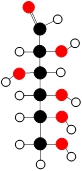
Determine the structural formula for the following compound given as a molecular model.
A
C6H12O6
B
C6H12N6
C
C12H6N6
D
C12H6O6
0 Comments for
0
Problem
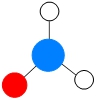
Which of the following molecular models represents the ammonia molecule, NH3?
Molecular models use color-coded spheres to represent different elements, making it easier to visualize chemical bonds. For example, white spheres represent hydrogen atoms, black spheres represent carbon, sky blue is nitrogen, red is oxygen, grayish off-white is fluorine, navy blue is phosphorus, lime green is sulfur, and forest green is chlorine. These colors help students quickly identify which atoms are present in a molecule and understand how they are connected. This color coding is a standard convention in chemistry to simplify the study of molecular structures and bonding.
To determine the chemical formula from a molecular model, first count the number of spheres of each color, which correspond to different elements. For example, count all black spheres for carbon, white for hydrogen, red for oxygen, and so on. Then, write the element symbols with subscripts indicating the number of atoms of each element. For instance, if a model has two black spheres and six white spheres, the formula is , which is ethane. This method helps translate a visual model into a chemical formula, aiding in understanding molecular composition.
Molecular models often use spheres of different sizes to roughly represent the relative atomic sizes or to make the model more visually clear. However, when identifying elements in these models, the size differences are not the primary focus. Instead, the color coding is the key to recognizing which element each sphere represents. For example, a small white sphere always represents hydrogen regardless of its size compared to other spheres. Therefore, while size can provide some context, students should rely mainly on color to identify elements accurately in molecular models.
Molecular models visually represent chemical bonds by showing how atoms (colored spheres) are connected. Each connection between spheres represents a bond, such as a single, double, or triple bond, depending on the model's detail. This helps students see the spatial arrangement of atoms and how they share electrons to form molecules. By using color-coded spheres, students can easily identify which atoms are bonded and understand molecular geometry, bond angles, and the overall structure, which are crucial for grasping chemical properties and reactions.
Common elements in molecular models and their colors include hydrogen (white), carbon (black), nitrogen (sky blue), oxygen (red), fluorine (grayish off-white), phosphorus (navy blue), sulfur (lime green), and chlorine (forest green). These colors are standardized to help students quickly identify elements in a model. Recognizing these colors allows for easier interpretation of molecular structures and formulas, facilitating learning in chemistry courses.