Back
Back
Problem 7.6.13
Find the limits in Exercises 13–20. (If in doubt, look at the function’s graph.)
13. lim(x → 1⁻)arcsin(x)
Problem 7.8.19
19. Show that e^x grows faster as x→∞ than x^n for any positive integer n, even x^1,000,000. (Hint: What is the nth derivative of x^n?)
Problem 7.7.33
In Exercises 25–36, find the derivative of y with respect to the appropriate variable.
33. y = csch⁻¹(1/2)^θ
Problem 7.7.71
Evaluate the integrals in Exercises 31–78.
71. ∫(from √2/3 to 2/3)dy/(|y|√(9y²-1))
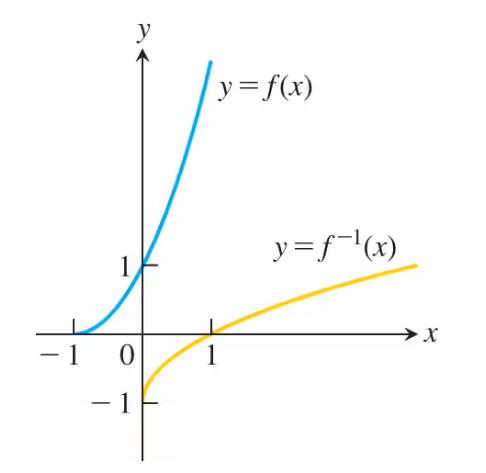
Problem 7.1.23
Each of Exercises 19–24 gives a formula for a function y=f(x) and shows the graphs of f and f^(-1). Find a formula for f^(-1) in each case.
f(x)=(x+1)², x≥-1
Problem 7.3.87
Evaluate the integrals in Exercises 87–96.
87. ∫ 5ˣ dx
Problem 7.7.43
Evaluate the integrals in Exercises 41–60.
43. ∫6cosh(x/2 - ln3)dx
Problem 7.4.10
Solve the differential equation in Exercises 9–22.
10. (dy/dx) = x²√y, y > 0
Problem 7.3.143
143.
b. Find the average value of ln(x) over [1, e].
Problem 7.4.43
43. Surrounding medium of unknown temperature A pan of warm water (46°C) was put in a refrigerator. Ten minutes later, the water’s temperature was 39°C; 10 min after that, it was 33°C. Use Newton’s Law of Cooling to estimate how cold the refrigerator was.
Problem 7.3.77
In Exercises 59–86, find the derivative of y with respect to the given independent variable.
77. y = log₃(((x + 1)/(x − 1))^(ln 3))
Problem 7.4.47
47. Carbon-14 The oldest known frozen human mummy, discovered in the Schnalstal glacier of the Italian Alps in 1991 and called Otzi, was found wearing straw shoes and a leather coat with goat fur, and holding a copper ax and stone dagger. It was estimated that Otzi died 5000 years before he was discovered in the melting glacier. How much of the original carbon-14 remained in Otzi at the time of his discovery?
Problem 7.3.95
Evaluate the integrals in Exercises 87–96.
95. ∫₂⁴ x^(2x) (1 + ln x) dx
Problem 7.4.37
37. Plutonium-239 The half-life of the plutonium isotope is 24,360 years. If 10 g of plutonium is released into the atmosphere by a nuclear accident, how many years will it take for 80% of the isotope to decay?
Problem 7.3.99
Evaluate the integrals in Exercises 97–110.
99. ∫₀³ (√2 + 1)x^(√2) dx
Problem 7.6.113
Verify the integration formulas in Exercises 111–114.
113. ∫ (arcsin x)² dx = x(arcsin x)² - 2x + 2 √(1 - x²) arcsin x + C
Problem 7.6.63
Evaluate the integrals in Exercises 53–76.
63. ∫(from -1 to -√2/2)dy/(y√(4y²-1))
Problem 7.4.9
Solve the differential equation in Exercises 9–22.
9. 2√(xy) (dy/dx) = 1, x, y > 0
Problem 7.7.59
Evaluate the integrals in Exercises 41–60.
59. ∫(from -ln2 to 0)cosh²(x/2) dx
Problem 7.6.102
Evaluate the integrals in Exercises 91–102.
102. ∫(from -1/3 to 1/√3)(cos(arctan 3x))/(1+9x²) dx
Problem 7.7.9
Rewrite the expressions in Exercises 5–10 in terms of exponentials and simplify the results as much as you can.
9. (sinh(x)+cosh(x))⁴
Problem 7.5.63
Indeterminate Powers and Products
Find the limits in Exercises 53–68.
63. lim (x → ∞) ((x + 2)/(x - 1))^x
Problem 7.5.51
Use l’Hôpital’s rule to find the limits in Exercises 7–52.
51. lim (θ → 0) (θ - sin θ cos θ) / (tan θ - θ)
Problem 7.2.64
In Exercises 57–70, use logarithmic differentiation to find the derivative of y with respect to the given independent variable.
64. y = 1/(t(t+1)(t+2))
Problem 7.2.61
In Exercises 57–70, use logarithmic differentiation to find the derivative of y with respect to the given independent variable.
61. y = √(θ + 3) sin θ
Problem 7.1.63
Suppose that the range of g lies in the domain of f so that the composition fog is defined. If f and g are one-to-one, can anything be said about fog? Give reasons for your answer.
Problem 7.7.57
Evaluate the integrals in Exercises 41–60.
57. ∫(from 1 to 2)cosh(ln t)/t dt
Problem 7.6.96
Evaluate the integrals in Exercises 91–102.
96. ∫dy/((arcsin y)(1-y²))
Problem 7.3.29
In Exercises 27–32, find dy/dx.
e^(2x)=sin(x+3y)
Problem 7.4.21
Solve the differential equation in Exercises 9–22.
21. (1/x)(dy/dx) = ye^(x²) + 2√y e^(x²)