Back
Back
Problem 7.1.27
Each of Exercises 25–36 gives a formula for a function y=f(x). In each case, find f^(-1)(x) and identify the domain and range of f^(-1). As a check, show that f(f^(-1)(x))=f^(-1)(f(x))=x.
f(x) = x³ + 1
Problem 7.2.39
Evaluate the integrals in Exercises 39–56.
39. ∫(from -3 to -2)dx/x
Problem 7.6.61
Evaluate the integrals in Exercises 53–76.
61. ∫(from 0 to 2)dt/√(8+2t²)
Problem 7.5.55
Indeterminate Powers and Products
Find the limits in Exercises 53–68.
55. lim (x → ∞) (ln x)^(1/x)
Problem 7.1.1
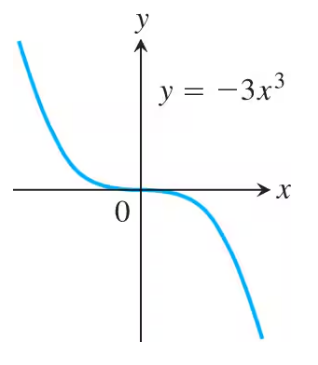
Which of the functions graphed in Exercises 1–6 are one-to-one, and which are not?
Problem 7.3.87
Evaluate the integrals in Exercises 87–96.
87. ∫ 5ˣ dx
Problem 7.6.43
In Exercises 21–48, find the derivative of y with respect to the appropriate variable.
43. y=√(arcsin x)
Problem 7.4.21
Solve the differential equation in Exercises 9–22.
21. (1/x)(dy/dx) = ye^(x²) + 2√y e^(x²)
Problem 7.5.17
Use l’Hôpital’s rule to find the limits in Exercises 7–52.
17. lim (θ → π/2) (2θ - π) / cos(2π - θ)
Problem 7.2.43
Evaluate the integrals in Exercises 39–56.
43. ∫(from 0 to π)(sin t)/(2 - cos t) dt
Problem 7.7.23
In Exercises 13–24, find the derivative of y with respect to the appropriate variable.
23. y = (x²+1)sech(ln x)
(Hint: Before differentiating, express in terms of exponentials and simplify.)
Problem 7.6.45
In Exercises 21–48, find the derivative of y with respect to the appropriate variable.
45. y=cos(x-arccos(x))
Problem 7.3.61
In Exercises 59–86, find the derivative of y with respect to the given independent variable.
61. y = 5√s
Problem 7.2.23
In Exercises 7–38, find the derivative of y with respect to x, t, or θ, as appropriate.
23. y = ln(x)/(1+ln(x))
Problem 7.2.27
In Exercises 7–38, find the derivative of y with respect to x, t, or θ, as appropriate.
27. y = θ(sin(lnθ) + cos(lnθ))
Problem 7.5.53
Indeterminate Powers and Products
Find the limits in Exercises 53–68.
53. lim (x → 1⁺) x^(1/(1 - x))
Problem 7.5.32
Use l’Hôpital’s rule to find the limits in Exercises 7–52.
32. lim (x → 0) (3^x - 1) / (2^x - 1)
Problem 7.7.73
Evaluate the integrals in Exercises 31–78.
73. ∫dx/√(-2x-x²)
Problem 7.4.41
41. Cooling soup Suppose that a cup of soup cooled from 90°C to 60°C after 10 min in a room where the temperature was 20°C. Use Newton’s Law of Cooling to answer the following questions.
a. How much longer would it take the soup to cool to 35°C?
Problem 7.7.19
In Exercises 13–24, find the derivative of y with respect to the appropriate variable.
19. y = (sech θ)(1-ln(sech θ))
Problem 7.5.9
Use l’Hôpital’s rule to find the limits in Exercises 7–52.
9. lim (t → -3) (t³ - 4t + 15) / (t² - t - 12)
Problem 7.3.126
In Exercises 115–126, use logarithmic differentiation or the method in Example 6 to find the derivative of y with respect to the given independent variable.
126. eʸ = y^(ln x)
Problem 7.3.13
In Exercises 7–26, find the derivative of y with respect to x, t, or θ, as appropriate.
y = (x^2 - 2x + 2)e^(x)
Problem 7.3.137
137. Find a curve through the origin in the xy-plane whose length from x = 0 to x = 1 is L = ∫ from 0 to 1 of sqrt(1 + (1/4)e^x) dx.
Problem 7.3.65
In Exercises 59–86, find the derivative of y with respect to the given independent variable.
65. y = (cos θ)^(√2)
Problem 7.5.75
Theory and Applications
L’Hôpital’s Rule does not help with the limits in Exercises 69–76.
Try it—you just keep on cycling. Find the limits some other way.
75. lim (x → ∞) e^(x²) / (x e^x)
Problem 7.4.13
Solve the differential equation in Exercises 9–22.
13. (dy/dx) = √y cos²√y
Problem 7.6.96
Evaluate the integrals in Exercises 91–102.
96. ∫dy/((arcsin y)(1-y²))
Problem 7.1.53
Suppose that the differentiable function y = f(x) has an inverse and that the graph of f passes through the point (2, 4) and has a slope of 1/3 there. Find the value of df⁻¹/dx at x = 4.
Problem 7.3.5
5. e^(2t)-3e^t = 0