Back
Back
Problem 4.PE.77
Finding Indefinite Integrals
Find the indefinite integrals (most general antiderivatives) in Exercises 73–88. You may need to try a solution and then adjust your guess. Check your answers by differentiation.
∫ 1/( r + 5)²dr
Problem 4.PE.81
Finding Indefinite Integrals
Find the indefinite integrals (most general antiderivatives) in Exercises 73–88. You may need to try a solution and then adjust your guess. Check your answers by differentiation.
∫ 𝓍³ (1 + 𝓍⁴ )⁻¹/⁴ d𝓍
Problem 4.1.51a
Theory and Examples
In Exercises 51 and 52, give reasons for your answers.
Let f(x) = (x − 2)²ᐟ³.
a. Does f′(2) exist?
Problem 4.7.64a
Checking Antiderivative Formulas
Right, or wrong? Say which for each formula and give a brief reason for each answer.
∫tanθ sec²θ dθ = sec³θ / 3 + C
Problem 4.3.64a
Identifying Extrema
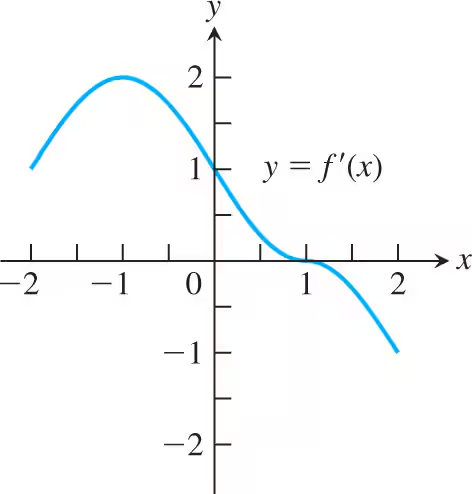
In Exercises 63 and 64, the graph of f' is given. Assume that f has domain (-2, 2).
a. Either use the graph to determine which intervals f is increasing on and which intervals f is decreasing on, or explain why this information cannot be determined from the graph.
Problem 4.7.7a
Finding Antiderivatives
In Exercises 1–16, find an antiderivative for each function. Do as many as you can mentally. Check your answers by differentiation.
(3/2)√x
Problem 4.3.54a
Identifying Extrema
In Exercises 53–60:
a. Find the local extrema of each function on the given interval, and say where they occur.
f(x) = sin x − cos x,0 ≤ x ≤ 2π
Problem 4.3.50a
Identifying Extrema
In Exercises 41–52:
a. Identify the function’s local extreme values in the given domain, and say where they occur.
f(x) = √(x² − 2x − 3), 3 ≤ x < ∞
Problem 4.5.52a
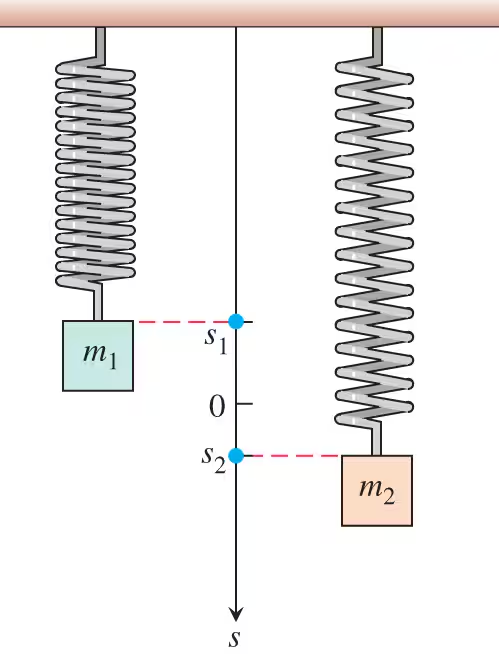
52. Two masses hanging side by side from springs have positions s_1 = 2 sin t and s_2 = sin 2t,
respectively.
a. At what times in the interval 0 < t do the masses pass each other? (Hint: sin 2t = 2 sint cost.)
Problem 4.7.109a
Applications
Suppose that f(x) = d/dx (1 − √x) and g(x) = d/dx (x + 2).
Find:
∫f(x) dx
Problem 4.5.20a
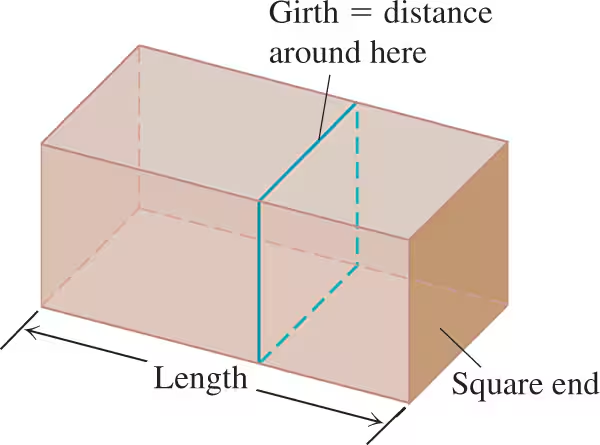
20.The U.S. Postal Service will accept a box for domestic shipment only if the sum of its length and girth (distance around) does not exceed 108 in. a.What dimensions will give a box with a square end the largest possible volume?
Problem 4.3.55a
Identifying Extrema
In Exercises 53–60:
a. Find the local extrema of each function on the given interval, and say where they occur.
f(x) = √3cos x + sin x, 0 ≤ x ≤ 2π
Problem 4.7.5a
Finding Antiderivatives
In Exercises 1–16, find an antiderivative for each function. Do as many as you can mentally. Check your answers by differentiation.
1 / x²
Problem 4.3.45a
Identifying Extrema
In Exercises 41–52:
a. Identify the function’s local extreme values in the given domain, and say where they occur.
f(t) = 12t − t³, −3 ≤ t < ∞
Problem 4.3.3a
Analyzing Functions from Derivatives
Answer the following questions about the functions whose derivatives are given in Exercises 1–14:
a. What are the critical points of f?
f′(x) = (x − 1)²(x + 2)
Problem 4.3.59a
Identifying Extrema
In Exercises 53–60:
a. Find the local extrema of each function on the given interval, and say where they occur.
f(x) = csc²x − 2cot x, 0 < x < π
Problem 4.7.3a
Finding Antiderivatives
In Exercises 1–16, find an antiderivative for each function. Do as many as you can mentally. Check your answers by differentiation.
−3x⁻⁴
Problem 4.3.51a
Identifying Extrema
In Exercises 41–52:
a. Identify the function’s local extreme values in the given domain, and say where they occur.
g(x) = (x − 2) / (x²−1), 0 ≤ x < 1
Problem 4.7.12a
Finding Antiderivatives
In Exercises 1–16, find an antiderivative for each function. Do as many as you can mentally. Check your answers by differentiation.
πcos πx
Problem 4.5.51a
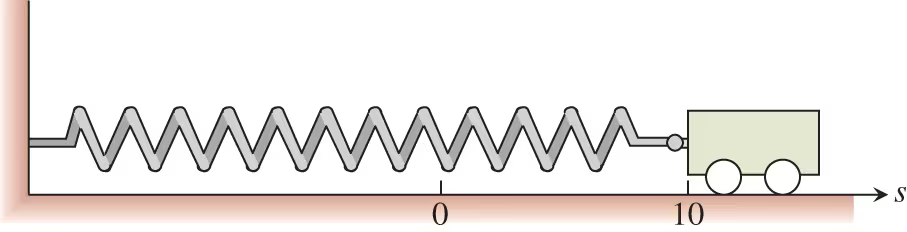
51. Frictionless cart A small frictionless cart, attached to the wall by a spring, is pulled 10 cm from its rest position and released at time t = 0 to roll back and forth for 4 sec. Its position at time t is s = 10 cos πt.
a. What is the cart's maximum speed? When is the cart moving that fast? Where is it then? What is the magnitude of the acceleration then?
Problem 4.3.9a
Analyzing Functions from Derivatives
Answer the following questions about the functions whose derivatives are given in Exercises 1–14:
a. What are the critical points of f?
f′(x) = 1− 4/x², x ≠ 0
Problem 4.7.66a
Checking Antiderivative Formulas
Right, or wrong? Say which for each formula and give a brief reason for each answer.
∫√(2x + 1) dx = √(x² + x +C)
Problem 4.1.52a
Theory and Examples
In Exercises 51 and 52, give reasons for your answers.
Let f(x) = |x³ − 9x|.
a. Does f'(0) exist?
Problem 4.7.11a
Finding Antiderivatives
In Exercises 1–16, find an antiderivative for each function. Do as many as you can mentally. Check your answers by differentiation.
−πsin πx
Problem 4.3.1a
Analyzing Functions from Derivatives
Answer the following questions about the functions whose derivatives are given in Exercises 1–14:
a. What are the critical points of f?
f′(x) = x(x − 1)
Problem 4.3.25a
Identifying Extrema
In Exercises 19–40:
a. Find the open intervals on which the function is increasing and those on which it is decreasing.
f(r) = 3r³ + 16r
Problem 4.3.42a
Identifying Extrema
In Exercises 41–52:
a. Identify the function’s local extreme values in the given domain, and say where they occur.
f(x) = (x + 1)², −∞ < x ≤ 0
Problem 4.7.1a
Finding Antiderivatives
In Exercises 1–16, find an antiderivative for each function. Do as many as you can mentally. Check your answers by differentiation.
2x
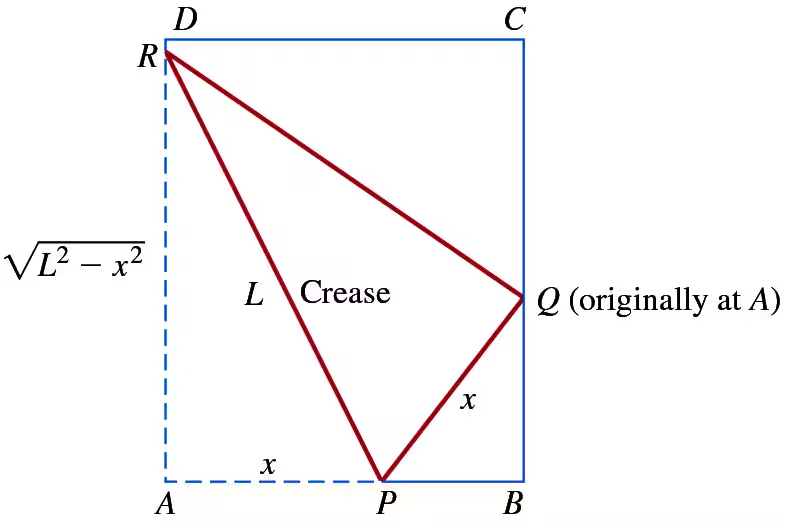
Problem 4.5.25a
25. Paper folding A rectangular sheet of 8.5-in.-by-11-in. paper is placed on a flat surface. One of the corners is placed on the opposite longer edge, as shown in the figure, and held there as the paper is smoothed flat. The problem is to make the length of the crease as small as possible. Call the length L. Try it with paper.
a. Show that L^2=2x^3/(2x-8.5).
Problem 4.3.60a
Identifying Extrema
In Exercises 53–60:
a. Find the local extrema of each function on the given interval, and say where they occur.
f(x) = sec²x − 2tan x, −π/2 < x < π/2