Compare the effects of the cardioacceleratory and cardioinhibitory centers on cardiac output and blood pressure.
Ch. 21 Blood Vessels and Circulation

Martini, Nath, Bartholomew12th EditionFundamentals of Anatomy and PhysiologyISBN: 9780137854011Not the one you use?Change textbook
Chapter 21, Problem 29
People with allergies commonly take antihistamines with decongestants to relieve their symptoms. The container warns that individuals who are being treated for high blood pressure should not take the medication. Why not?
Verified step by step guidance1
Understand that antihistamines are used to block histamine receptors, reducing allergy symptoms, while decongestants typically constrict blood vessels to reduce nasal swelling.
Recognize that decongestants often contain sympathomimetic agents like pseudoephedrine, which stimulate the sympathetic nervous system causing vasoconstriction and increased heart rate.
Recall that increased vasoconstriction and heart rate can raise blood pressure, which is risky for individuals already being treated for hypertension.
Connect that taking decongestants can counteract the effects of antihypertensive medications, making blood pressure harder to control.
Conclude that the warning exists because decongestants may elevate blood pressure and interfere with hypertension treatment, potentially leading to dangerous cardiovascular effects.

Verified video answer for a similar problem:
This video solution was recommended by our tutors as helpful for the problem above.
Was this helpful?
Key Concepts
Here are the essential concepts you must grasp in order to answer the question correctly.
Mechanism of Antihistamines
Antihistamines block histamine receptors to reduce allergy symptoms like sneezing and itching. They primarily target H1 receptors to prevent allergic reactions but generally have minimal direct effects on blood pressure.
Recommended video:
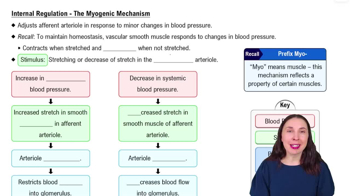
Internal Regulation - The Myogenic Mechanism
Role of Decongestants and Their Effect on Blood Pressure
Decongestants, such as pseudoephedrine, constrict blood vessels to reduce nasal swelling. This vasoconstriction can increase blood pressure and heart rate, posing risks for individuals with hypertension.
Recommended video:
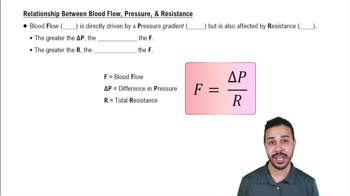
Relationship Between Blood Flow, Pressure, & Resistance
Interaction Between Decongestants and Hypertension
People with high blood pressure are advised to avoid decongestants because these drugs can elevate blood pressure further, potentially leading to dangerous cardiovascular events. This interaction explains the warning on the medication container.
Recommended video:
Guided course
The Difference Between Anatomy and Physiology
Related Practice
Textbook Question
1
views
Textbook Question
Why is blood flow to the brain relatively continuous and constant?
1
views
Textbook Question
Bob is sitting outside on a warm day and is sweating profusely. Mary wants to practice taking blood pressures, and he agrees to play the patient. Mary finds that Bob's blood pressure is elevated, even though he is resting and has lost fluid from sweating. (She reasons that fluid loss should lower blood volume and, thus, blood pressure.) Why is Bob's blood pressure high instead of low?
2
views
Textbook Question
Jolene awakens suddenly to the sound of her alarm clock. Realizing that she is late for class, she jumps to her feet, feels light-headed, and falls back on her bed. What probably caused this reaction? Why doesn't this happen all the time?
1
views