Ch. 21 Blood Vessels and Circulation
Martini - Fundamentals of Anatomy and Physiology 12th Edition
Martini, Nath, Bartholomew12th EditionFundamentals of Anatomy and PhysiologyISBN: 9780137854011Not the one you use?Change textbook
Chapter 21, Problem 28

Bob is sitting outside on a warm day and is sweating profusely. Mary wants to practice taking blood pressures, and he agrees to play the patient. Mary finds that Bob's blood pressure is elevated, even though he is resting and has lost fluid from sweating. (She reasons that fluid loss should lower blood volume and, thus, blood pressure.) Why is Bob's blood pressure high instead of low?

Verified step by step guidance
1
Step 1: Understand the relationship between blood volume and blood pressure. Normally, a decrease in blood volume (such as from sweating) would reduce blood pressure because there is less fluid circulating in the vessels.
Step 2: Consider the body's compensatory mechanisms in response to fluid loss. When Bob loses fluid through sweating, his body detects a drop in blood volume and activates systems to maintain blood pressure.
Step 3: Identify the role of the sympathetic nervous system and hormones like vasopressin (antidiuretic hormone) and aldosterone. These cause vasoconstriction (narrowing of blood vessels) and promote water retention to increase blood pressure.
Step 4: Recognize that vasoconstriction increases peripheral resistance, which can raise blood pressure even if blood volume is reduced. This explains why Bob's blood pressure is elevated despite fluid loss.
Step 5: Summarize that the elevated blood pressure is due to the body's homeostatic response to maintain adequate blood flow and pressure, involving vasoconstriction and hormonal regulation, rather than a direct effect of blood volume alone.

Verified video answer for a similar problem:

This video solution was recommended by our tutors as helpful for the problem above.
Was this helpful?

Key Concepts

Here are the essential concepts you must grasp in order to answer the question correctly.

Blood Pressure Regulation

Blood pressure is controlled by multiple factors including cardiac output, blood volume, and resistance in blood vessels. Even if blood volume decreases due to sweating, the body can adjust other parameters like heart rate and vessel constriction to maintain or increase blood pressure.
Recommended video:
Guided course
6:12
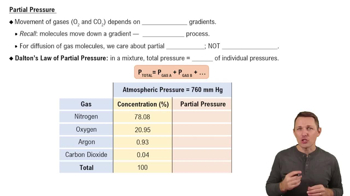
Partial Pressure

Role of the Sympathetic Nervous System

The sympathetic nervous system activates during stress or heat exposure, causing vasoconstriction and increased heart rate. This response helps maintain blood pressure despite fluid loss by increasing vascular resistance and cardiac output.
Recommended video:
1:21
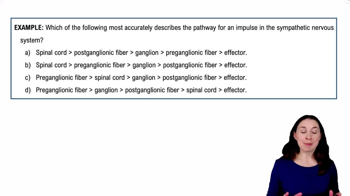
Sympathetic Nervous System Example 3

Effect of Dehydration and Fluid Loss on Blood Volume

Sweating causes fluid loss, reducing blood volume, which typically lowers blood pressure. However, the body compensates through mechanisms like vasoconstriction and increased heart rate to prevent hypotension, sometimes resulting in elevated blood pressure.
Recommended video:
11:30
Renin-Angiotensin-Aldosterone-System