Ch. 21 Blood Vessels and Circulation
Martini - Fundamentals of Anatomy and Physiology 12th Edition
Martini, Nath, Bartholomew12th EditionFundamentals of Anatomy and PhysiologyISBN: 9780137854011Not the one you use?Change textbook
Chapter 21, Problem 30

Jolene awakens suddenly to the sound of her alarm clock. Realizing that she is late for class, she jumps to her feet, feels light-headed, and falls back on her bed. What probably caused this reaction? Why doesn't this happen all the time?

Verified step by step guidance
1
Step 1: Understand the physiological context. Jolene's sudden standing causes a rapid change in her body's position, which affects blood flow and blood pressure, particularly to the brain.
Step 2: Identify the likely cause. The light-headedness and fainting are probably due to orthostatic hypotension, a temporary drop in blood pressure when standing up quickly, leading to reduced cerebral blood flow.
Step 3: Explain the body's normal response. Normally, baroreceptors in the carotid arteries and aorta detect the drop in blood pressure and trigger a reflex to increase heart rate and constrict blood vessels, stabilizing blood pressure.
Step 4: Discuss why this doesn't happen all the time. The reflex response usually acts quickly and effectively, preventing symptoms. However, if standing is too sudden or if the reflex is delayed or impaired, symptoms like light-headedness can occur.
Step 5: Summarize the mechanism. Jolene's sudden movement caused a temporary mismatch between blood pressure regulation and gravity's effect on blood flow, leading to transient cerebral hypoperfusion and her symptoms.

Verified video answer for a similar problem:

This video solution was recommended by our tutors as helpful for the problem above.
Was this helpful?

Key Concepts

Here are the essential concepts you must grasp in order to answer the question correctly.

Orthostatic Hypotension

Orthostatic hypotension is a sudden drop in blood pressure that occurs when a person stands up quickly from a lying or sitting position. This causes reduced blood flow to the brain, leading to dizziness or light-headedness, as experienced by Jolene.

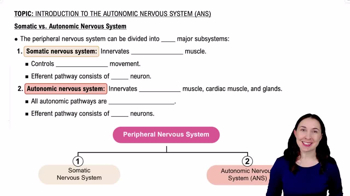
Autonomic Nervous System Regulation

The autonomic nervous system controls involuntary functions like blood pressure regulation. It quickly adjusts heart rate and vessel constriction upon standing to maintain blood flow to the brain, preventing symptoms like dizziness under normal conditions.
Recommended video:
1:50
Somatic vs. Autonomic Nervous System

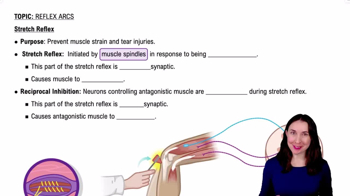
Baroreceptor Reflex

Baroreceptors are pressure sensors in blood vessels that detect changes in blood pressure. When standing up, they trigger reflexes to increase heart rate and constrict blood vessels, stabilizing blood pressure and preventing frequent episodes of light-headedness.
Recommended video:
3:37
Stretch Reflex