Ch. 5 The Integumentary System
Amerman- Human Anatomy & Physiology 3e
Amerman3rd EditionHuman Anatomy & PhysiologyISBN: 9780138247201, 9780138247928, 9780138201814Not the one you use?Change textbook
Chapter 5, Problem 6

Keratinocytes in the superficial strata of the epidermis die because:
a. They are too far away from the blood supply in the dermis.
b. They are surrounded by a lipid-based substance that makes them more permeable to water.
c. They do not die.
d. No keratinocytes in the epidermis are alive.

Verified step by step guidance
1
Understand the structure of the epidermis: The epidermis is the outermost layer of the skin, composed of stratified squamous epithelial cells. It is avascular, meaning it lacks blood vessels, and relies on diffusion from the dermis for nutrients and oxygen.
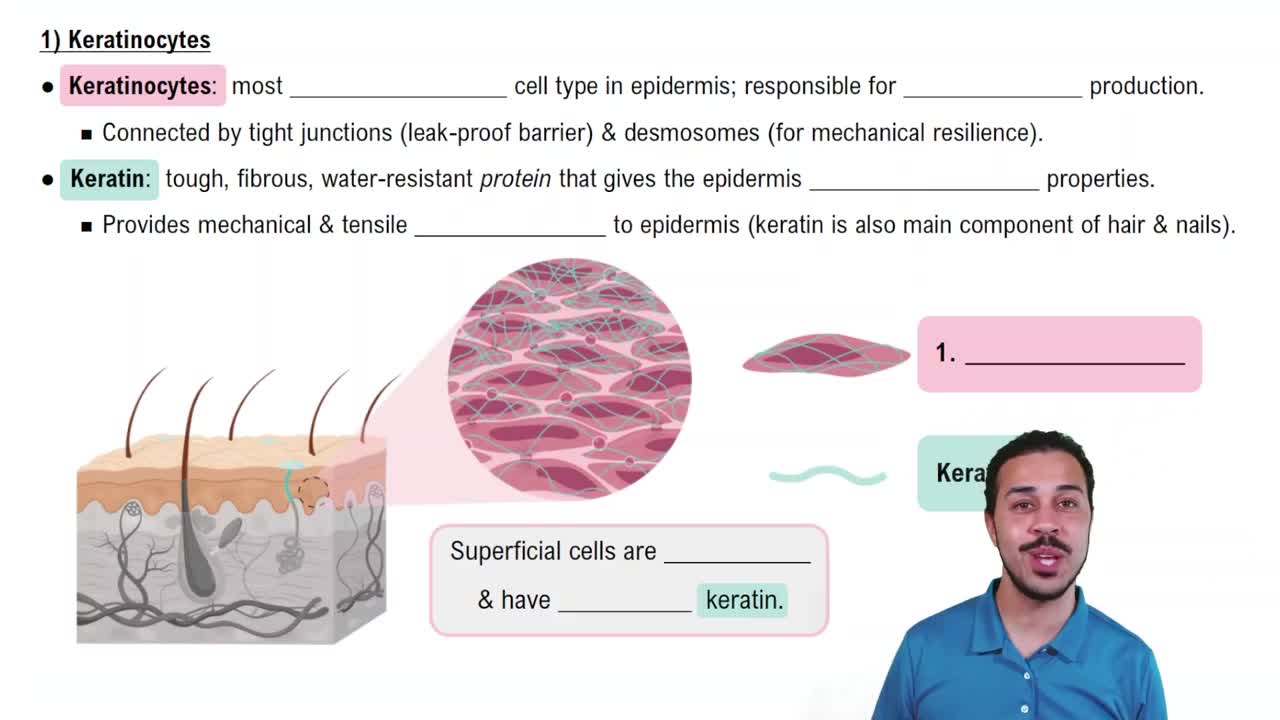
Identify the role of keratinocytes: Keratinocytes are the primary cell type in the epidermis. They originate in the basal layer (stratum basale) and migrate upward through the layers, undergoing changes as they move toward the surface.
Explain the process of keratinization: As keratinocytes move upward, they produce keratin, a tough, fibrous protein. They also accumulate lipid-based substances that contribute to the skin's barrier function, making the cells less permeable to water and nutrients.
Discuss why keratinocytes die in the superficial layers: Keratinocytes in the upper layers (e.g., stratum corneum) are too far from the blood supply in the dermis to receive adequate nutrients and oxygen via diffusion. This lack of sustenance leads to their death, and they become flattened, dead cells that form the protective outer layer of the skin.
Clarify the correct answer: Based on the explanation, the correct reason for keratinocyte death in the superficial strata is that they are too far away from the blood supply in the dermis, which aligns with option 'a'.

Verified video answer for a similar problem:

This video solution was recommended by our tutors as helpful for the problem above.
Was this helpful?

Key Concepts

Here are the essential concepts you must grasp in order to answer the question correctly.

Keratinocyte Function

Keratinocytes are the primary cell type found in the epidermis, responsible for forming a protective barrier. As they move from the deeper layers of the epidermis to the surface, they undergo a process called keratinization, where they produce keratin, a tough protein that helps waterproof the skin. This process is crucial for maintaining skin integrity and preventing water loss.
Recommended video:
04:22
Keratinocytes

Epidermal Structure

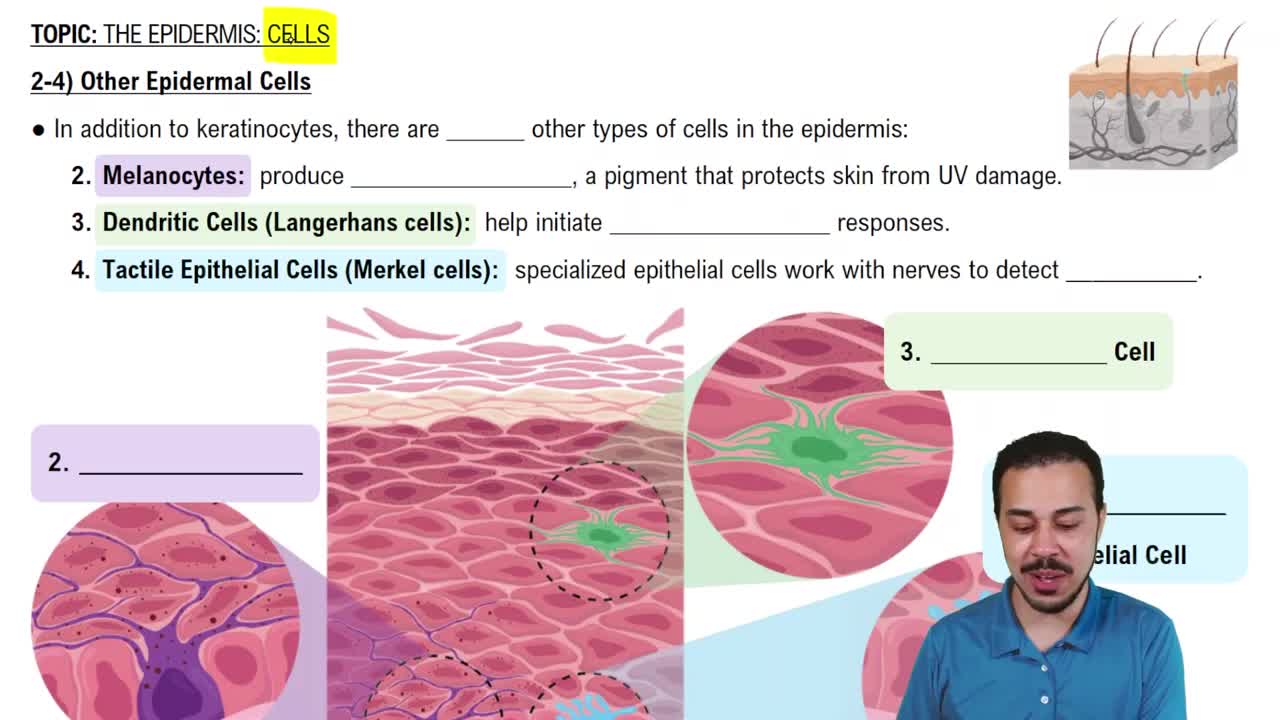
The epidermis is the outermost layer of the skin, composed of multiple strata of keratinocytes. The superficial strata, or stratum corneum, consist of dead keratinized cells that provide a barrier against environmental damage. These cells are not supplied with blood vessels, which is why they die as they move away from the dermis, where the blood supply is located.
Recommended video:
07:02
Other Epidermal Cells

Apoptosis in Keratinocytes

Apoptosis is the process of programmed cell death that occurs in keratinocytes as they reach the surface of the skin. This is a normal part of skin renewal, where older cells are shed to make way for new ones. The lack of nutrients and oxygen at the surface, combined with the accumulation of keratin, leads to the death of these cells, which is essential for maintaining healthy skin turnover.
Recommended video:
04:22
Keratinocytes