Ch. 25 Fluid, Electrolyte, and Acid-Base Homeostasis
Amerman- Human Anatomy & Physiology 3e
Amerman3rd EditionHuman Anatomy & PhysiologyISBN: 9780138247201, 9780138247928, 9780138201814Not the one you use?Change textbook
Chapter 25, Problem 8

Which of the following statements best describes the principle of mass balance?
a. The amount of a variable that is gained by the body through ingestion equals the amount that is lost from the body.
b. The body maintains a stable mass at all times.
c. The amount of each variable brought into the body must be balanced by all other variables.
d. The amount of a variable ingested is regulated by a positive feedback loop.

Verified step by step guidance
1
Understand the concept of mass balance: Mass balance refers to the principle that the total amount of a substance in the body remains constant unless there is an input (gain) or output (loss) of that substance. This is crucial for maintaining homeostasis in the body.
Analyze the options provided: Each option describes a different interpretation of mass balance. Carefully evaluate which one aligns with the principle of maintaining equilibrium in the body.
Option a: This option states that the amount of a variable gained through ingestion equals the amount lost. This aligns with the principle of mass balance, as it emphasizes the balance between input and output.
Option b: This option suggests that the body maintains a stable mass at all times. This is incorrect because the body’s mass can fluctuate due to various factors, such as water retention or fat storage, and is not directly related to the principle of mass balance.
Option c and d: Option c implies that all variables must balance each other, which is not accurate since mass balance focuses on individual variables. Option d mentions regulation by a positive feedback loop, which is incorrect because mass balance is typically maintained by negative feedback mechanisms.

Verified video answer for a similar problem:

This video solution was recommended by our tutors as helpful for the problem above.
Was this helpful?

Key Concepts

Here are the essential concepts you must grasp in order to answer the question correctly.

Mass Balance Principle

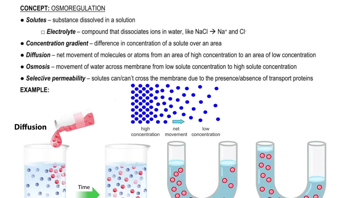
The principle of mass balance states that the mass of a substance in a system must remain constant over time, provided that no mass is added or removed. In biological systems, this means that the amount of a substance gained through processes like ingestion must equal the amount lost through processes such as excretion or metabolism.
Recommended video:
07:59
Osmosis and Osmolarity

Homeostasis

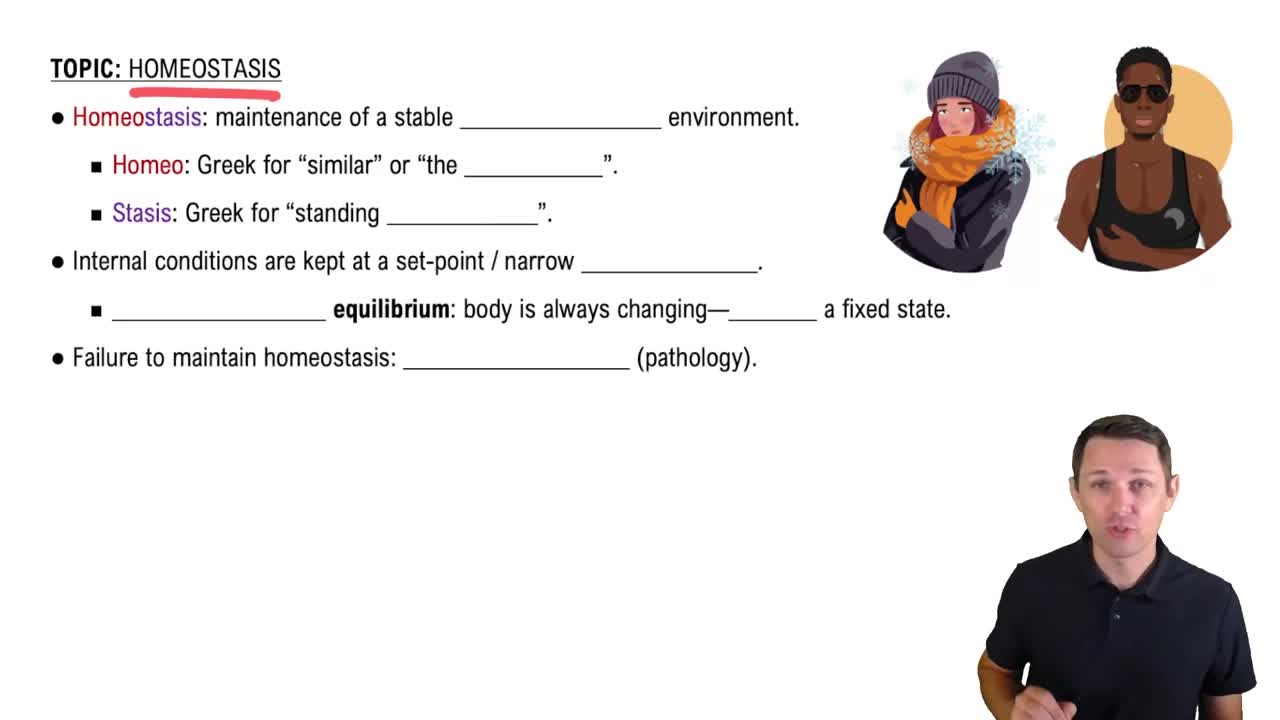
Homeostasis refers to the body's ability to maintain stable internal conditions despite external changes. This concept is crucial for understanding how the body regulates various variables, such as temperature, pH, and nutrient levels, to ensure optimal functioning and balance.
Recommended video:
Guided course
01:59
Introduction to Homeostasis

Feedback Mechanisms

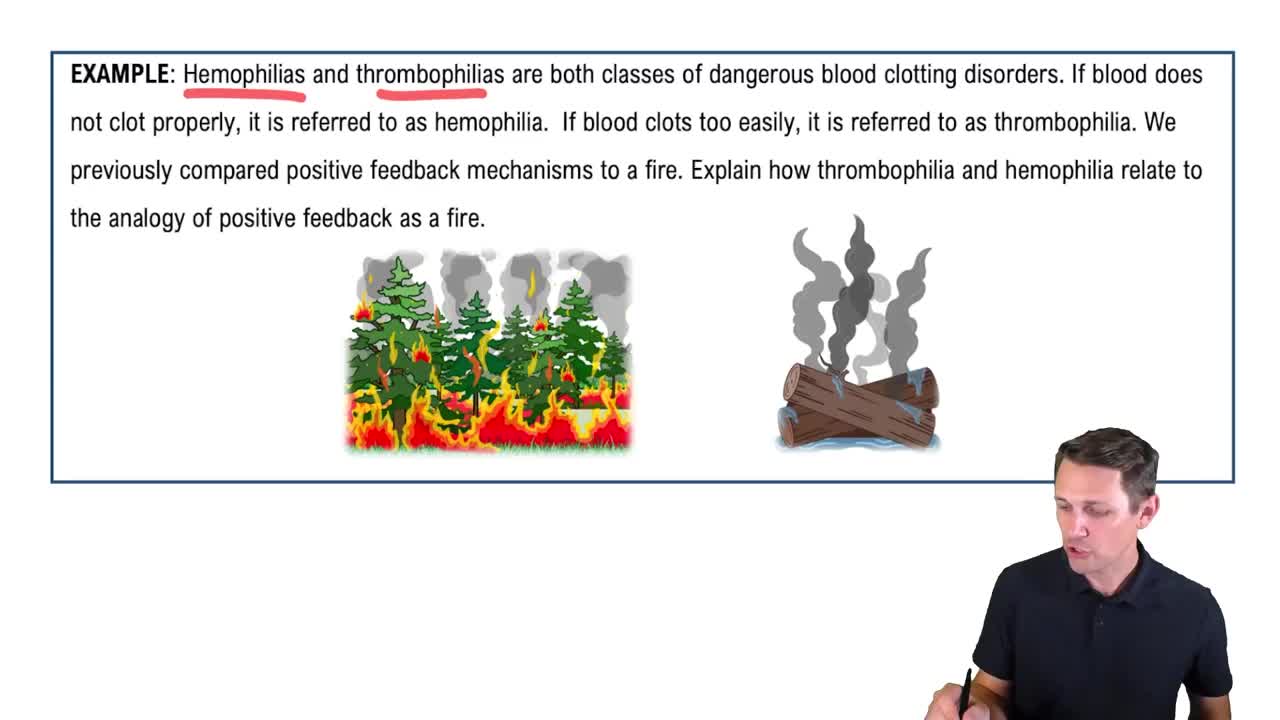
Feedback mechanisms are processes that help regulate biological functions by using information from the output of a system to adjust its input. Positive feedback amplifies changes, while negative feedback counteracts them, playing a vital role in maintaining homeostasis and mass balance in the body.
Recommended video:
Guided course
02:43
Feedback Loops: Positive Feedback Example 1