
The drug methotrexate is used to treat several different types of cancer and diseases of the immune system. It works by inhibiting an enzyme in the cell necessary for folic acid synthesis. Without folic acid, the cell cannot make nucleotides. What, specifically, does an enzyme do in the cell? Why would inhibiting this enzyme disrupt folic acid synthesis? What effect would a disruption in folic acid synthesis have on the cell as a whole? (Hint: Think about the role that folic acid plays in the cell.) (Connects to Chapter 2)
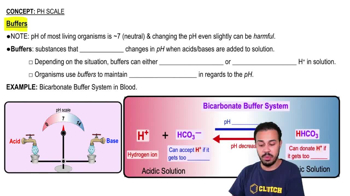
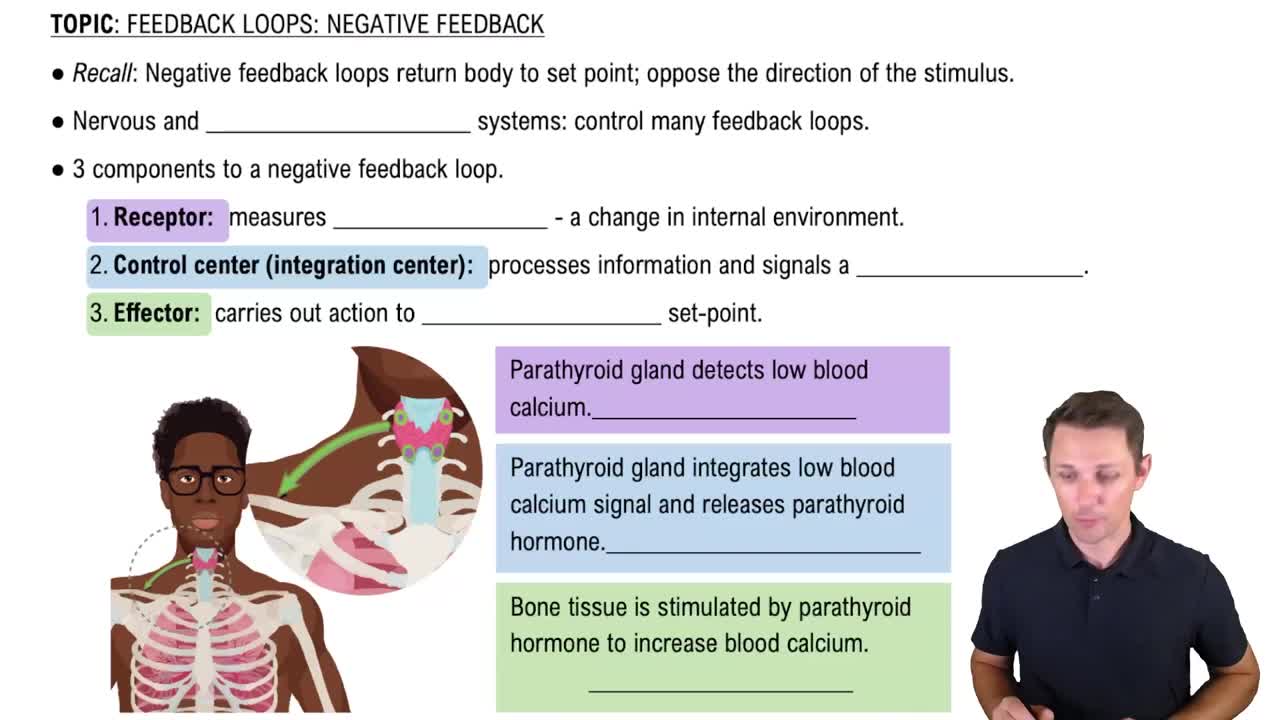
Explain how buffer systems in the body work if the pH of body fluids increases. Is this an example of a negative or a positive feedback loop? Explain.
Verified step by step guidance
Verified video answer for a similar problem:
Key Concepts
Buffer Systems
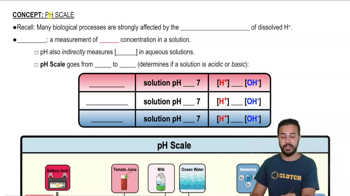
pH Regulation
Negative Feedback Loop
Considering that water is a main component of the juices in the stomach and intestines, explain why digestion of lipids is more complicated than digestion of carbohydrates and proteins.
In certain types of radioactive decay, the isotope releases a particle called an alpha particle, which contains two protons and two neutrons. When this happens, is the product still the same element? Why or why not?
Many drugs and poisons exert their effects by blocking one or more enzymes. How could blocking an enzyme lead to the death of a cell?
Which of the following statements correctly describes a solution?
a. In a solution the solute is chemically dissolved by the solvent.
b. Solutions involve large particles suspended in another component.
c. The particles in a solution will settle out if left to sit.
d. The amount of solute in a solution is expressed as the solution's concentration.
Some claim that the pH of your blood can be affected by eating acidic foods such as citrus. Do you believe this to be true? Explain your answer. (Hint: What happens when extra hydrogen ions are added to the blood?)
