Textbook Question
The following reaction steps are shown using conventional electron pushing. (b) Use the bouncing arrow formalism to illustrate the formation of only the product shown.
(c)
2
views

 Mullins 1st EditionCh. 8 - Alkenes I: Properties and Electrophilic AdditionsProblem 22b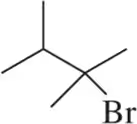
 Verified step by step guidance
 03:54
03:54
 05:58
05:58 1:59
1:59The following reaction steps are shown using conventional electron pushing. (b) Use the bouncing arrow formalism to illustrate the formation of only the product shown.
(c)
Suggest an alkene that, upon reaction with the appropriate hydrohalic acid, will produce only the alkyl halide shown. [Ignore stereochemistry.]
(d)
Which is the most likely transition state for the reactions shown? Explain your answer. [Note the difference in the size of the partial charges or partial unpaired electrons.]
The following reaction steps are shown using conventional electron pushing. (a) Draw the second product whose formation would have been rationalized with this same arrow.
(c)
A wayward chemist proposed the following mechanism for the addition of HBr to an alkene.
(a) Why is this mechanism unlikely?
(b) Compare the reaction coordinate diagrams for the actual mechanism studied in Section 8.3.1 and this alternate mechanism on the same graph.
Provide an arrow-pushing mechanism that rationalizes the formation of each alkyl halide in Assessment 8.19.