Ch. 8 - Alkenes I: Properties and Electrophilic Additions
Mullins - Organic Chemistry: A Learner Centered Approach 1st Edition
Mullins1st EditionOrganic Chemistry: A Learner Centered ApproachISBN: 9780137566471Not the one you use?Change textbook
Chapter 7, Problem 41a

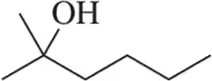
Provide the alkene that would give the following alcohols under acid-catalyzed hydration conditions.
(a) Structural formula of an alcohol with an -OH group attached to a branched carbon chain.

Verified step by step guidance
1
Identify the alcohol product given in the problem. Acid-catalyzed hydration of an alkene follows Markovnikov's rule, where the hydroxyl group (-OH) attaches to the more substituted carbon of the double bond.
Work backward from the alcohol structure to determine the possible alkene. Remove the -OH group and replace it with a double bond between the carbon that originally had the -OH group and its adjacent carbon.
Consider the regioselectivity of the reaction. Ensure that the double bond placement aligns with the Markovnikov addition mechanism, where the proton (H⁺) adds to the less substituted carbon of the double bond.
Verify the structure of the proposed alkene by mentally performing the acid-catalyzed hydration reaction on it. Ensure that the product matches the given alcohol.
If there are multiple possible alkenes, consider stereochemistry and regioselectivity to determine the most likely precursor alkene under the given reaction conditions.

Verified video answer for a similar problem:

This video solution was recommended by our tutors as helpful for the problem above.
Video duration:
3m
Was this helpful?

Key Concepts

Here are the essential concepts you must grasp in order to answer the question correctly.

Alkene Structure

Alkenes are hydrocarbons that contain at least one carbon-carbon double bond (C=C). Their structure is crucial for understanding reactivity, as the double bond is a site for electrophilic attack. The position and substitution of the double bond influence the products formed during reactions, such as hydration.
Recommended video:
1:59
Alkene Metathesis Concept 5

Acid-Catalyzed Hydration

Acid-catalyzed hydration is a reaction where an alkene reacts with water in the presence of an acid catalyst, typically sulfuric acid. This process involves the formation of a carbocation intermediate, which can lead to Markovnikov or anti-Markovnikov addition of water, depending on the stability of the carbocation formed. Understanding this mechanism is essential for predicting the alcohol products.
Recommended video:
Guided course
06:34
Acid-catalyzed hydration mechanism

Markovnikov's Rule

Markovnikov's Rule states that in the addition of HX (where X is a halogen or OH) to an alkene, the hydrogen atom will attach to the carbon with the greater number of hydrogen atoms already attached. This principle helps predict the major product of acid-catalyzed hydration, guiding the formation of the more stable alcohol from the alkene.
Recommended video:
Guided course
03:54
The 18 and 16 Electron Rule