
Ch. 14 - Structural Identification I: Infrared Spectroscopy and Mass Spectrometry
Mullins - Organic Chemistry: A Learner Centered Approach 1st Edition
Mullins1st EditionOrganic Chemistry: A Learner Centered ApproachISBN: 9780137566471Not the one you use?Change textbook
Chapter 13, Problem 59

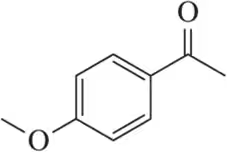
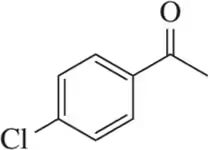
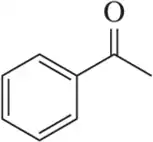
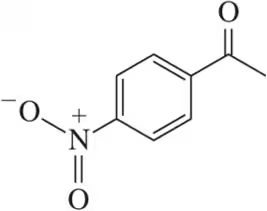
Rank the following acetophenone derivatives on the basis of the carbonyl stretching frequency (1 = highest ; 4 = lowest ).
(a) Chemical structure of para-methoxyacetophenone, showing a benzene ring with methoxy and carbonyl groups.
(b) Chemical structure of 4-chloroacetophenone, showing a benzene ring with a chlorine atom and a carbonyl group attached.
(c) Chemical structure of acetophenone, showing a benzene ring attached to a carbonyl group.
(d) Chemical structure of a nitro-substituted acetophenone derivative with a carbonyl group.

Verified step by step guidance
1
Identify the substituents on the acetophenone derivatives and their positions relative to the carbonyl group. This will help determine their electronic effects on the carbonyl stretching frequency.
Understand the concept of electronic effects: Electron-donating groups (EDGs) and electron-withdrawing groups (EWGs) can influence the carbonyl stretching frequency. EDGs typically decrease the frequency, while EWGs increase it.
Consider the resonance and inductive effects of the substituents. Resonance effects can delocalize electron density, affecting the carbonyl group, while inductive effects involve the transmission of charge through sigma bonds.
Analyze the position of the substituents: Ortho, meta, and para positions can have different impacts on the electronic effects due to steric and resonance considerations.
Rank the acetophenone derivatives based on the combined electronic effects of the substituents on the carbonyl stretching frequency, from highest to lowest frequency.

Verified video answer for a similar problem:

This video solution was recommended by our tutors as helpful for the problem above.
Was this helpful?

Key Concepts

Here are the essential concepts you must grasp in order to answer the question correctly.

IR Spectroscopy

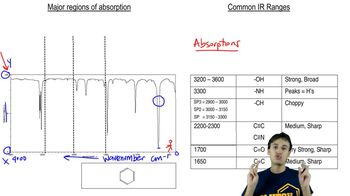
Infrared (IR) spectroscopy is a technique used to identify and study chemicals by analyzing the infrared light absorbed by molecules. Different functional groups absorb characteristic frequencies of IR radiation, allowing for the identification of specific bonds and functional groups within a molecule. In the context of acetophenone derivatives, the carbonyl group (C=O) stretching frequency is particularly important.
Recommended video:
Guided course
16:04
General Features of IR Spect

Electronic Effects of Substituents

Substituents on a benzene ring can influence the electronic environment of the molecule through inductive and resonance effects. Electron-donating groups can increase electron density, while electron-withdrawing groups can decrease it. These effects can alter the carbonyl stretching frequency in IR spectroscopy, as they affect the bond strength and electron distribution around the carbonyl group.
Recommended video:
2:02
Directing Effects in Substituted Pyrroles, Furans, and Thiophenes Concept 1

Carbonyl Stretching Frequency

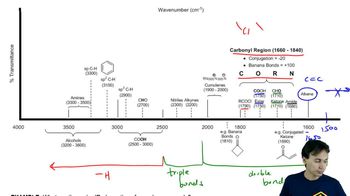
The carbonyl stretching frequency in IR spectroscopy is a key indicator of the electronic environment around the carbonyl group. Typically found between 1600-1800 cm⁻¹, this frequency can shift depending on the presence and type of substituents on the benzene ring. Electron-withdrawing groups generally increase the frequency, while electron-donating groups decrease it, due to changes in bond strength and electron distribution.
Recommended video:
Guided course
16:47
Common IR Frequencies