Textbook Question
In the following allylic radicals, identify the carbon where the new C― Br bond is most likely to form in the second propagation step.
(c)
1
views

 Mullins 1st EditionCh. 11 - Properties and Synthesis of Alkyl Halides: Radical ReactionsProblem 30d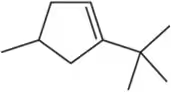
 Verified step by step guidance
 03:43
03:43
 12:11
12:11 04:28
04:28In the following allylic radicals, identify the carbon where the new C― Br bond is most likely to form in the second propagation step.
(c)
In the following molecules, identify the carbon where the radical is most likely to form in the first propagation step.
(c)
In the following allylic radicals, identify the carbon where the new C― Br bond is most likely to form in the second propagation step.
(b)
In the following reaction, which C―H bond would be most likely to react with a bromine radical?
In the following allylic radicals, identify the carbon where the new C–Br bond is most likely to form in the second propagation step.
(a)
We show in Chapter 12 that C― Br bonds can break to give a carbocation and a bromide anion. For which of the organohalides (A or B) would you expect this process to be fastest? Explain.