Ch. 10 - Alkynes: Electrophilic Addition and Redox Reactions
Mullins - Organic Chemistry: A Learner Centered Approach 1st Edition
Mullins1st EditionOrganic Chemistry: A Learner Centered ApproachISBN: 9780137566471Not the one you use?Change textbook
Chapter 9, Problem 49g

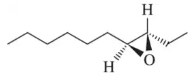
Synthesize the following molecules beginning with only organic molecules containing three carbons or fewer.
(g)

Verified step by step guidance
1
Step 1: Analyze the target molecule. The molecule contains a total of 9 carbons, including a hydroxyl group (-OH) attached to a chiral center. The structure also includes a long alkyl chain and a methyl group attached to the chiral center. The synthesis must begin with organic molecules containing three carbons or fewer.
Step 2: Begin by synthesizing the alkyl chain. Use ethyl bromide (C2H5Br) and a Grignard reagent derived from methyl bromide (CH3Br) to extend the carbon chain. Perform successive Grignard reactions to build the chain up to the desired length of 7 carbons.
Step 3: Introduce the hydroxyl group at the chiral center. Use a carbonyl compound, such as a ketone, to create the chiral center. React the ketone with a Grignard reagent to form the alcohol group (-OH) at the chiral center. Ensure stereoselectivity during this step to achieve the correct configuration.
Step 4: Add the methyl group to the chiral center. Use a methyl Grignard reagent (CH3MgBr) to attach the methyl group to the carbon adjacent to the hydroxyl group. This step will complete the chiral center with the correct stereochemistry.
Step 5: Verify the stereochemistry and purity of the final product. Use techniques such as NMR spectroscopy and chiral chromatography to confirm the structure and stereochemistry of the synthesized molecule. Adjust reaction conditions if necessary to optimize yield and stereoselectivity.

Verified video answer for a similar problem:

This video solution was recommended by our tutors as helpful for the problem above.
Was this helpful?

Key Concepts

Here are the essential concepts you must grasp in order to answer the question correctly.

Functional Groups

Functional groups are specific groups of atoms within molecules that are responsible for the characteristic chemical reactions of those molecules. Understanding functional groups is essential for predicting the reactivity and properties of organic compounds. Common functional groups include hydroxyl (-OH), carboxyl (-COOH), and amine (-NH2), which can significantly influence the synthesis pathways of larger molecules.
Recommended video:
Guided course
02:36
Identifying Functional Groups

Reactions of Organic Molecules

Organic synthesis often involves various types of chemical reactions, such as substitution, addition, and elimination reactions. Each reaction type has specific mechanisms and conditions under which they occur. Familiarity with these reactions allows chemists to design synthetic routes to create complex molecules from simpler precursors, particularly when starting with small organic molecules.
Recommended video:
Guided course
02:17
Identifying organic molecules

Carbon Skeletons

The carbon skeleton refers to the arrangement of carbon atoms in an organic molecule, which can be linear, branched, or cyclic. Understanding how to manipulate carbon skeletons is crucial for synthesizing larger molecules from smaller ones. In this context, starting with three-carbon or fewer molecules means recognizing how to build and modify these structures to achieve the desired target molecules.
Recommended video:
Guided course
02:12
Carbonation of Grignard Reagents