Textbook Question
For each of the following ketones/aldehydes, indicate whether it is possible to synthesize it from an alkyne as the only compound in good ( > 50%) yield. If so, how would you do it?
(a)
1
views

 Mullins 1st EditionCh. 10 - Alkynes: Electrophilic Addition and Redox ReactionsProblem 39d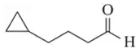
 Verified step by step guidance
 09:11
09:11
 06:38
06:38 03:54
03:54For each of the following ketones/aldehydes, indicate whether it is possible to synthesize it from an alkyne as the only compound in good ( > 50%) yield. If so, how would you do it?
(a)
Draw the ketone(s) you would expect to form by reacting the following alkynes under the conditions of oxymercuration: (a) 6-methyloct-1-yne, (b) 1,10-dicyclohexyldec-5-yne, and (c) 5-phenylhex-2-yne.
Beginning with the molecules on the left of each chemical equation, synthesize the molecules shown. While there can be multiple ways of doing each synthesis, the minimum number of steps necessary is indicated over each reaction arrow.
(a)
When doing synthesis, you will often find yourself repeating the same series of steps. To see this in action, synthesize the following aldehydes beginning with an organic molecule containing three carbons or fewer.
(b)
When doing synthesis, you will often find yourself repeating the same series of steps. To see this in action, synthesize the following aldehydes beginning with an organic molecule containing three carbons or fewer.
(d)
Draw the ketone(s) you would expect to form by treating the following alkynes under the conditions of hydroboration–oxidation: (a) 6-methyloct-1-yne, (b) 1,10-dicyclohexyldec-5-yne, and (c) 5-phenylhex-2-yne.
<IMAGE>