Table of contents
- 0. Basic Principles of Economics
- Introduction to Economics
- People Are Rational
- People Respond to Incentives
- Scarcity and Choice
- Marginal Analysis
- Allocative Efficiency, Productive Efficiency, and Equality
- Positive and Normative Analysis
- Microeconomics vs. Macroeconomics
- Factors of Production
- Circular Flow Diagram
- Graphing Review
- Percentage and Decimal Review
- Fractions Review
- 1. Reading and Understanding Graphs
- 2. Introductory Economic Models
- 3. The Market Forces of Supply and Demand
- Competitive Markets
- The Demand Curve
- Shifts in the Demand Curve
- Movement Along a Demand Curve
- The Supply Curve
- Shifts in the Supply Curve
- Movement Along a Supply Curve
- Market Equilibrium
- Using the Supply and Demand Curves to Find Equilibrium
- Effects of Surplus
- Effects of Shortage
- Supply and Demand: Quantitative Analysis
- 4. Elasticity
- Percentage Change and Price Elasticity of Demand
- Elasticity and the Midpoint Method
- Price Elasticity of Demand on a Graph
- Determinants of Price Elasticity of Demand
- Total Revenue Test
- Total Revenue Along a Linear Demand Curve
- Income Elasticity of Demand
- Cross-Price Elasticity of Demand
- Price Elasticity of Supply
- Price Elasticity of Supply on a Graph
- Elasticity Summary
- 5. Consumer and Producer Surplus; Price Ceilings and Floors
- Consumer Surplus and Willingness to Pay
- Producer Surplus and Willingness to Sell
- Economic Surplus and Efficiency
- Quantitative Analysis of Consumer and Producer Surplus at Equilibrium
- Price Ceilings, Price Floors, and Black Markets
- Quantitative Analysis of Price Ceilings and Price Floors: Finding Points
- Quantitative Analysis of Price Ceilings and Price Floors: Finding Areas
- 6. Introduction to Taxes and Subsidies
- 7. Externalities
- 8. The Types of Goods
- 9. International Trade
- 10. The Costs of Production
- 11. Perfect Competition
- Introduction to the Four Market Models
- Characteristics of Perfect Competition
- Revenue in Perfect Competition
- Perfect Competition Profit on the Graph
- Short Run Shutdown Decision
- Long Run Entry and Exit Decision
- Individual Supply Curve in the Short Run and Long Run
- Market Supply Curve in the Short Run and Long Run
- Long Run Equilibrium
- Perfect Competition and Efficiency
- Four Market Model Summary: Perfect Competition
- 12. Monopoly
- 13. Monopolistic Competition
- 14. Oligopoly
- 15. Markets for the Factors of Production
- 16. Income Inequality and Poverty
- 17. Asymmetric Information, Voting, and Public Choice
- 18. Consumer Choice and Behavioral Economics
- Unions
- Firms, the Stock Market, and Corporate Governance
- Health Care
- Uncertainty and Risk
- Balance of Payments
- Exchange Rates
- Rent, Interest, and Profit (Brue)
- Measuring National Output and Income (MACROECONOMICS)
- Unemployment and Inflation (MACROECONOMICS)
- Labor Force and Unemployment
- Types of Unemployment
- Unemployment: Minimum Wage Laws and Efficiency Wages
- Inflation and Consumer Price Index (CPI)
- Using CPI to Adjust for Inflation
- Problems with the Consumer Price Index (CPI)
- Nominal Income and Real Income
- Nominal Interest, Real Interest, and the Fisher Equation
- Who is Affected by Inflation?
- Demand-Pull and Cost-Push Inflation
- Costs of Inflation: Shoe-leather Costs and Menu Costs
- Productivity and Economic Growth (MACROECONOMICS)
- The Financial System (MACROECONOMICS)
- Income and Consumption (MACROECONOMICS)
- Deriving the Aggregate Expenditures Model (MACROECONOMICS)
- Aggregate Demand and Aggregate Supply Analysis (MACROECONOMICS)
- The Monetary System (MACROECONOMICS)
- Monetary Policy (MACROECONOMICS)
- Fiscal Policy (MACROECONOMICS)
- Tradeoffs Between Inflation and Unemployment (MACROECONOMICS)
- Open-Economy Macroeconomics (MACROECONOMICS)
- Balance of Payments: Introduction
- Balance of Payments: Current Account
- Balance of Payments: Financial Account and Capital Account
- Net Exports Equal Net Foreign Investment
- Balance of Trade; Trade Deficit and Trade Surplus
- Exchange Rates: Introduction
- Exchange Rates: Nominal and Real
- Exchange Rates: Equilibrium
- Exchange Rates: Shifts in Supply and Demand
- Exchange Rates and Net Exports
- Exchange Rates: Purchasing Power Parity
- The Gold Standard
- The Bretton Woods System
- Macroeconomic Schools of Thought (MACROECONOMICS)
- Dynamic AD/AS Model (MACROECONOMICS)
3. The Market Forces of Supply and Demand
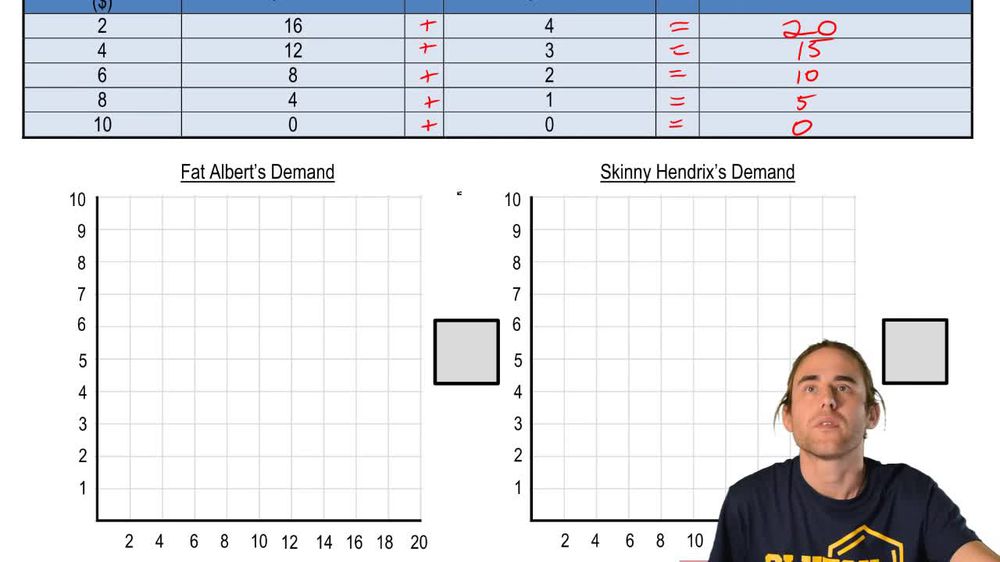
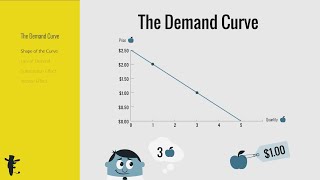
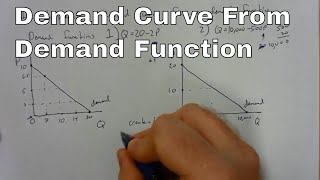
The Demand Curve
3. The Market Forces of Supply and Demand
The Demand Curve
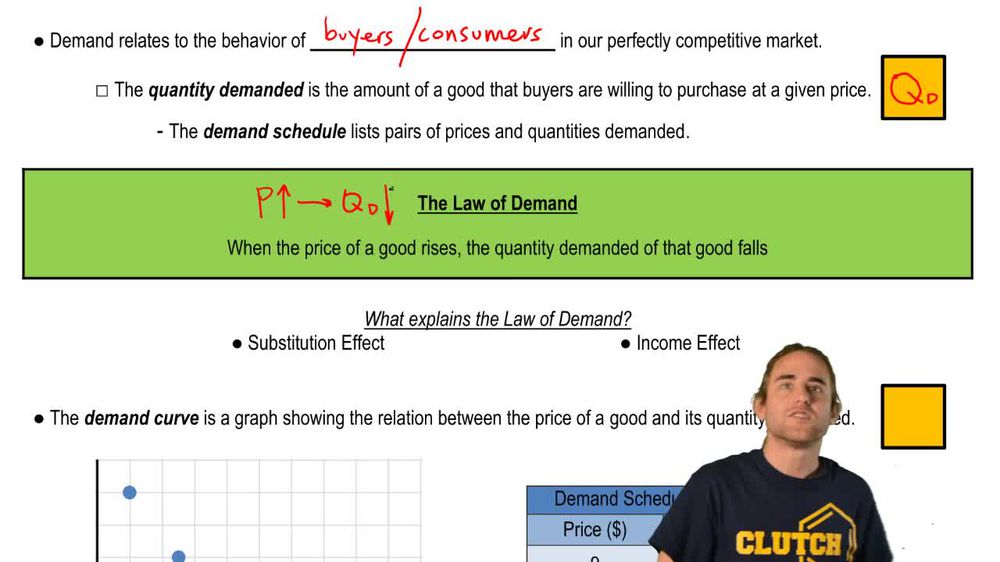
Showing 11 of 11 videos
Practice this topic
- Multiple ChoiceWhich of the following is a determinant of the demand curve for a good?1views
- Multiple ChoiceWhich of the following specifically refers to demand?1views
- Multiple ChoiceWhich statement best explains the law of demand?1views
- Multiple ChoiceWhich of the following best describes the difference between a change in demand and a change in quantity demanded?2views