
Ch. 20 - Antimicrobial Drugs
Tortora - Microbiology: An Introduction 14th Edition
Tortora14th EditionMicrobiology: An IntroductionISBN: 9780138200398Not the one you use?Change textbook
Chapter 20, Problem 3

Which of the following modes of action would not be fungicidal?
a. Inhibition of peptidoglycan synthesis
b. Inhibition of mitosis
c. Injury to the plasma membrane
d. Inhibition of nucleic acid synthesis
e. All of the above are fungicidal modes of action

Verified step by step guidance
1
Step 1: Understand the term 'fungicidal' — it refers to an agent or mode of action that kills fungi, rather than merely inhibiting their growth (which would be 'fungistatic').
Step 2: Analyze each option in terms of fungal biology. Option (a) involves inhibition of peptidoglycan synthesis. Since peptidoglycan is a component of bacterial cell walls and fungi have cell walls made of chitin, this mode would not affect fungi directly and thus is unlikely to be fungicidal.
Step 3: Consider option (b), inhibition of mitosis. Since mitosis is essential for fungal cell division, inhibiting it would prevent fungal growth and likely kill the fungi, making it fungicidal.
Step 4: Look at option (c), injury to the plasma membrane. Damage to the plasma membrane disrupts cell integrity and can cause cell death, so this mode is fungicidal.
Step 5: Evaluate option (d), inhibition of nucleic acid synthesis. This would prevent replication and transcription, leading to cell death, so it is also fungicidal.

Verified video answer for a similar problem:

This video solution was recommended by our tutors as helpful for the problem above.
Video duration:
1m
Was this helpful?

Key Concepts

Here are the essential concepts you must grasp in order to answer the question correctly.

Fungicidal vs. Fungistatic Actions

Fungicidal agents kill fungi outright, while fungistatic agents inhibit fungal growth without killing. Understanding this distinction helps determine which modes of action lead to fungal death versus growth inhibition.
Recommended video:
Guided course
05:56
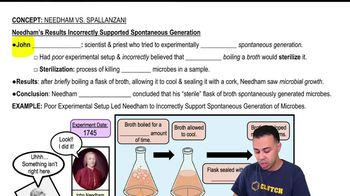
Needham vs. Spallanzani

Fungal Cell Wall Composition

Fungal cell walls are primarily composed of chitin and glucans, not peptidoglycan, which is found in bacterial walls. Therefore, inhibiting peptidoglycan synthesis does not affect fungi, making it non-fungicidal.
Recommended video:
Guided course
03:44
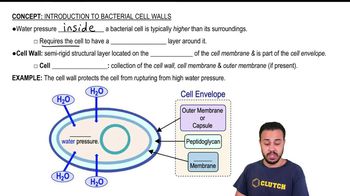
Introduction to Bacterial Cell Walls

Modes of Action Targeting Fungi

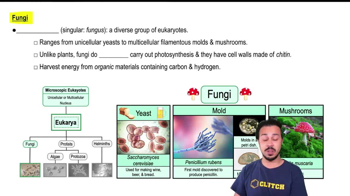
Common fungicidal actions include disrupting the plasma membrane, inhibiting mitosis, and blocking nucleic acid synthesis. These interfere with vital fungal processes, leading to cell death.
Recommended video: