Show where the following antibiotics work: ciprofloxacin, tetracycline, streptomycin, vancomycin, polymyxin B, sulfanilamide, rifampin, erythromycin.
Ch. 20 - Antimicrobial Drugs

Tortora14th EditionMicrobiology: An IntroductionISBN: 9780138200398Not the one you use?Change textbook
Chapter 20, Problem 2
All of the following are modes of action of antiviral drugs except:
a. Inhibition of protein synthesis at 70S ribosomes
b. Inhibition of DNA synthesis
c. Inhibition of RNA synthesis
d. Inhibition of uncoating
e. All of the above are modes of action of antiviral drugs
Verified step by step guidance1
Step 1: Understand the context of antiviral drug action. Antiviral drugs target specific stages in the viral life cycle to prevent virus replication without harming the host cells significantly.
Step 2: Review common modes of action of antiviral drugs, which include inhibition of viral DNA synthesis, inhibition of viral RNA synthesis, and inhibition of viral uncoating processes.
Step 3: Analyze the option related to inhibition of protein synthesis at 70S ribosomes. Recall that 70S ribosomes are found in prokaryotes (bacteria), not in eukaryotic cells or viruses, which rely on host cell machinery (80S ribosomes) for protein synthesis.
Step 4: Conclude that since viruses use the host's 80S ribosomes for protein synthesis, antiviral drugs do not target 70S ribosomes, making this option inconsistent with known antiviral mechanisms.
Step 5: Therefore, identify the option that does not represent a mode of action of antiviral drugs by excluding the inhibition of protein synthesis at 70S ribosomes.

Verified video answer for a similar problem:
This video solution was recommended by our tutors as helpful for the problem above.
Video duration:
2mWas this helpful?
Key Concepts
Here are the essential concepts you must grasp in order to answer the question correctly.
Antiviral Drug Mechanisms
Antiviral drugs target specific stages of the viral life cycle to inhibit replication. Common mechanisms include blocking viral DNA or RNA synthesis, preventing viral entry or uncoating, and inhibiting viral enzymes essential for replication.
Recommended video:
Guided course
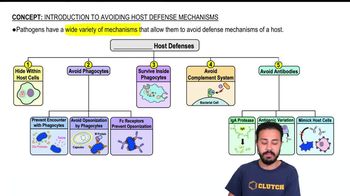
Introduction to Avoiding Host Defense Mechanisms
Protein Synthesis in Viruses vs. Bacteria
Viruses rely on host cell machinery for protein synthesis and do not have their own ribosomes. In contrast, bacteria have 70S ribosomes, which are targets for some antibiotics but not antiviral drugs, making inhibition of 70S ribosomes irrelevant for antiviral action.
Recommended video:
Guided course
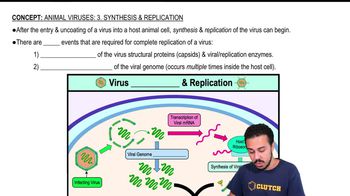
Animal Viruses: 3. Synthesis & Replication
Viral Uncoating Process
Uncoating is the step where the viral capsid is removed to release viral genetic material inside the host cell. Some antiviral drugs inhibit this process, preventing the virus from replicating by blocking access to its genome.
Recommended video:
Guided course
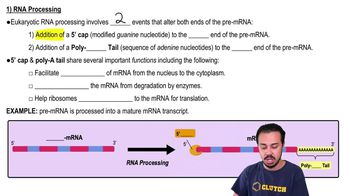
1) RNA Processing
Related Practice
Textbook Question
4
views
Textbook Question
Which of the following modes of action would not be fungicidal?
a. Inhibition of peptidoglycan synthesis
b. Inhibition of mitosis
c. Injury to the plasma membrane
d. Inhibition of nucleic acid synthesis
e. All of the above are fungicidal modes of action
1
views
Textbook Question
List and explain five criteria used to identify an effective antimicrobial agent.
2
views
Textbook Question
Which of the following pairs is mismatched?
a. Antihelminthic—inhibition of oxidative phosphorylation
b. Antihelminthic—inhibition of cell wall synthesis
c. Antifungal—injury to plasma membrane
d. Antifungal—inhibition of mitosis
e. Antiviral—inhibition of DNA synthesis
3
views
Textbook Question
What similar problems are encountered with antiviral, antifungal, antiprotozoan, and antihelminthic drugs?
4
views