
Ch. 20 - Antimicrobial Drugs
Tortora - Microbiology: An Introduction 14th Edition
Tortora14th EditionMicrobiology: An IntroductionISBN: 9780138200398Not the one you use?Change textbook
Chapter 20, Problem 1

Show where the following antibiotics work: ciprofloxacin, tetracycline, streptomycin, vancomycin, polymyxin B, sulfanilamide, rifampin, erythromycin.
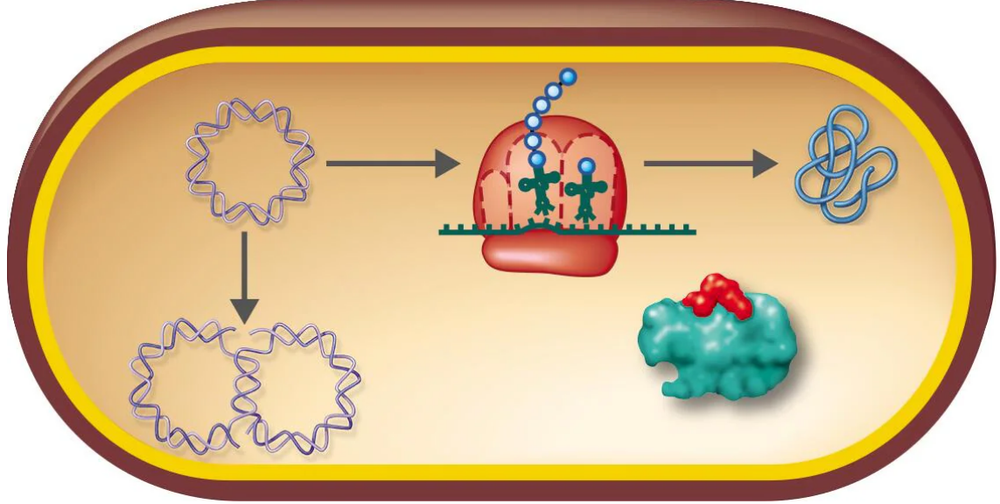
Diagram of antibiotic targets showing DNA replication, transcription, and protein synthesis processes inside a bacterial cell.

Verified step by step guidance
1
Identify the main targets within a bacterial cell where antibiotics typically act: the cell wall, the cell membrane, DNA replication machinery, RNA synthesis machinery, and the ribosomes (protein synthesis).
Locate ciprofloxacin and rifampin as antibiotics that interfere with nucleic acid processes: ciprofloxacin inhibits DNA gyrase affecting DNA replication, while rifampin inhibits RNA polymerase affecting transcription.
Place tetracycline, streptomycin, and erythromycin at the ribosome level, noting that tetracycline blocks the attachment of tRNA to the ribosome, streptomycin causes misreading of mRNA, and erythromycin blocks the exit tunnel of the ribosome, all disrupting protein synthesis.
Mark vancomycin as targeting the bacterial cell wall by inhibiting peptidoglycan synthesis, which is crucial for cell wall integrity.
Assign polymyxin B to the bacterial cell membrane, where it disrupts membrane integrity by interacting with phospholipids, and sulfanilamide as a metabolic inhibitor that blocks folic acid synthesis, which is essential for nucleotide production.

Verified video answer for a similar problem:

This video solution was recommended by our tutors as helpful for the problem above.
Video duration:
2m
Was this helpful?

Key Concepts

Here are the essential concepts you must grasp in order to answer the question correctly.

Mechanism of Action of Antibiotics

Understanding how antibiotics inhibit or kill bacteria is essential. Each antibiotic targets specific bacterial structures or processes, such as cell wall synthesis, protein synthesis, DNA replication, or metabolic pathways. Knowing these mechanisms helps identify where each drug acts within the bacterial cell.
Recommended video:
Guided course
01:59
Introduction to Avoiding Host Defense Mechanisms

Bacterial Cell Structure and Function

Familiarity with bacterial cell components like the cell wall, ribosomes, DNA, and cell membrane is crucial. Antibiotics interact with these structures differently; for example, vancomycin targets the cell wall, while tetracycline affects ribosomes. This knowledge aids in mapping antibiotic action sites.
Recommended video:
Guided course
05:42
Cell Junctions

Classes of Antibiotics and Their Targets

Antibiotics are grouped by their target sites and chemical nature, such as fluoroquinolones (ciprofloxacin) targeting DNA gyrase, aminoglycosides (streptomycin) affecting the 30S ribosomal subunit, or sulfonamides inhibiting folic acid synthesis. Recognizing these classes helps categorize and locate their action points.
Recommended video:
Guided course
04:43
Classes of Antibodies