

Ch. 20 - Antimicrobial Drugs
Tortora - Microbiology: An Introduction 14th Edition
Tortora14th EditionMicrobiology: An IntroductionISBN: 9780138200398Not the one you use?Change textbook
Chapter 20, Problem 4

An antimicrobial agent should meet all of the following criteria except:
a. Selective toxicity
b. The production of hypersensitivities
c. A narrow spectrum of activity
d. No production of drug resistance
e. All of the above are necessary criteria for an antimicrobial

Verified step by step guidance
1
Step 1: Understand the concept of selective toxicity, which means the antimicrobial agent should target the microorganism without harming the host cells. This is a crucial criterion for any antimicrobial agent.
Step 2: Recognize that hypersensitivities (allergic reactions) are undesirable side effects, so an ideal antimicrobial should NOT cause hypersensitivities. Therefore, the production of hypersensitivities is not a necessary criterion.
Step 3: Consider the spectrum of activity. While a narrow spectrum can be beneficial to target specific pathogens and reduce harm to normal flora, it is not always required; some antimicrobials have broad spectrum activity and are still effective.
Step 4: Note that preventing the development of drug resistance is an important goal, so an antimicrobial ideally should not promote resistance.
Step 5: Evaluate the options and identify which criterion is an exception (i.e., not necessary or desirable) for an antimicrobial agent, based on the above understanding.

Verified video answer for a similar problem:

This video solution was recommended by our tutors as helpful for the problem above.
Video duration:
2m
Was this helpful?

Key Concepts

Here are the essential concepts you must grasp in order to answer the question correctly.

Selective Toxicity

Selective toxicity refers to an antimicrobial agent's ability to target and kill or inhibit pathogens without harming the host's cells. This principle is fundamental to effective treatment, ensuring that the drug affects microbial cells specifically, minimizing side effects.
Recommended video:
Guided course
03:27
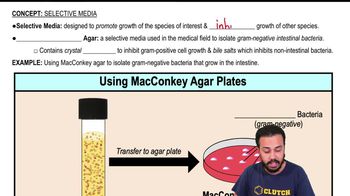
Selective Media

Spectrum of Activity

The spectrum of activity describes the range of microorganisms an antimicrobial agent can affect. A narrow spectrum targets specific types of bacteria, reducing harm to beneficial microbes, while a broad spectrum affects a wide variety of pathogens but may disrupt normal flora.
Recommended video:
Guided course
04:29
Electromagnetic Spectrum

Drug Resistance and Hypersensitivity

Ideal antimicrobials should not induce drug resistance or cause hypersensitivity reactions. Drug resistance occurs when microbes evolve to survive treatment, reducing drug efficacy. Hypersensitivity involves adverse immune responses, which are undesirable side effects.
Recommended video:
Guided course
06:20
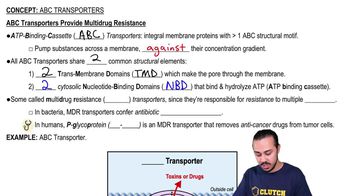
ABC Transporters Provide Multidrug Resistance