Ch. 5 - Microbial Metabolism
Bauman - Microbiology with Diseases by Taxonomy 6th Edition
Bauman6th EditionMicrobiology with Diseases by TaxonomyISBN: 9780134832302Not the one you use?Change textbook
Chapter 5, Problem 6

Facultative anaerobes can live under either aerobic or anaerobic conditions. What metabolic pathways allow these organisms to continue to harvest energy from sugar molecules in the absence of oxygen?

Verified step by step guidance
1
Understand that facultative anaerobes can switch between aerobic respiration when oxygen is present and alternative metabolic pathways when oxygen is absent.
Recall that in the absence of oxygen, these organisms cannot use the electron transport chain for oxidative phosphorylation, so they rely on other pathways to generate ATP.
Identify the two main metabolic pathways facultative anaerobes use without oxygen: fermentation and anaerobic respiration.
Recognize that fermentation allows the regeneration of NAD+ by converting pyruvate into various end products (like lactic acid or ethanol), enabling glycolysis to continue producing ATP.
Note that anaerobic respiration uses an electron transport chain with a final electron acceptor other than oxygen (such as nitrate or sulfate), allowing continued ATP production without oxygen.

Verified video answer for a similar problem:

This video solution was recommended by our tutors as helpful for the problem above.
Video duration:
2m
Was this helpful?

Key Concepts

Here are the essential concepts you must grasp in order to answer the question correctly.

Facultative Anaerobes

Facultative anaerobes are organisms that can survive and grow in both the presence and absence of oxygen. They switch between aerobic respiration when oxygen is available and anaerobic processes when it is not, allowing metabolic flexibility depending on environmental conditions.
Recommended video:
Guided course
03:35
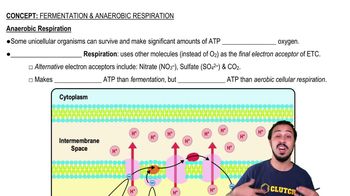
Anaerobic Respiration

Anaerobic Metabolic Pathways

In the absence of oxygen, facultative anaerobes use anaerobic metabolic pathways such as fermentation or anaerobic respiration to generate energy. These pathways allow the regeneration of NAD+ so glycolysis can continue, producing ATP without the need for oxygen.
Recommended video:
Guided course
02:17
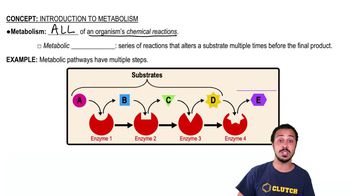
Introduction to Metabolism

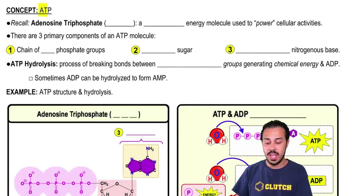
Glycolysis and ATP Production

Glycolysis is the initial step in sugar metabolism, breaking down glucose into pyruvate and producing a small amount of ATP. It occurs in both aerobic and anaerobic conditions, providing the foundation for energy harvesting in facultative anaerobes regardless of oxygen availability.
Recommended video: