Ch. 1 - A Brief History of Microbiology
Bauman - Microbiology with Diseases by Taxonomy 6th Edition
Bauman6th EditionMicrobiology with Diseases by TaxonomyISBN: 9780134832302Not the one you use?Change textbook
Chapter 1, Problem 7

List four major questions that drive microbiological investigations today.

Verified step by step guidance
1
Understand that microbiological investigations are driven by fundamental questions aimed at exploring the nature, behavior, and impact of microorganisms.
Identify the first major question: 'What are the characteristics and diversity of microorganisms?' This involves studying their classification, structure, and genetic makeup.
Consider the second question: 'How do microorganisms interact with their environments and hosts?' This includes understanding symbiotic relationships, pathogenicity, and ecological roles.
Recognize the third question: 'What mechanisms do microorganisms use to grow, reproduce, and evolve?' This covers metabolism, genetic exchange, and adaptation processes.
Finally, address the fourth question: 'How can microorganisms be utilized or controlled for human benefit?' This involves applications in medicine, industry, agriculture, and biotechnology, as well as strategies for infection control.

Verified video answer for a similar problem:

This video solution was recommended by our tutors as helpful for the problem above.
Video duration:
2m
Was this helpful?

Key Concepts

Here are the essential concepts you must grasp in order to answer the question correctly.

Microbial Diversity and Classification

Understanding the vast variety of microorganisms and their classification helps scientists explore unknown species, their roles, and evolutionary relationships, which is fundamental to microbiological research.
Recommended video:
Guided course
05:58
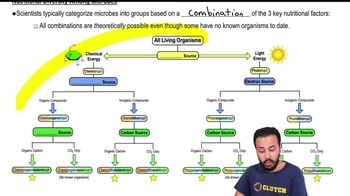
Nutritional Diversity Among Microbes

Microbial Physiology and Metabolism

Studying how microbes grow, obtain energy, and interact with their environment reveals mechanisms of survival and adaptation, essential for applications in medicine, industry, and ecology.
Recommended video:
Guided course
02:17
Introduction to Metabolism

Microbe-Host Interactions

Examining how microbes interact with hosts, including pathogenicity and symbiosis, is crucial for understanding disease processes, immune responses, and developing treatments or preventive measures.
Recommended video:
Guided course
01:50
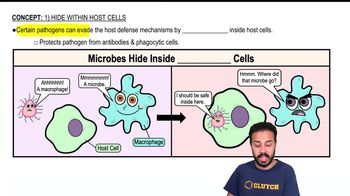
Hide Within Host Cells