Back

Normal Microbiota of the Urogenital System definitions

Control buttons has been changed to "navigation" mode.
1/15
  • Microbial Antagonism

    Protection against pathogens by resident microbes occupying space and producing inhibitory substances in the urogenital tract.
  • Urinary Microbiome

    Community of microorganisms residing in the urinary tract, influenced by urine's antimicrobial properties and flushing action.
  • Vaginal Microbiome

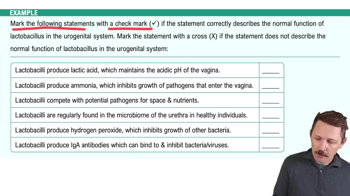
    Diverse microbial population in the vagina, dominated by Lactobacillus, crucial for maintaining acidic pH and preventing infections.
  • Lactobacillus

    Genus of bacteria prevalent in the vagina, responsible for acid production and defense against invading pathogens.
  • Streptococcus

    Genus of bacteria commonly found in the urinary tract, part of the normal microbial community.
  • Candida

    Yeast species present in some healthy vaginal microbiomes, but capable of causing infections if overgrown.
  • Acidic pH

    Low pH environment (3.8–4.5) in the vagina, maintained by lactic acid, which inhibits pathogen growth.
  • Lactic Acid

    Metabolic product of glycogen fermentation by Lactobacillus, essential for sustaining vaginal acidity.
  • Glycogen

    Polysaccharide produced by vaginal walls, serving as a substrate for beneficial bacteria to generate lactic acid.
  • Hydrogen Peroxide

    Antimicrobial compound produced by vaginal bacteria, contributing to the inhibition of harmful microbes.
  • Antimicrobial Peptides

    Small proteins secreted by resident bacteria that suppress the growth of potential pathogens in the vagina.
  • Flushing Action

    Physical removal of microbes from the urinary tract by the forceful flow of urine.
  • Ammonia

    Chemical present in urine that contributes to its antimicrobial properties.
  • Sphincters

    Muscular structures in the urinary tract that help regulate flow and prevent microbial ascent.
  • Valves

    Anatomical features between the bladder and ureters that restrict upward movement of microbes.