Ch. 15 - Microbial Mechanisms of Pathogenicity
Tortora - Microbiology: An Introduction 14th Edition
Tortora14th EditionMicrobiology: An IntroductionISBN: 9780138200398Not the one you use?Change textbook
Chapter 15, Problem 6

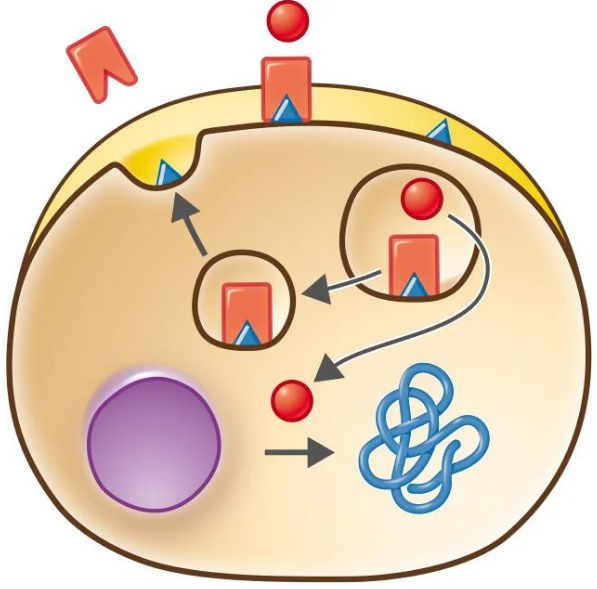
Label this diagram to show how the Shiga toxin enters and inhibits protein synthesis in a human cell.
Diagram showing Shiga toxin entering a human cell and inhibiting protein synthesis by disrupting ribosome function.

Verified step by step guidance
1
Identify the receptor on the human cell surface that the Shiga toxin binds to; this is typically a glycolipid such as Gb3 (globotriaosylceramide).
Label the binding of the Shiga toxin's B subunit to the Gb3 receptor, which facilitates the toxin's entry into the cell via endocytosis.
Trace the intracellular trafficking of the toxin from the endosome to the Golgi apparatus and then to the endoplasmic reticulum (ER), highlighting the retrograde transport pathway.
Indicate the translocation of the A subunit of the Shiga toxin from the ER into the cytosol, where it exerts its toxic effect.
Show how the A subunit enzymatically modifies the 28S rRNA of the 60S ribosomal subunit by removing an adenine residue, thereby inhibiting protein synthesis and leading to cell damage.

Verified video answer for a similar problem:

This video solution was recommended by our tutors as helpful for the problem above.
Video duration:
2m
Was this helpful?

Key Concepts

Here are the essential concepts you must grasp in order to answer the question correctly.

Shiga Toxin Structure and Function

Shiga toxin is a bacterial exotoxin composed of an A subunit and multiple B subunits. The B subunits bind specifically to receptors on the host cell surface, facilitating toxin entry. The A subunit enzymatically inhibits protein synthesis by targeting ribosomes, leading to cell damage.
Recommended video:
Guided course
03:40
Introduction to Pathogenic Toxins

Mechanism of Cellular Entry

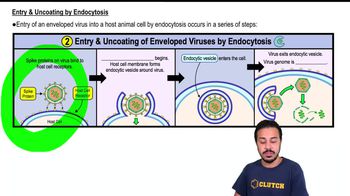
Shiga toxin enters human cells via receptor-mediated endocytosis, where the B subunits bind to glycolipid receptors like Gb3 on the cell membrane. After internalization, the toxin is transported retrogradely through the Golgi apparatus to the endoplasmic reticulum, enabling the A subunit to reach the cytosol.
Recommended video:
Guided course
02:29
Entry & Uncoating by Endocytosis

Inhibition of Protein Synthesis

Once in the cytosol, the A subunit of Shiga toxin enzymatically removes an adenine base from the 28S rRNA of the 60S ribosomal subunit. This depurination halts elongation during translation, effectively inhibiting protein synthesis and causing cell death.
Recommended video:
Guided course
05:03
Enzyme Inhibition
Related Practice
Textbook Question

Compare and contrast the following aspects of endotoxins and exotoxins: bacterial source, chemistry, toxigenicity, and pharmacology. Give an example of each toxin.

4
views

Textbook Question

A drug that binds to mannose on human cells would prevent

a. the entrance of Vibrio enterotoxin.

b. the attachment of pathogenic E. coli.

c. the action of botulinum toxin.

d. streptococcal pneumonia.

e. the action of diphtheria toxin.

7
views
Textbook Question

Describe the factors contributing to the pathogenicity of fungi, protozoa, and helminths.

7
views
Textbook Question

The earliest smallpox vaccines were infected tissue rubbed into the skin of a healthy

person. The recipient of such a vaccine usually developed a mild case of smallpox, recovered, and was immune thereafter. What is the most likely reason this vaccine did not kill more people?

a. Skin is the wrong portal of entry for smallpox.

b. The vaccine consisted of a mild form of the virus.

c. Smallpox is normally transmitted by skin-to-skin contact.

d. Smallpox is a virus.

e. The virus mutated.

1
views
Textbook Question

All of the following are related to bacterial infection. Which would prevent all of the others?

a. Vaccination against fimbriae

b. Phagocytosis

c. Inhibition of phagocytic digestion

d. Destruction of adhesins

e. Alteration of cytoskeleton

2
views
Textbook Question

The ID₅₀ for Campylobacter sp. is 500 cells; the ID₅₀ for Cryptosporidium sp. is 100 cells. Which of the following statements is false?

a. Both microbes are pathogens.

b. Both microbes produce infections in 50% of the inoculated hosts.

c. Campylobacter is more virulent than Cryptosporidium.

d. Campylobacter and Cryptosporidium are equally virulent; they cause infections in the same number of test animals.

e. Cryptosporidium infections are acquired more easily than Campylobacter infections.