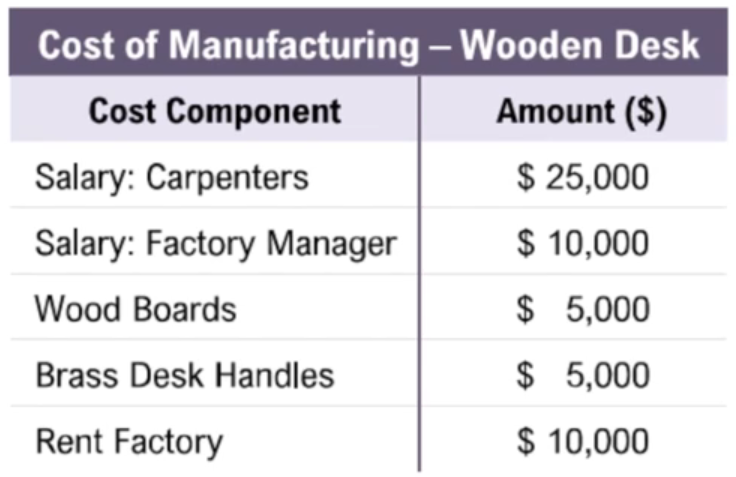
In cost accounting, understanding the distinction between direct and indirect costs is essential for accurately assigning expenses to specific products, such as Brian Clothing's heavyweight knit wool sweater. A direct cost is one that can be directly traced to a single cost object—in this case, the sweater. For example, the yarn used to make each sweater is a direct cost because the amount of yarn can be specifically measured and assigned to each individual sweater produced. Similarly, the labor of a worker who knits the sweaters is also a direct cost, as the time spent by this worker can be directly linked to the production of each sweater.
On the other hand, indirect costs cannot be directly traced to a single product. These costs support multiple products or activities and are often referred to as common costs. For instance, the salary of the factory manager is an indirect cost because, although the manager oversees sweater production, their time and effort cannot be allocated to any one sweater specifically. Likewise, knitting needles, while necessary for production, are not consumed per sweater and support the creation of many sweaters, making their cost indirect. Lastly, equipment such as forklifts used to move inventory in the warehouse is an indirect cost because it facilitates the handling of large quantities of sweaters rather than any individual item.
Recognizing these distinctions helps businesses accurately calculate product costs, which is crucial for pricing, budgeting, and financial analysis. Direct costs like materials and labor vary with production volume, while indirect costs such as management salaries and equipment usage are often fixed or allocated across multiple products. This classification ensures that cost objects, like the heavyweight knit wool sweater, reflect the true expenses incurred in their production.