Assume that you have samples of the following two compounds, both with formula C7H8O. Both compounds dissolve in ether, but only one of the two dissolves in aqueous NaOH. How could you use this information to distinguish between them?
Ch.14 Some Compounds with Oxygen, Sulfur, or a Halogen
McMurry8th EditionFundamentals of General, Organic, and Biological ChemistryISBN: 9780134015187Not the one you use?Change textbook
Chapter 14, Problem 45
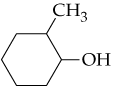
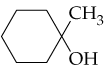
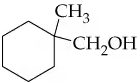
Which of the following alcohols can undergo oxidation? Draw the line structure of the product expected for those that can. Assume an excess of oxidizing agent is present.
a. 
b. 
c. 
Verified step by step guidance1
Identify the type of alcohol (primary, secondary, or tertiary) for each structure provided in the problem. Primary alcohols can be oxidized to aldehydes and then further to carboxylic acids. Secondary alcohols can be oxidized to ketones. Tertiary alcohols generally do not undergo oxidation under normal conditions because they lack a hydrogen atom on the carbon bonded to the hydroxyl group.
For each alcohol structure, determine if it is primary, secondary, or tertiary by examining the carbon atom to which the hydroxyl (-OH) group is attached. Count the number of carbon atoms directly bonded to this carbon.
If the alcohol is primary, draw the line structure of the aldehyde formed after the first oxidation step. Then, draw the line structure of the carboxylic acid formed after further oxidation with an excess of oxidizing agent.
If the alcohol is secondary, draw the line structure of the ketone formed after oxidation. Secondary alcohols do not oxidize further under normal conditions.
If the alcohol is tertiary, note that no oxidation reaction occurs, and no product is formed. Explain that this is because tertiary alcohols lack the necessary hydrogen atom on the carbon bonded to the hydroxyl group for oxidation to take place.

Verified video answer for a similar problem:
This video solution was recommended by our tutors as helpful for the problem above.
Was this helpful?
Key Concepts
Here are the essential concepts you must grasp in order to answer the question correctly.
Oxidation of Alcohols
Oxidation of alcohols involves the conversion of alcohols into carbonyl compounds, such as aldehydes or ketones, and ultimately to carboxylic acids, depending on the type of alcohol and the oxidizing agent used. Primary alcohols can be oxidized to aldehydes and then to carboxylic acids, while secondary alcohols are typically oxidized to ketones. Tertiary alcohols, however, do not undergo oxidation under normal conditions due to the lack of a hydrogen atom on the carbon bearing the hydroxyl group.
Recommended video:
Guided course
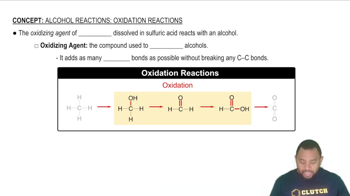
Alcohol Reactions: Oxidation Concept 1
Types of Alcohols
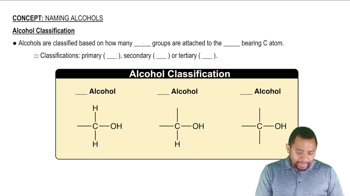
Alcohols are classified into three categories: primary, secondary, and tertiary. Primary alcohols have the hydroxyl group attached to a carbon that is connected to only one other carbon, secondary alcohols are attached to a carbon connected to two other carbons, and tertiary alcohols are attached to a carbon connected to three other carbons. This classification is crucial for predicting the oxidation behavior of the alcohols in the question.
Recommended video:
Guided course
Alcohol Classification Concept 2
Oxidizing Agents
Oxidizing agents are substances that facilitate the oxidation of other compounds by accepting electrons. Common oxidizing agents for alcohols include potassium dichromate (K2Cr2O7), chromium trioxide (CrO3), and sodium hypochlorite (NaOCl). The presence of an excess of oxidizing agent, as stated in the question, indicates that complete oxidation of the alcohols may occur, leading to the formation of the corresponding carbonyl compounds or acids.
Recommended video:
Guided course
Alcohol Reactions: Oxidation Concept 1
Related Practice
Textbook Question
Textbook Question
What is the structural relationship between a thiol and an alcohol?
Textbook Question
Draw the structures of the aldehydes that might be oxidized to yield the following carboxylic acids:
c. CH3CH=CHCOOH
Textbook Question
What type of product is formed on reaction of an alcohol with Na metal?
Textbook Question
The following alkenes can be prepared by dehydration of an appropriate alcohol. Show the structure of the alcohol in each case that would provide the alkene shown as the major product.
e. 1,4-Pentadiene
Textbook Question
What alcohols would you oxidize to obtain the following carbonyl compounds?
a.
b.
c.