Exercises 41–60 contain rational equations with variables in denominators. For each equation, a. write the value or values of the variable that make a denominator zero. These are the restrictions on the variable. b. Keeping the restrictions in mind, solve the equation. 5/2x - 8/9 = 1/18 - 1/3x
Ch. 1 - Equations and Inequalities

Chapter 2, Problem 45a
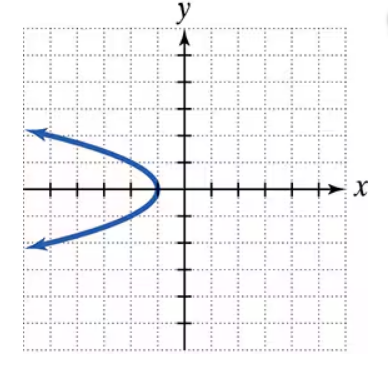
Use the graph to a. determine the x-intercepts, if any; b. determine the y-intercepts, if any. For each graph, tick marks along the axes represent one unit each.

Verified step by step guidance1
Step 1: To determine the x-intercepts, observe where the orange curve crosses the x-axis. The x-intercepts are the points where the y-value is zero.
Step 2: To determine the y-intercepts, observe where the orange curve crosses the y-axis. The y-intercepts are the points where the x-value is zero.
Step 3: From the graph, note that the tick marks along the axes represent one unit each. Carefully count the units to identify the exact coordinates of the intercepts.
Step 4: For the x-intercepts, locate the points where the curve intersects the x-axis. These points will have coordinates of the form (x, 0).
Step 5: For the y-intercepts, locate the point where the curve intersects the y-axis. This point will have coordinates of the form (0, y).

Verified video answer for a similar problem:
This video solution was recommended by our tutors as helpful for the problem above.
Video duration:
1mWas this helpful?
Key Concepts
Here are the essential concepts you must grasp in order to answer the question correctly.
X-Intercepts
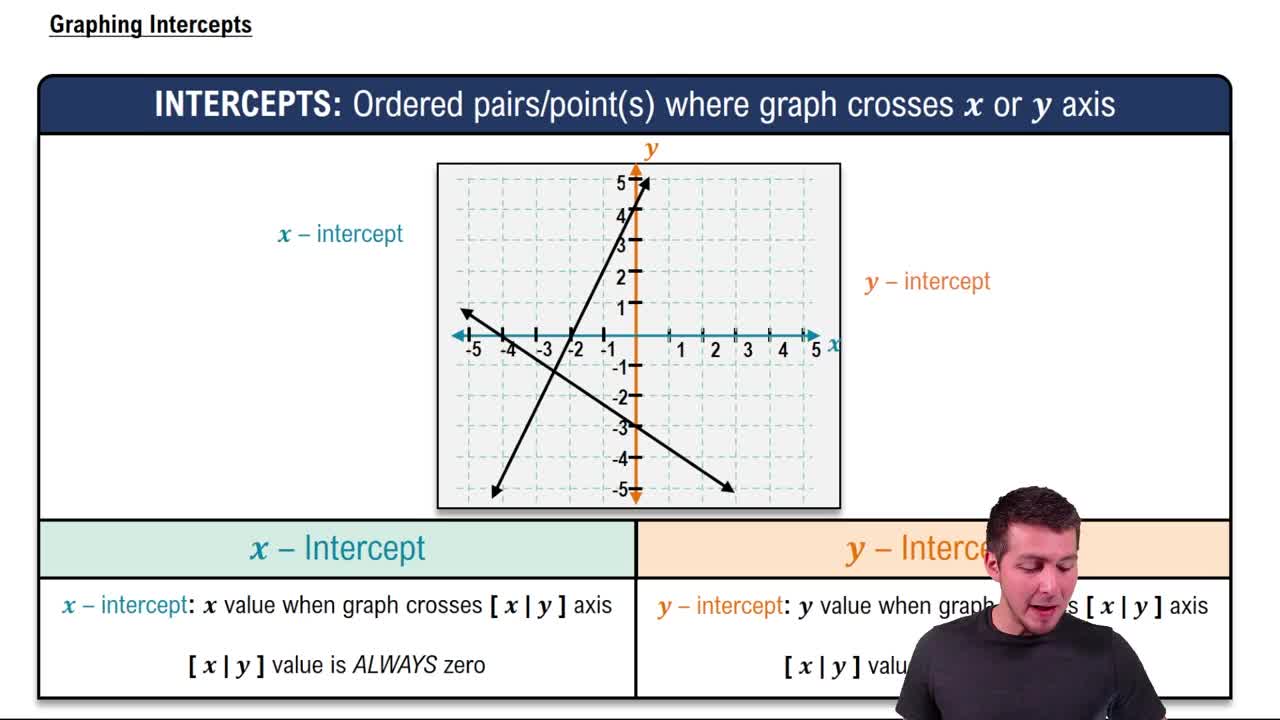
X-intercepts are the points where a graph crosses the x-axis. At these points, the value of y is zero. To find the x-intercepts, one can set the equation of the graph equal to zero and solve for x. In the context of the provided graph, identifying these points helps in understanding the behavior of the function at specific values of x.
Recommended video:
Guided course
Graphing Intercepts
Y-Intercepts
Y-intercepts are the points where a graph crosses the y-axis, where the value of x is zero. To determine the y-intercept, one can substitute x = 0 into the equation of the graph and solve for y. This point is crucial as it indicates the value of the function when no input from the x-axis is present, providing insight into the function's initial value.
Recommended video:
Guided course
Graphing Intercepts
Graph Interpretation
Graph interpretation involves analyzing the visual representation of a function to extract meaningful information about its behavior. This includes identifying intercepts, understanding the shape of the curve, and recognizing trends such as increasing or decreasing intervals. Effective graph interpretation is essential for solving problems related to functions and their properties, as it allows for a deeper understanding of the relationship between x and y.
Recommended video:
Guided course
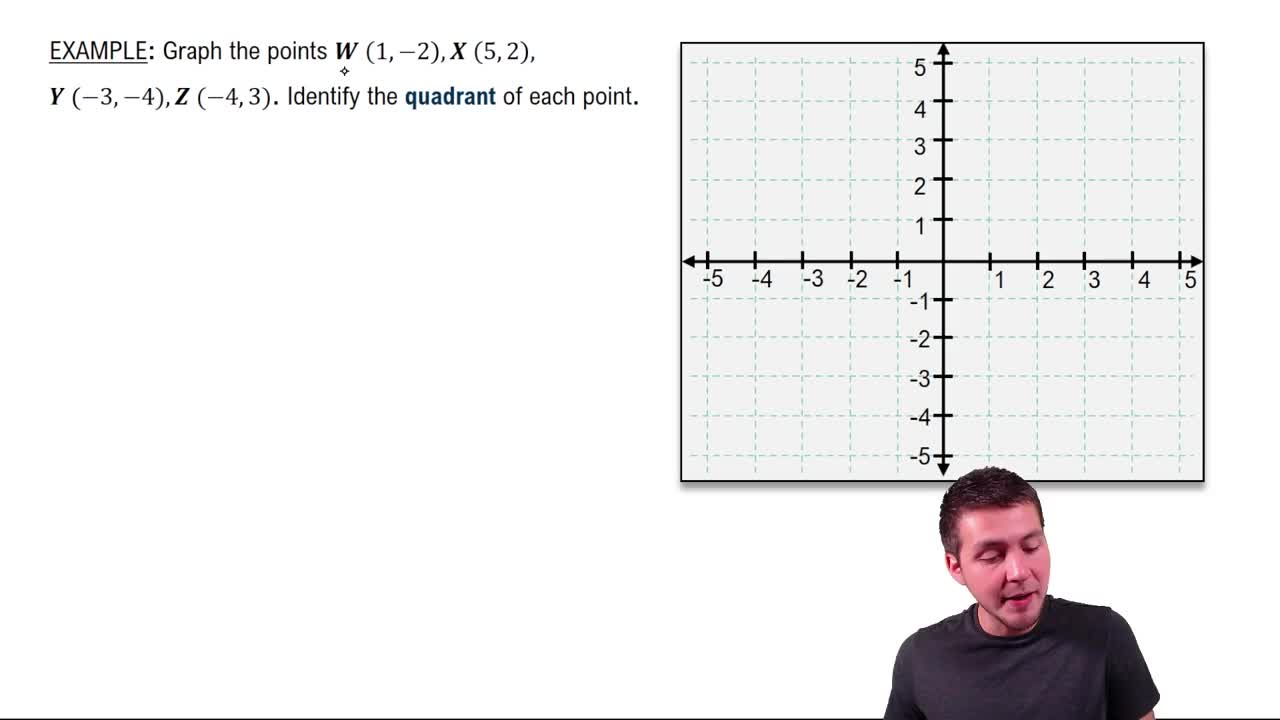
Graphs and Coordinates - Example
Related Practice
Textbook Question
Textbook Question
Solve each equation in Exercises 41–60 by making an appropriate substitution. x - 13√x + 40 = 0
Textbook Question
In all exercises, other than exercises with no solution, use interval notation to express solution sets and graph each solution set on a number line. In Exercises 27–50, solve each linear inequality. (x - 4)/6 ≥ (x - 2)/9 + 5/18
Textbook Question
Use the graph to a. determine the x-intercepts, if any; b. determine the y-intercepts, if any. For each graph, tick marks along the axes represent one unit each.
1
views
Textbook Question
Solve each equation in Exercises 47–64 by completing the square.
Textbook Question
In Exercises 37–52, perform the indicated operations and write the result in standard form. (- 8 + √-32)/24
2
views
