Textbook Question
Catenary arch The portion of the curve y =17/15 - cosh x that lies above the x-axis forms a catenary arch. Find the average height of the arch above the x-axis.

 Briggs 3rd EditionCh. 7 - Logarithmic, Exponential Functions, and Hyperbolic FunctionsProblem 7.3.72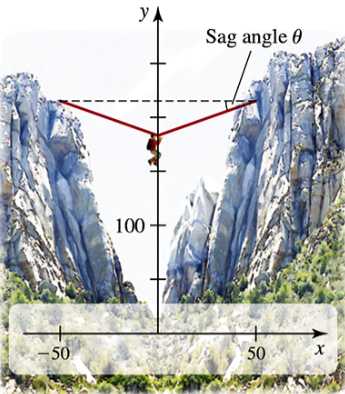
 Verified step by step guidance
 06:35
06:35
 6:04
6:04 06:29
06:29Catenary arch The portion of the curve y =17/15 - cosh x that lies above the x-axis forms a catenary arch. Find the average height of the arch above the x-axis.
15–20. Designing exponential growth functions Complete the following steps for the given situation.
a. Find the rate constant k and use it to devise an exponential growth function that fits the given data.
b. Answer the accompanying question.
Savings account An initial deposit of \$1500 is placed in a savings account with an APY of 3.1%. How long will it take until the balance of the account is \$2500? Assume the interest rate remains constant and no additional deposits or withdrawals are made.
29–62. Integrals Evaluate the following integrals. Include absolute values only when needed.
∫₀^{π} 2^{sin x} · cos x dx
29–62. Integrals Evaluate the following integrals. Include absolute values only when needed.
∫₁ᵉ^² (ln x)^5 / x dx
Derivative of ln|x| Differentiate ln x, for x > 0, and differentiate ln(−x), for x < 0, to conclude that d/dx (ln|x|) = 1/x
15–20. Designing exponential growth functions Complete the following steps for the given situation.
a. Find the rate constant k and use it to devise an exponential growth function that fits the given data.
b. Answer the accompanying question.
Population The population of Clark County, Nevada, was about 2.115 million in 2015. Assuming an annual growth rate of 1.5%/yr, what will the county population be in 2025?