 Back
BackA Tour of the Cell: Structure and Function of Prokaryotic and Eukaryotic Cells
Study Guide - Smart Notes
 Tailored notes based on your materials, expanded with key definitions, examples, and context.
Cell Components
Prokaryotic vs. Eukaryotic Cells
Cells are the fundamental units of life, and they are classified into two main types: prokaryotic and eukaryotic. Understanding their differences is essential for studying cell biology.
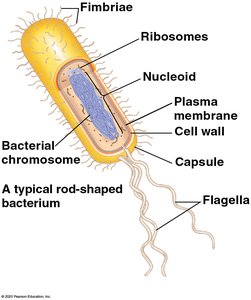
Prokaryotic Cells: Smaller, simpler, lack membrane-bound organelles, and do not have a true nucleus. DNA is located in a region called the nucleoid.
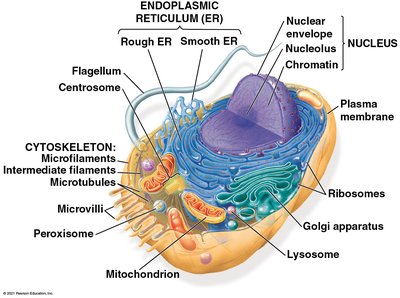
Eukaryotic Cells: Larger, more complex, contain membrane-bound organelles, and have a nucleus that houses their DNA.
Prokaryotic Cell Structure
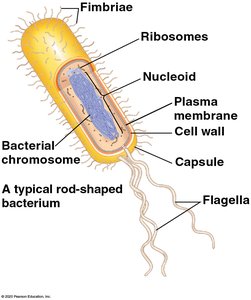
Prokaryotic cells, such as bacteria, have a simple structure but are highly efficient. Their main features include:
Nucleoid: Region where the cell's DNA is located (not enclosed by a membrane).
Ribosomes: Sites of protein synthesis.
Plasma Membrane: Selectively permeable barrier that encloses the cytoplasm.
Cell Wall: Provides structural support and protection.
Capsule: Outer coating that can protect against desiccation and immune attack.
Fimbriae: Hair-like structures for attachment to surfaces.
Flagella: Long appendages for locomotion.
Eukaryotic Cell Structure
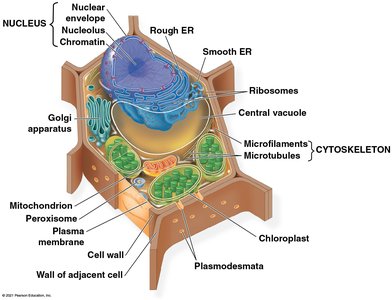
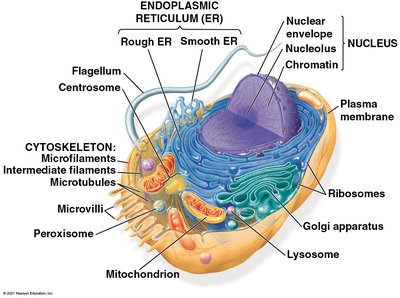
Eukaryotic cells are more complex and compartmentalized, allowing for specialized functions. They include animal, plant, fungal, and protist cells.
Nucleus: Contains the cell's DNA and is surrounded by a double membrane (nuclear envelope).
Nucleolus: Dense region within the nucleus; site of rRNA synthesis and ribosome assembly.
Chromatin: DNA wrapped around proteins, organizing genetic material.
Ribosomes: Free in cytosol or bound to the endoplasmic reticulum (ER); synthesize proteins.
Endoplasmic Reticulum (ER): Network of membranes; rough ER (with ribosomes) synthesizes proteins, smooth ER synthesizes lipids.
Golgi Apparatus: Modifies, sorts, and packages proteins and lipids for secretion or delivery to other organelles.
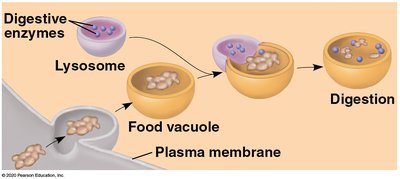
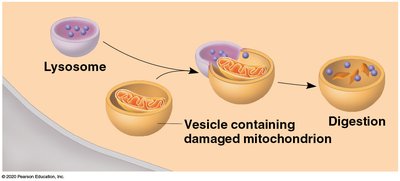
Lysosomes: Contain digestive enzymes to break down macromolecules and damaged organelles.
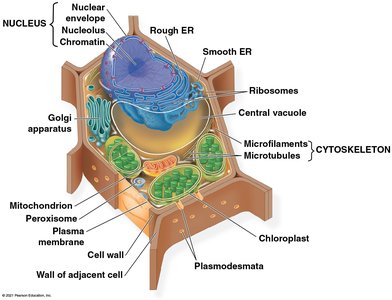
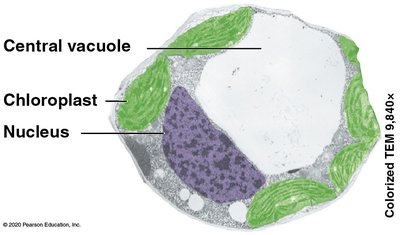
Vacuoles: Large vesicles for storage and transport; central vacuole in plants maintains turgor pressure.
Mitochondria: Sites of cellular respiration; generate ATP from nutrients.
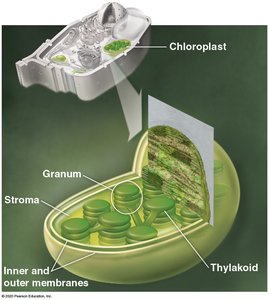
Chloroplasts (plants and algae): Sites of photosynthesis; convert solar energy to chemical energy.
Cytoskeleton: Network of microtubules, microfilaments, and intermediate filaments for structural support and transport.
Plasma Membrane: Controls entry and exit of substances.
Cell Wall (plants, fungi, some protists): Rigid structure outside the plasma membrane for support and protection.
Plasmodesmata (plants): Channels between adjacent plant cells for communication.
The Nucleus and Ribosomes
Nucleus
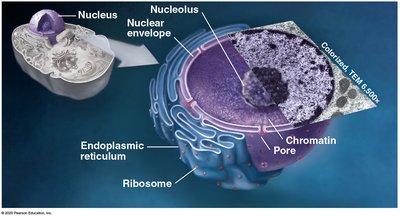
The nucleus is the genetic control center of eukaryotic cells.
Nuclear Envelope: Double membrane with pores for molecular exchange.
Nucleolus: Site of ribosomal RNA (rRNA) synthesis and ribosome assembly.
Chromatin: DNA-protein complex that condenses to form chromosomes during cell division.
Ribosomes
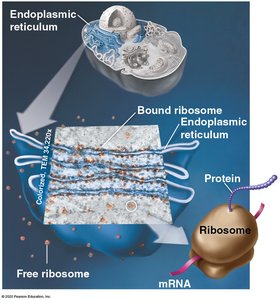
Ribosomes are molecular machines that synthesize proteins using instructions from messenger RNA (mRNA).
Free Ribosomes: Float in the cytosol; make proteins for use within the cell.
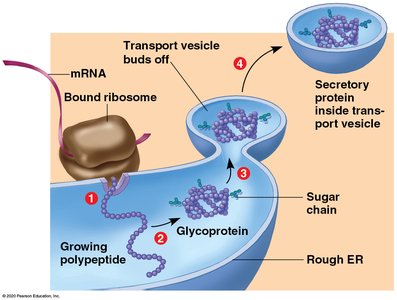
Bound Ribosomes: Attached to the rough ER; make proteins for secretion or for use in membranes.
The Endomembrane System
Components and Functions
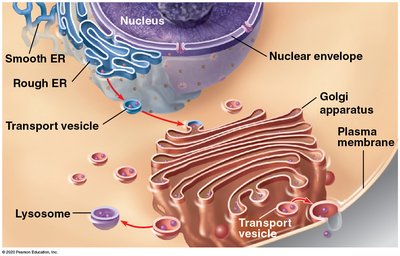
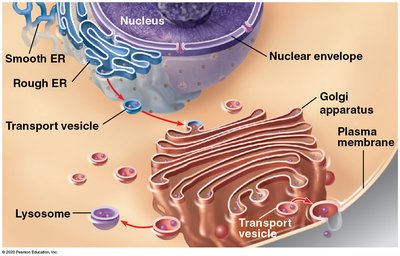
The endomembrane system is a group of interconnected organelles that work together to modify, package, and transport lipids and proteins.
Nuclear Envelope
Endoplasmic Reticulum (ER): Rough ER (protein synthesis), Smooth ER (lipid synthesis, detoxification)
Golgi Apparatus: Modifies and sorts proteins and lipids
Lysosomes: Digestive compartments
Vesicles: Transport materials between organelles
Plasma Membrane: Exports products out of the cell
Endoplasmic Reticulum (ER)
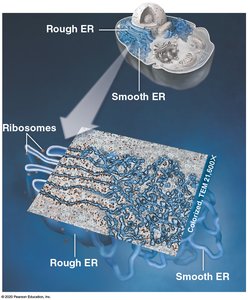
Rough ER: Studded with ribosomes; synthesizes proteins for secretion or membrane insertion.
Smooth ER: Lacks ribosomes; synthesizes lipids, metabolizes carbohydrates, detoxifies drugs.
Protein Production and Trafficking
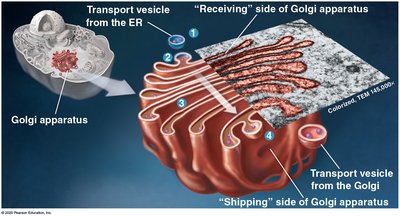
Proteins synthesized in the rough ER are packaged into vesicles and sent to the Golgi apparatus for further modification and sorting.
Golgi Apparatus
The Golgi apparatus consists of flattened membranous sacs (cisternae) and is responsible for modifying, sorting, and shipping proteins and lipids received from the ER.
Lysosomes
Lysosomes are membrane-bound sacs containing hydrolytic enzymes for intracellular digestion of macromolecules, old organelles, and foreign substances.
Phagocytosis: Engulfing of large particles or cells by the cell membrane to form a food vacuole, which fuses with a lysosome for digestion.
Autophagy: Digestion of the cell's own damaged organelles.
Vacuoles
Vacuoles are large vesicles with diverse functions. In plant cells, the central vacuole stores water, ions, and nutrients, and helps maintain cell rigidity. Food vacuoles are involved in phagocytosis.
Mitochondria and Chloroplasts
Mitochondria
Mitochondria are the powerhouses of the cell, generating ATP through cellular respiration. They have a double membrane, with the inner membrane folded into cristae to increase surface area for energy production.
Matrix: Contains enzymes, mitochondrial DNA, and ribosomes.
Intermembrane Space: Space between the inner and outer membranes.
Chloroplasts
Chloroplasts are found in plants and algae and are the sites of photosynthesis. They have a double membrane and contain thylakoids (stacked into grana) and stroma (fluid containing DNA, ribosomes, and enzymes).
Endosymbiotic Theory
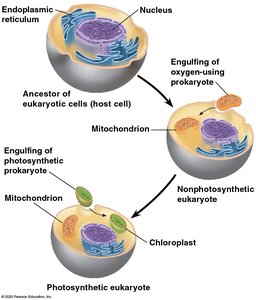
The endosymbiotic theory proposes that mitochondria and chloroplasts originated as free-living prokaryotes that were engulfed by ancestral eukaryotic cells. Evidence includes their own DNA, double membranes, and ribosomes similar to those of bacteria.
Cytoskeleton and Cell Movement
Cytoskeleton
The cytoskeleton is a dynamic network of protein filaments that provides structural support, maintains cell shape, and facilitates movement of organelles and the cell itself.
Microtubules: Hollow tubes made of tubulin; involved in cell shape, organelle movement, and chromosome separation.
Intermediate Filaments: Rope-like fibers for mechanical strength.
Microfilaments: Thin filaments of actin; involved in cell movement and muscle contraction.
Cilia and Flagella
Cilia and flagella are motile appendages made of microtubules. Cilia are short and numerous, moving substances past the cell, while flagella are longer and usually singular, propelling the cell.
Extracellular Structures and Cell Junctions
Extracellular Matrix (ECM)
The ECM is a network of glycoproteins, polysaccharides, and proteoglycans outside animal cells. It provides structural support, segregates tissues, and facilitates cell signaling.
Collagen: Main structural protein in connective tissue.
Integrins: Transmembrane proteins that connect the ECM to the cytoskeleton.
Cell Junctions
Cell junctions are specialized structures that connect adjacent cells and facilitate communication.
Tight Junctions: Seal neighboring cells to prevent leakage of extracellular fluid.
Desmosomes: Anchor cells together using intermediate filaments.
Gap Junctions: Provide cytoplasmic channels for communication and exchange of materials.
Plasmodesmata (plants): Channels through cell walls that connect the cytoplasm of adjacent cells, allowing transport and communication.
Plant Cell Walls
The plant cell wall is a rigid structure outside the plasma membrane, composed mainly of cellulose. It provides protection, maintains cell shape, and prevents excessive water uptake.
Cellulose: A polysaccharide consisting of glucose monomers; main component of plant cell walls.
Summary Table: Comparison of Prokaryotic and Eukaryotic Cells
Feature | Prokaryotic Cells | Eukaryotic Cells |
|---|---|---|
Nucleus | Absent (nucleoid region) | Present (membrane-bound) |
Organelles | No membrane-bound organelles | Membrane-bound organelles present |
Cell Size | Generally smaller (1-10 μm) | Generally larger (10-100 μm) |
Examples | Bacteria, Archaea | Animals, Plants, Fungi, Protists |
