
Textbook Question
The two major components of the dermis are the
(a) Superficial fascia and cutaneous membrane
(b) Epidermis and subcutaneous layer
(c) Papillary layer and reticular layer
(d) Stratum basale and stratum corneum
1
views

 Verified step by step guidance
 06:54
06:54
 06:49
06:49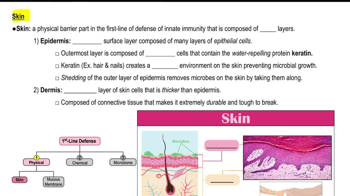 4:08
4:08The two major components of the dermis are the
(a) Superficial fascia and cutaneous membrane
(b) Epidermis and subcutaneous layer
(c) Papillary layer and reticular layer
(d) Stratum basale and stratum corneum
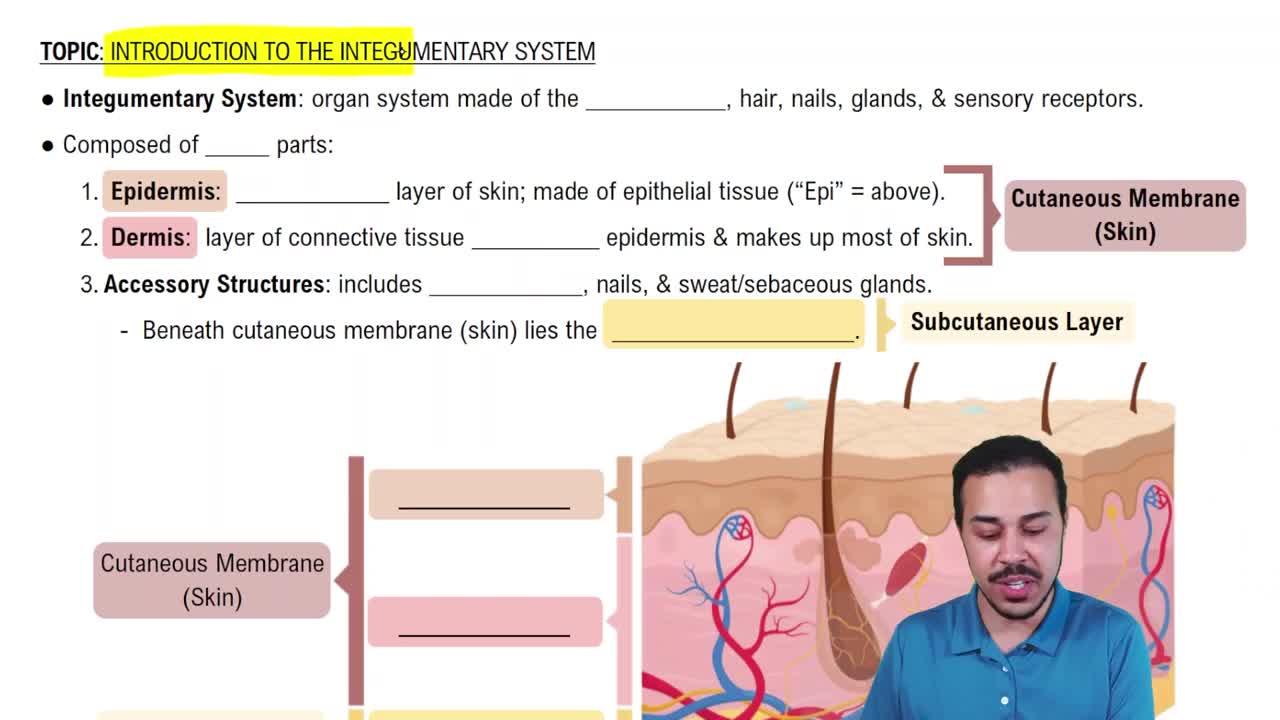
Identify the different portions (a–d) of the cutaneous membrane and the underlying layer of loose connective tissue (e) in the diagram to the right.
c. ____
The cutaneous plexus and subpapillary plexus consist of
a. Blood vessels providing the dermal blood supply.
b. A network of nerves providing dermal sensations.
c. Specialized cells for cutaneous sensations.
d. Gland cells that release cutaneous secretions.
Identify the different portions (a–d) of the cutaneous membrane and the underlying layer of loose connective tissue (e) in the diagram to the right.
d. ____
Beginning at the basement membrane and traveling toward the free surface, the epidermis includes the following strata:
(a) Corneum, lucidum, granulosum, spinosum, basale
(b) Granulosum, lucidum, spinosum, basale, corneum
(c) Basale, spinosum, granulosum, lucidum, corneum
(d) Lucidum, granulosum, spinosum, basale, corneum
Identify the different portions (a–d) of the cutaneous membrane and the underlying layer of loose connective tissue (e) in the diagram to the right.
e. ____