Ch. 26 The Urinary System
Martini - Fundamentals of Anatomy and Physiology 12th Edition
Martini, Nath, Bartholomew12th EditionFundamentals of Anatomy and PhysiologyISBN: 9780137854011Not the one you use?Change textbook
Chapter 25, Problem 14

What are the primary effects of angiotensin II on kidney function and regulation?

Verified step by step guidance
1
Understand that angiotensin II is a peptide hormone that plays a crucial role in the renin-angiotensin-aldosterone system (RAAS), which regulates blood pressure and fluid balance.
Recognize that one primary effect of angiotensin II on the kidneys is vasoconstriction of the efferent arterioles, which increases glomerular capillary hydrostatic pressure and helps maintain glomerular filtration rate (GFR) even when blood pressure is low.
Note that angiotensin II stimulates the reabsorption of sodium and water in the proximal convoluted tubule by increasing the activity of sodium-hydrogen exchangers, which contributes to increased blood volume and pressure.
Understand that angiotensin II also promotes the release of aldosterone from the adrenal cortex, which acts on the distal tubules and collecting ducts to increase sodium and water reabsorption, further aiding in blood volume expansion.
Finally, angiotensin II reduces renal blood flow by constricting renal blood vessels, which helps conserve fluid but can also affect kidney function if excessively activated.

Verified video answer for a similar problem:

This video solution was recommended by our tutors as helpful for the problem above.
Was this helpful?

Key Concepts

Here are the essential concepts you must grasp in order to answer the question correctly.

Angiotensin II

Angiotensin II is a potent peptide hormone that plays a central role in the renin-angiotensin system. It regulates blood pressure and fluid balance by causing vasoconstriction and stimulating aldosterone release, which affects kidney function and systemic circulation.
Recommended video:
11:30
Renin-Angiotensin-Aldosterone-System

Kidney Function in Fluid and Electrolyte Balance

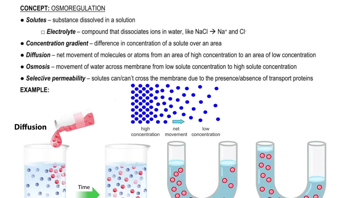
The kidneys regulate fluid volume and electrolyte levels by filtering blood, reabsorbing needed substances, and excreting waste. They adjust sodium and water reabsorption in response to hormonal signals, which is crucial for maintaining blood pressure and homeostasis.
Recommended video:
07:59
Osmosis and Osmolarity

Effects of Angiotensin II on Renal Physiology

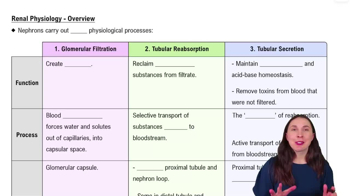
Angiotensin II constricts the efferent arterioles in the kidney, increasing glomerular filtration pressure. It also promotes sodium and water reabsorption in the proximal tubules and stimulates aldosterone secretion, enhancing sodium retention and blood volume expansion.
Recommended video:
4:58
Overview of Renal Physiology