Ch. 26 The Urinary System
Martini - Fundamentals of Anatomy and Physiology 12th Edition
Martini, Nath, Bartholomew12th EditionFundamentals of Anatomy and PhysiologyISBN: 9780137854011Not the one you use?Change textbook
Chapter 25, Problem 27

In response to excess water in the body, 
(a) Antidiuretic hormone is secreted by the anterior lobe of the pituitary gland.
(b) The active transport mechanisms in the ascending thick limb of the nephron loop cease functioning.
(c) The permeability of the distal convoluted tubules and collecting ducts to water is decreased.
(d) The permeability of the ascending limb of the nephron loop is increased.
(e) The glomerular filtration rate is reduced.

Verified step by step guidance
1
Step 1: Understand the physiological role of antidiuretic hormone (ADH) in water balance. ADH is secreted by the posterior lobe of the pituitary gland (not the anterior lobe) and functions to increase water reabsorption in the kidneys, reducing water loss in urine.
Step 2: Analyze how the nephron responds to excess water. When there is excess water in the body, the secretion of ADH decreases, leading to decreased water reabsorption in the distal convoluted tubules and collecting ducts, making them less permeable to water.
Step 3: Consider the function of the ascending thick limb of the nephron loop. This segment actively transports ions but is impermeable to water. Its active transport mechanisms generally continue functioning regardless of water excess to maintain the medullary osmotic gradient.
Step 4: Evaluate the permeability changes in the nephron segments. In response to excess water, the permeability of the distal convoluted tubules and collecting ducts to water decreases, allowing more water to be excreted in urine, while the ascending limb remains impermeable to water and does not increase its permeability.
Step 5: Reflect on the glomerular filtration rate (GFR). GFR is usually maintained or may slightly increase to help excrete excess water, rather than being reduced.

Verified video answer for a similar problem:

This video solution was recommended by our tutors as helpful for the problem above.
Was this helpful?

Key Concepts

Here are the essential concepts you must grasp in order to answer the question correctly.

Antidiuretic Hormone (ADH) Function and Secretion

ADH, also known as vasopressin, is secreted by the posterior pituitary gland, not the anterior lobe. It regulates water balance by increasing water reabsorption in the kidneys, particularly in the distal convoluted tubules and collecting ducts, thus concentrating urine and reducing water loss.
Recommended video:
Guided course
13:06
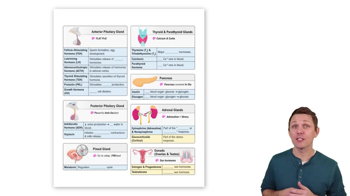
Review of Major Hormones

Nephron Loop (Loop of Henle) Transport Mechanisms

The thick ascending limb of the nephron loop actively transports ions like Na+, K+, and Cl- out of the filtrate, creating a concentration gradient essential for water reabsorption. This segment is impermeable to water, so its active transport helps concentrate the medullary interstitium, facilitating water reabsorption downstream.
Recommended video:
Guided course
04:09
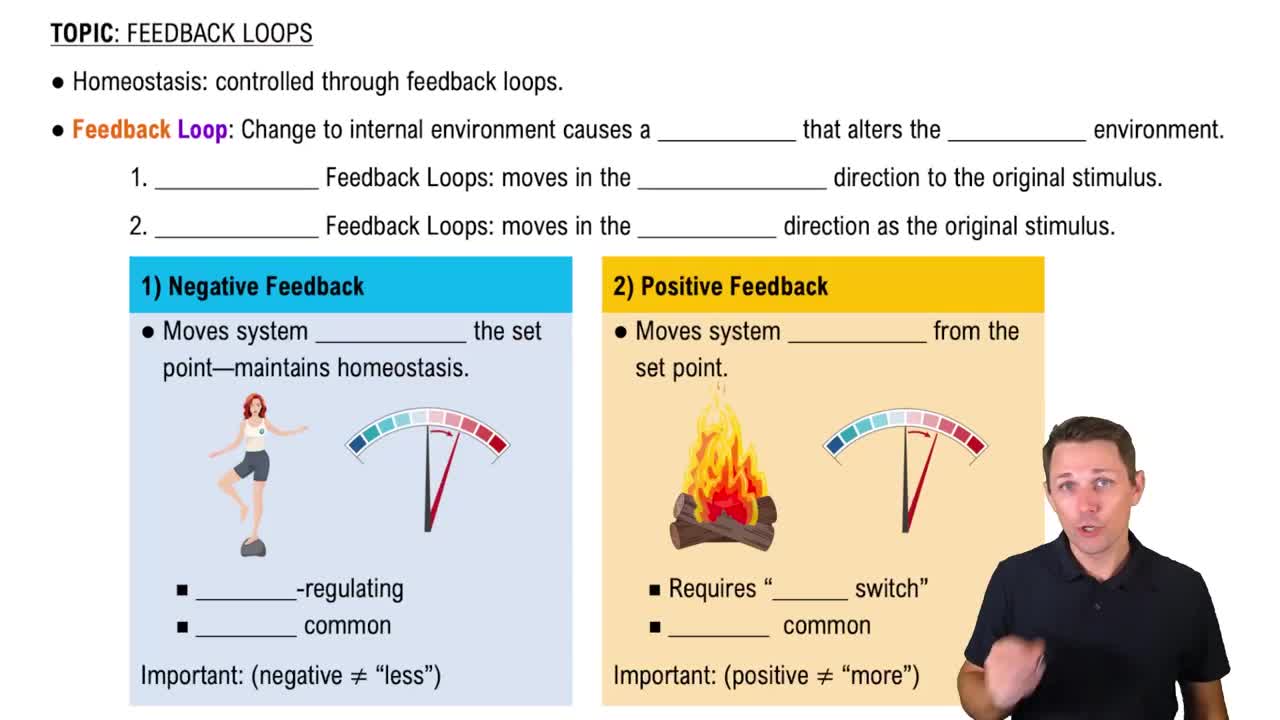
Introduction to Feedback Loops

Regulation of Tubular Permeability in Response to Water Balance

The permeability of the distal convoluted tubules and collecting ducts to water is controlled by ADH levels. When excess water is present, ADH secretion decreases, reducing water permeability and promoting excretion of dilute urine. Conversely, increased ADH enhances permeability to conserve water.
Recommended video:
07:59
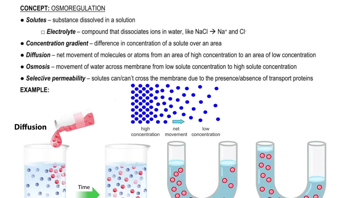
Osmosis and Osmolarity