
Textbook Question
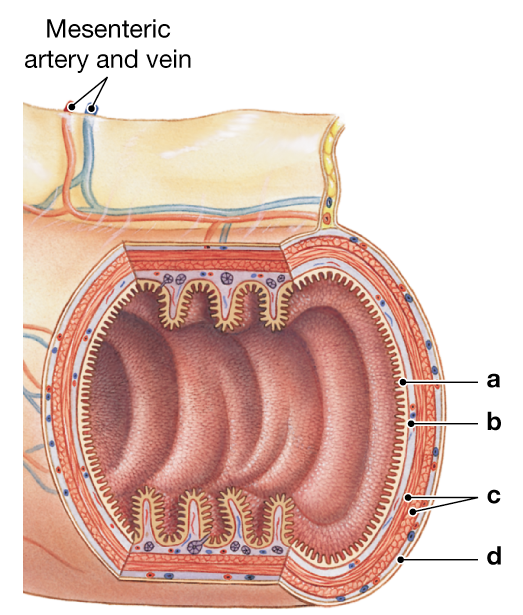
Double sheets of peritoneum that provide support and stability for the organs of the peritoneal cavity are the
(a) Mediastina
(b) Mucous membranes
(c) Omenta
(d) Mesenteries
5
views

 Verified step by step guidance
 02:31
02:31 02:31
02:31 6:17
6:17Double sheets of peritoneum that provide support and stability for the organs of the peritoneal cavity are the
(a) Mediastina
(b) Mucous membranes
(c) Omenta
(d) Mesenteries
Most of the digestive tract is lined by_____epithelium.
(a) pseudostratified ciliated columnar
(b) cuboidal
(c) stratified squamous
(d) simple
(e) simple columnar
Bile release from the gallbladder into the duodenum occurs only under the stimulation of
(a) Cholecystokinin
(b) Secretin
(c) Gastrin
(d) Enteropeptidase
Regional movements that occur in the small intestine and function to churn and fragment the digestive material are called:
(a) Segmentation
(b) Pendular movements
(c) Peristalsis
(d) Mass movements
(e) Mastication
A branch of the hepatic portal vein, hepatic artery proper, and branch of the bile duct form\(a) A liver lobule
(b) The sinusoids
(c) A portal triad
(d) The hepatic duct
(e) The pancreatic duct
Label the digestive system structures in the following figure.
a. ___
b. ___
c. ___
d. ___
e. ___
f. ___
g. ___
h. ___
i. ___
j. ___
k.___