Ch. 21 Blood Vessels and Circulation
Martini - Fundamentals of Anatomy and Physiology 12th Edition
Martini, Nath, Bartholomew12th EditionFundamentals of Anatomy and PhysiologyISBN: 9780137854011Not the one you use?Change textbook
Chapter 21, Problem 24

How is blood pressure maintained in veins to counter the force of gravity?

Verified step by step guidance
1
Understand that blood pressure in veins is generally lower than in arteries, and veins must overcome gravity, especially in the lower parts of the body, to return blood to the heart.
Recognize the role of one-way valves in veins, which prevent the backflow of blood and ensure it moves in the correct direction toward the heart.
Consider the skeletal muscle pump mechanism: when muscles surrounding veins contract, they squeeze the veins, pushing blood upward against gravity.
Acknowledge the role of the respiratory pump, where pressure changes in the thoracic cavity during breathing help draw blood into the veins of the chest and toward the heart.
Note that the relatively low pressure in veins is maintained by the combination of these mechanical aids (valves, muscle contractions, and pressure changes) rather than by high intrinsic venous pressure.

Verified video answer for a similar problem:

This video solution was recommended by our tutors as helpful for the problem above.
Was this helpful?

Key Concepts

Here are the essential concepts you must grasp in order to answer the question correctly.

Venous Valves

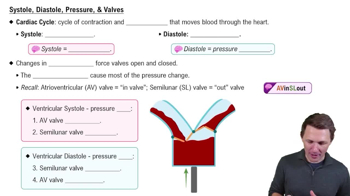
Venous valves are one-way flaps inside veins that prevent the backflow of blood, ensuring it moves toward the heart. These valves are crucial in the limbs, where gravity can cause blood to pool, helping maintain unidirectional flow despite low pressure.
Recommended video:
Guided course
7:13
Systole, Diastole, Pressure, & Valves

Skeletal Muscle Pump

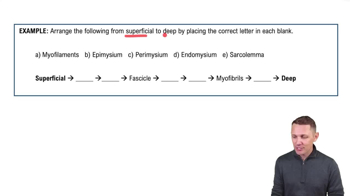
The skeletal muscle pump refers to the mechanism where contracting muscles compress nearby veins, pushing blood upward. This action assists venous return by increasing pressure in veins and overcoming gravitational forces, especially during movement.
Recommended video:
Guided course
2:46
Structure of a Skeletal Muscle Example 2

Respiratory Pump

The respiratory pump involves pressure changes in the thoracic cavity during breathing. Inhalation lowers thoracic pressure and increases abdominal pressure, creating a pressure gradient that helps draw venous blood toward the heart, aiding circulation against gravity.
Recommended video:
03:40
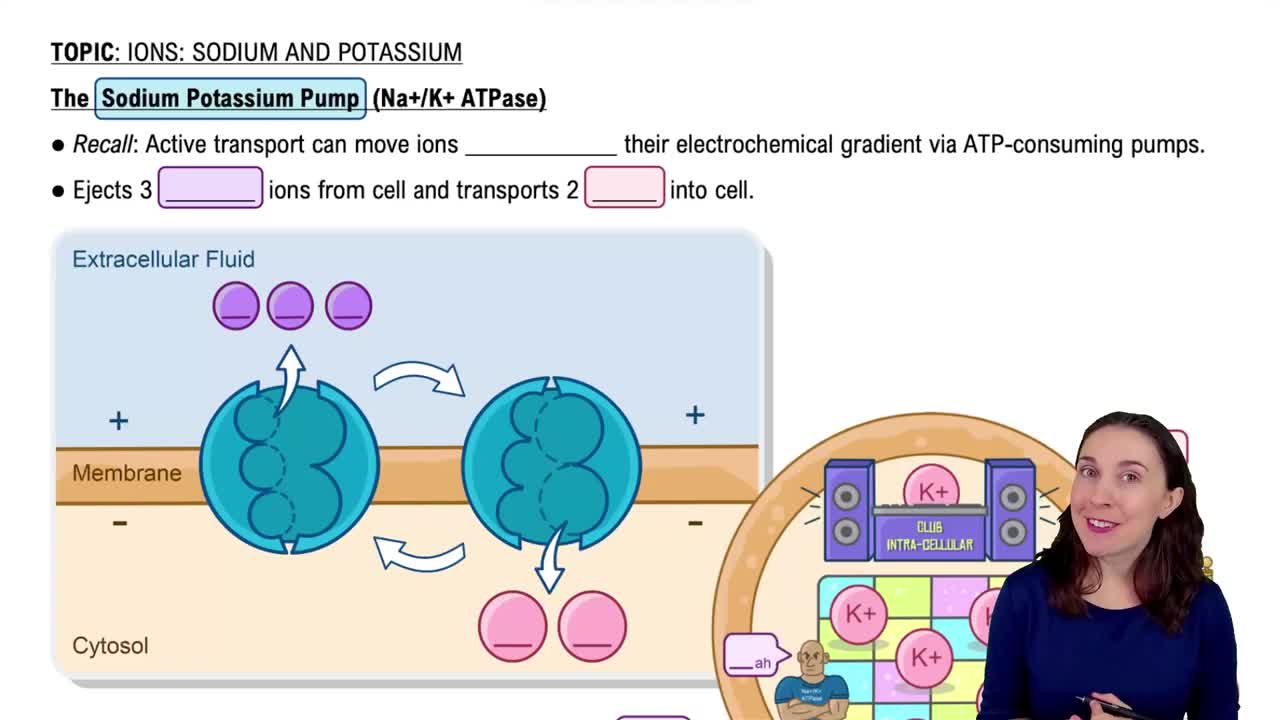
The Sodium Potassium Pump