Ch. 18 The Endocrine System
Martini - Fundamentals of Anatomy and Physiology 12th Edition
Martini, Nath, Bartholomew12th EditionFundamentals of Anatomy and PhysiologyISBN: 9780137854011Not the one you use?Change textbook
Chapter 18, Problem 8

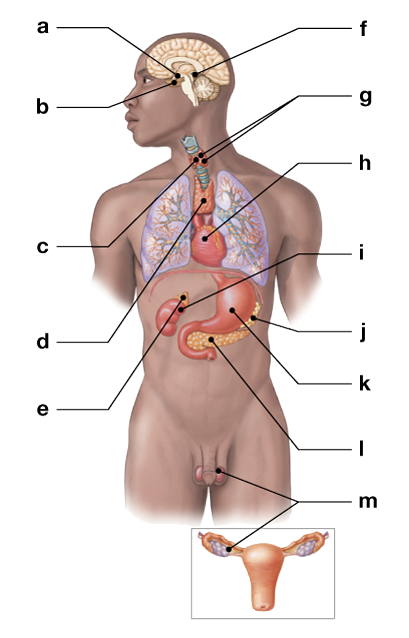
Identify the endocrine glands and tissues in the following diagram.
Diagram of a human body highlighting major endocrine glands and tissues with labeled pointers.
a. ___
b. ___
c. ___
d. ___
e. ___
f. ___
g. ___
h. ___
i. ___
j. ___
k. ___
l. ___
m. ___

Verified step by step guidance
1
Step 1: Understand that endocrine glands are specialized organs that secrete hormones directly into the bloodstream to regulate various body functions. Common endocrine glands include the pituitary gland, thyroid gland, adrenal glands, pancreas (as an endocrine organ), and gonads (ovaries and testes).
Step 2: Identify the major endocrine glands typically shown in anatomical diagrams: the hypothalamus and pituitary gland in the brain, the thyroid gland in the neck, the parathyroid glands on the thyroid, the adrenal glands above the kidneys, the pancreas in the abdominal cavity, and the gonads in the pelvic region.
Step 3: Recognize that some tissues, such as the heart (which produces atrial natriuretic peptide), kidneys (which produce erythropoietin), and adipose tissue (which produces leptin), also have endocrine functions even though they are not traditional glands.
Step 4: Use anatomical landmarks in the diagram to locate each gland or tissue. For example, locate the brain region for the hypothalamus and pituitary, the neck area for the thyroid and parathyroids, the upper abdomen for the pancreas and adrenal glands, and the pelvic area for the gonads.
Step 5: Label each identified gland or tissue on the diagram accordingly, ensuring you distinguish between primary endocrine glands and other tissues with endocrine functions.

Verified video answer for a similar problem:

This video solution was recommended by our tutors as helpful for the problem above.
Was this helpful?

Key Concepts

Here are the essential concepts you must grasp in order to answer the question correctly.

Endocrine Glands

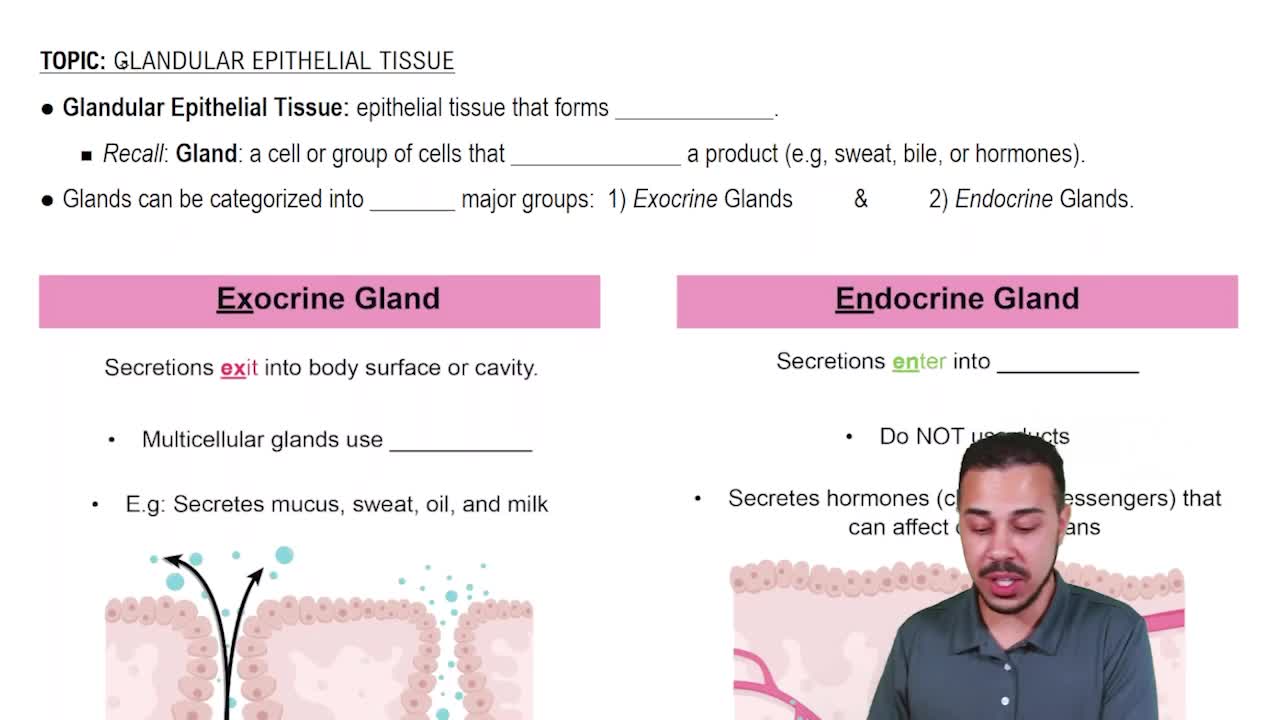
Endocrine glands are specialized organs that secrete hormones directly into the bloodstream to regulate various body functions. Examples include the pituitary, thyroid, adrenal glands, and pancreas. Understanding their location and function is essential for identifying them in diagrams.
Recommended video:
Guided course
06:14
Exocrine vs. Endocrine Glands

Hormone-Secreting Tissues

Some tissues not traditionally classified as glands also produce hormones, such as adipose tissue and the heart. Recognizing these hormone-secreting tissues helps in distinguishing all endocrine components in a diagram beyond the classic glands.
Recommended video:
01:33
Protein Secretion

Anatomical Identification in Diagrams

Interpreting anatomical diagrams requires knowledge of the shape, position, and relative size of endocrine glands and tissues. Familiarity with common visual markers and spatial relationships aids in accurately identifying these structures.
Recommended video:
Guided course
04:01
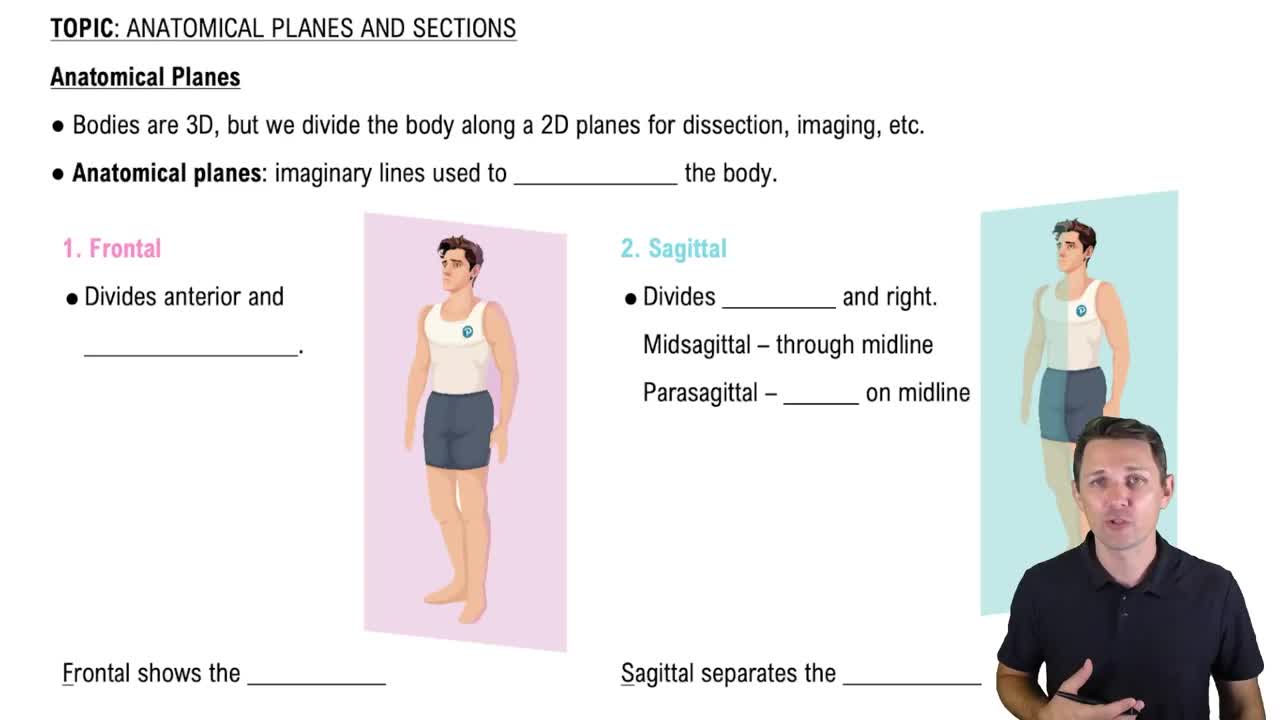
Anatomical Planes