Ch. 18 The Endocrine System
Martini - Fundamentals of Anatomy and Physiology 12th Edition
Martini, Nath, Bartholomew12th EditionFundamentals of Anatomy and PhysiologyISBN: 9780137854011Not the one you use?Change textbook
Chapter 18, Problem 6

All of the following are true of the endocrine system, except that it:
(a) Releases chemicals into the bloodstream for distribution throughout the body
(b) Releases hormones that simultaneously alter the metabolic activities of many different tissues and organs
(c) Produces effects that can last for hours, days, and even longer
(d) Produces rapid, local, brief-duration responses to specific stimuli
(e) Functions to control ongoing metabolic processes.

Verified step by step guidance
1
Step 1: Understand the primary functions of the endocrine system. The endocrine system releases hormones into the bloodstream, which travel to target organs and tissues to regulate various bodily functions over a longer duration.
Step 2: Analyze option (a): The endocrine system does release chemicals (hormones) into the bloodstream for distribution throughout the body, so this statement is true.
Step 3: Analyze option (b): Hormones can simultaneously affect multiple tissues and organs by altering their metabolic activities, so this statement is also true.
Step 4: Analyze option (c): Hormonal effects often last for hours, days, or even longer, which is characteristic of the endocrine system, so this statement is true.
Step 5: Analyze option (d): The endocrine system generally produces slower, widespread, and longer-lasting effects rather than rapid, local, brief responses. Rapid and brief responses are typically characteristics of the nervous system, so this statement is false and is the correct answer to the question.

Verified video answer for a similar problem:

This video solution was recommended by our tutors as helpful for the problem above.
Was this helpful?

Key Concepts

Here are the essential concepts you must grasp in order to answer the question correctly.

Endocrine System Function

The endocrine system regulates bodily functions by releasing hormones into the bloodstream, which travel to target organs and tissues. These hormones influence metabolism, growth, and homeostasis over varying durations, often producing widespread effects throughout the body.
Recommended video:
Guided course
7:06
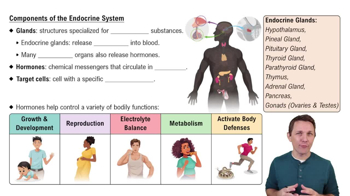
Components of the Endocrine System

Hormonal vs. Nervous System Responses

Hormonal responses are typically slower and longer-lasting compared to nervous system signals, which are rapid, localized, and brief. The endocrine system’s effects can last from minutes to days, whereas the nervous system handles immediate, short-term reactions.
Recommended video:
1:50
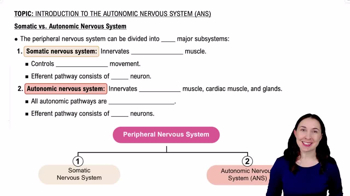
Somatic vs. Autonomic Nervous System

Metabolic Regulation by Hormones

Hormones control ongoing metabolic processes by altering the activity of enzymes and cells in various tissues. This regulation ensures the body maintains energy balance, growth, and adaptation to environmental changes over time.
Recommended video:
02:17
Introduction to Metabolism