Ch. 18 The Endocrine System
Martini - Fundamentals of Anatomy and Physiology 12th Edition
Martini, Nath, Bartholomew12th EditionFundamentals of Anatomy and PhysiologyISBN: 9780137854011Not the one you use?Change textbook
Chapter 18, Problem 23

Decreased blood calcium level would result in increased:
(a) Secretion of calcitonin
(b) Secretion of PTH
(c) Elimination of calcium by the kidneys
(d) Osteoclast activity
(e) Excitability of neural membranes

Verified step by step guidance
1
Step 1: Understand the role of blood calcium levels in the body. Calcium is crucial for many physiological processes, including bone metabolism, nerve function, and muscle contraction. The body tightly regulates blood calcium levels through hormones and cellular activity.
Step 2: Recall the hormones involved in calcium regulation: Parathyroid hormone (PTH) and calcitonin. PTH is secreted when blood calcium levels are low to increase calcium levels, while calcitonin is secreted when calcium levels are high to lower them.
Step 3: Analyze the effects of decreased blood calcium. When calcium levels drop, the body responds by increasing PTH secretion to raise calcium levels. This involves increasing osteoclast activity to release calcium from bones, reducing calcium elimination by the kidneys, and increasing calcium absorption in the intestines.
Step 4: Evaluate each option in the context of decreased blood calcium: (a) Calcitonin secretion would decrease, not increase, because it lowers calcium. (b) PTH secretion would increase to raise calcium levels. (c) Calcium elimination by kidneys would decrease to conserve calcium. (d) Osteoclast activity would increase to release calcium from bones. (e) Excitability of neural membranes increases with low calcium, as calcium stabilizes neural membranes.
Step 5: Summarize the physiological responses to decreased blood calcium: increased PTH secretion, increased osteoclast activity, decreased calcium elimination by kidneys, and increased neural excitability. Calcitonin secretion decreases in this scenario.

Verified video answer for a similar problem:

This video solution was recommended by our tutors as helpful for the problem above.
Was this helpful?

Key Concepts

Here are the essential concepts you must grasp in order to answer the question correctly.

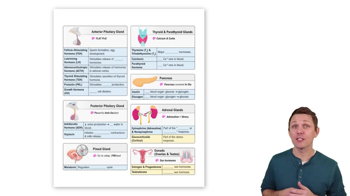
Parathyroid Hormone (PTH) Secretion

PTH is secreted by the parathyroid glands in response to low blood calcium levels. It acts to increase calcium concentration by stimulating bone resorption, enhancing calcium reabsorption in the kidneys, and promoting activation of vitamin D to increase intestinal calcium absorption.
Recommended video:
Guided course
13:06
Review of Major Hormones

Calcitonin Function

Calcitonin is a hormone produced by the thyroid gland that lowers blood calcium levels by inhibiting osteoclast activity and promoting calcium deposition in bones. Its secretion increases when blood calcium is high, thus it decreases when calcium levels are low.
Recommended video:
06:04
Functional Groups

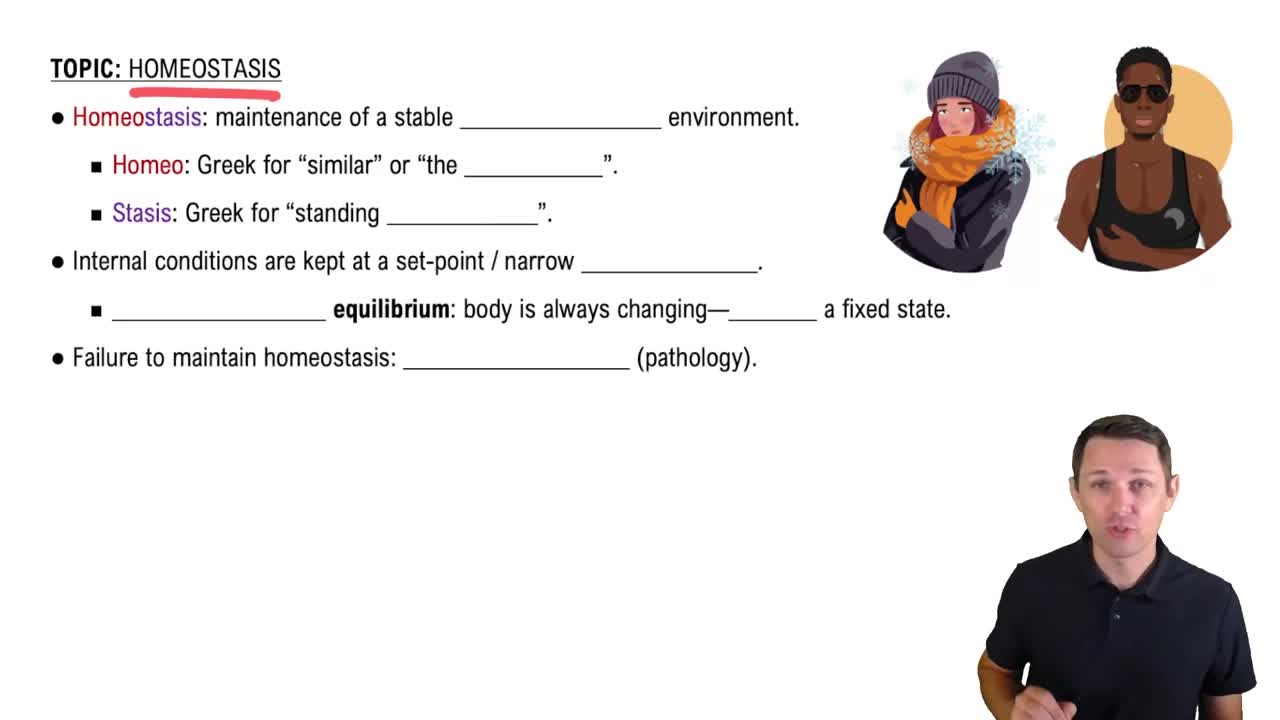
Osteoclast Activity and Calcium Homeostasis

Osteoclasts are bone cells that break down bone tissue, releasing calcium into the bloodstream. Increased osteoclast activity raises blood calcium levels, which is typically stimulated by PTH during hypocalcemia to restore calcium balance.
Recommended video:
Guided course
01:59
Introduction to Homeostasis