

Ch. 23 The Digestive System
Marieb - Human Anatomy & Physiology 7th Edition
Marieb, Hoehn7th EditionHuman Anatomy & PhysiologyISBN: 9780805359091Not the one you use?Change textbook
Chapter 22, Problem 31

Mr. Holden has had severe diarrhea all day and is severely weakened. Explain why his nurse is concerned about his present condition.

Verified step by step guidance
1
Understand that diarrhea leads to excessive loss of water and electrolytes, such as sodium (Na⁺), potassium (K⁺), and bicarbonate (HCO₃⁻), which are critical for maintaining homeostasis in the body.
Recognize that the loss of water can result in dehydration, which decreases blood volume and blood pressure, potentially leading to hypovolemic shock if not addressed promptly.
Explain that the loss of electrolytes, particularly potassium (K⁺), can disrupt the electrical activity of cells, especially in the heart and muscles, leading to arrhythmias or muscle weakness.
Discuss how the loss of bicarbonate (HCO₃⁻) can lead to metabolic acidosis, a condition where the blood becomes too acidic, impairing enzyme function and cellular processes.
Conclude that the nurse is concerned because these imbalances can quickly become life-threatening if not corrected through rehydration therapy and electrolyte replacement.

Verified video answer for a similar problem:

This video solution was recommended by our tutors as helpful for the problem above.
Video duration:
2m
Was this helpful?

Key Concepts

Here are the essential concepts you must grasp in order to answer the question correctly.

Dehydration

Dehydration occurs when the body loses more fluids than it takes in, which can happen rapidly during episodes of severe diarrhea. This condition can lead to electrolyte imbalances, affecting vital bodily functions. Symptoms may include dry mouth, dizziness, and decreased urine output, making it a critical concern for healthcare providers.
Recommended video:
04:19
Building & Breaking-Down Polymers

Electrolyte Imbalance

Electrolytes are minerals in the body that carry an electric charge and are essential for various physiological processes, including muscle function and nerve signaling. Severe diarrhea can lead to significant losses of key electrolytes like sodium, potassium, and chloride, potentially resulting in complications such as muscle cramps, irregular heartbeats, and confusion.
Recommended video:
07:59
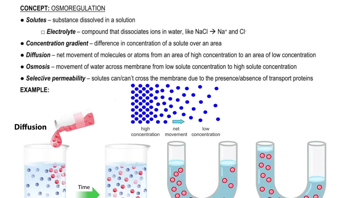
Osmosis and Osmolarity

Hypovolemic Shock

Hypovolemic shock is a life-threatening condition that occurs when the body loses a significant amount of blood or fluids, leading to inadequate blood flow to organs. In Mr. Holden's case, severe diarrhea can cause rapid fluid loss, increasing the risk of this shock, which requires immediate medical intervention to restore blood volume and stabilize the patient.
Recommended video:
01:39
Structural Class: Cartilaginous Joints Example 2
Related Practice
Textbook Question

Troy Francis, a middle-aged salesman, complains of a burning pain in the 'pit of his stomach,' usually beginning about two hours after eating and abating after drinking a glass of milk. When asked to indicate the site, he points to his epigastric region. The GI tract is examined by X-ray fluoroscopy. A gastric ulcer is visualized, and drug therapy using a proton pump inhibitor and antibiotics is recommended.

a. Why is this treatment suggested?

b. What are the possible consequences of nontreatment?

1
views
Textbook Question

After a heavy meal rich with fried foods, Debby Collins, an overweight 45-year-old woman, was rushed to the emergency room with severe spasmodic pains in her epigastric region that radiated to the right side of her rib cage. She indicated that the attack came on suddenly, and her abdomen was found to be tender to the touch and somewhat rigid. What do you think is this patient's problem and why is her pain discontinuous (colicky)? What are the treatment options and what might happen if the problem is not resolved?

2
views
Textbook Question

A baby is admitted to the hospital with a history of diarrhea and watery feces occurring over the last three days. The baby has sunken fontanelles (the not yet ossified spaces between skull bones in infants), indicating extreme dehydration. Tests indicate that the baby has a bacterium-induced colitis, and antibiotics are prescribed. Because of the baby's loss of intestinal juices, do you think that his blood pH would indicate acidosis or alkalosis? Explain your reasoning.