
Ch. 23 The Digestive System
Marieb - Human Anatomy & Physiology 7th Edition
Marieb, Hoehn7th EditionHuman Anatomy & PhysiologyISBN: 9780805359091Not the one you use?Change textbook
Chapter 22, Problem 29

A baby is admitted to the hospital with a history of diarrhea and watery feces occurring over the last three days. The baby has sunken fontanelles (the not yet ossified spaces between skull bones in infants), indicating extreme dehydration. Tests indicate that the baby has a bacterium-induced colitis, and antibiotics are prescribed. Because of the baby's loss of intestinal juices, do you think that his blood pH would indicate acidosis or alkalosis? Explain your reasoning.

Verified step by step guidance
1
Step 1: Understand the physiological impact of diarrhea and watery feces. Diarrhea leads to the loss of intestinal fluids, which are rich in bicarbonate ions (HCO₃⁻). Bicarbonate ions play a crucial role in maintaining blood pH by buffering excess hydrogen ions (H⁺). Loss of these ions can disrupt the acid-base balance in the body.
Step 2: Recall the relationship between bicarbonate loss and blood pH. When bicarbonate ions are lost, the buffering capacity of the blood decreases, leading to an accumulation of hydrogen ions (H⁺). This results in a decrease in blood pH, a condition known as acidosis.
Step 3: Consider the symptoms of dehydration and colitis. The baby's sunken fontanelles indicate severe dehydration, which can exacerbate the loss of bicarbonate through diarrhea. Additionally, bacterium-induced colitis may further impair the intestinal lining, increasing fluid and bicarbonate loss.
Step 4: Relate the physiological changes to the blood pH. The loss of bicarbonate ions due to diarrhea and colitis directly contributes to metabolic acidosis, as the body cannot adequately buffer the excess hydrogen ions.
Step 5: Conclude that the baby's blood pH would likely indicate acidosis. This conclusion is based on the loss of bicarbonate ions from intestinal juices, the symptoms of dehydration, and the underlying bacterial infection causing colitis.

Verified video answer for a similar problem:

This video solution was recommended by our tutors as helpful for the problem above.
Video duration:
2m
Was this helpful?

Key Concepts

Here are the essential concepts you must grasp in order to answer the question correctly.

Acidosis and Alkalosis

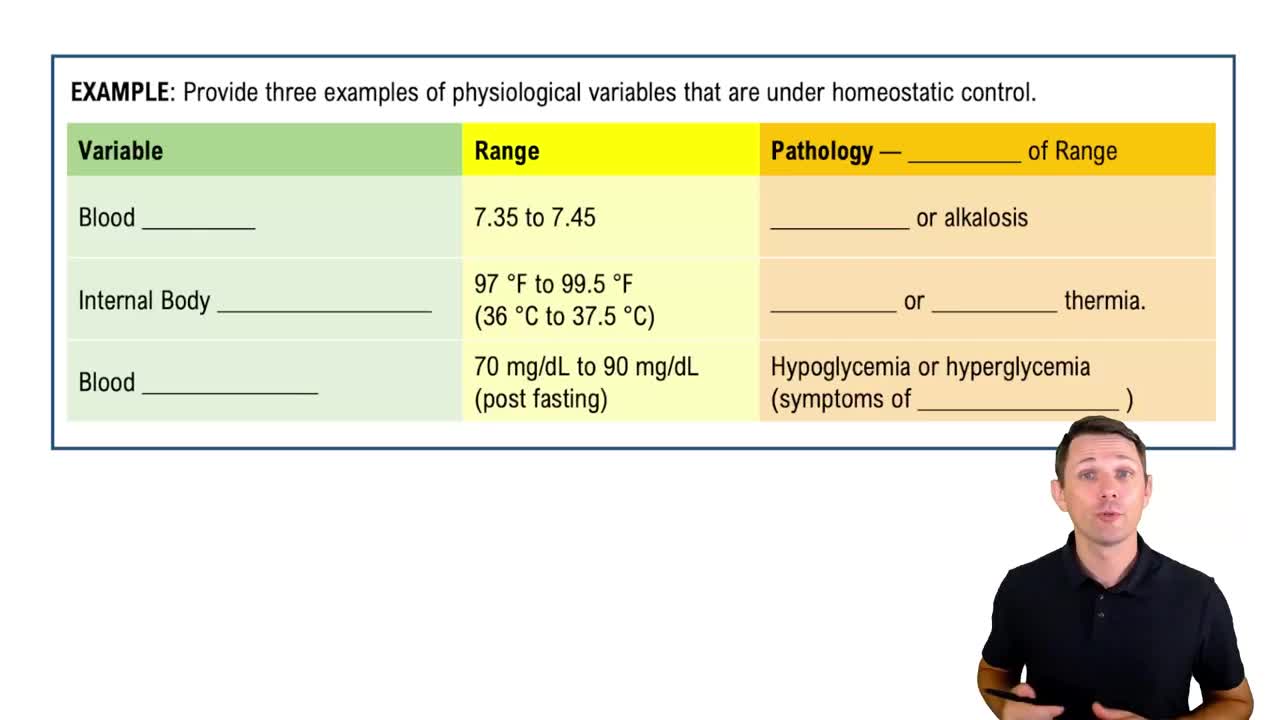
Acidosis and alkalosis refer to the conditions of the body's pH balance. Acidosis occurs when the blood pH falls below 7.35, indicating an excess of hydrogen ions, while alkalosis occurs when the pH rises above 7.45, indicating a deficiency of hydrogen ions. Understanding these conditions is crucial for assessing the impact of dehydration and electrolyte imbalances on the body's acid-base status.
Recommended video:
Guided course
03:46
Homeostasis Example 1

Dehydration and Electrolyte Loss

Dehydration results from excessive loss of fluids, which can lead to a significant decrease in electrolytes such as sodium and potassium. In infants, dehydration can be particularly severe due to their smaller body size and higher fluid turnover. This loss can disrupt normal physiological functions, including acid-base balance, potentially leading to acidosis.
Recommended video:
07:59
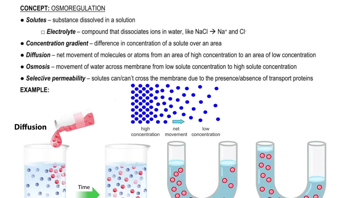
Osmosis and Osmolarity

Bacterium-Induced Colitis

Bacterium-induced colitis is an inflammation of the colon caused by bacterial infection, often leading to diarrhea and fluid loss. This condition can exacerbate dehydration and contribute to metabolic disturbances, including changes in blood pH. Understanding the implications of colitis is essential for predicting the potential for acidosis in the context of fluid and electrolyte loss.
Recommended video:
4:02
Retinoic Acid Inducible Gene (RIG)-Like Receptors