
Ch. 6 Bones and Bone Tissue
Amerman- Human Anatomy & Physiology 3e
Amerman3rd EditionHuman Anatomy & PhysiologyISBN: 9780138247201, 9780138247928, 9780138201814Not the one you use?Change textbook
Chapter 6, Problem 10

The part of the epiphysis that does not ossify during a person's lifetime is the:
a. Articular surface
b. Secondary ossification center
c. Diaphyseal notch
d. Nutrient foramen

Verified step by step guidance
1
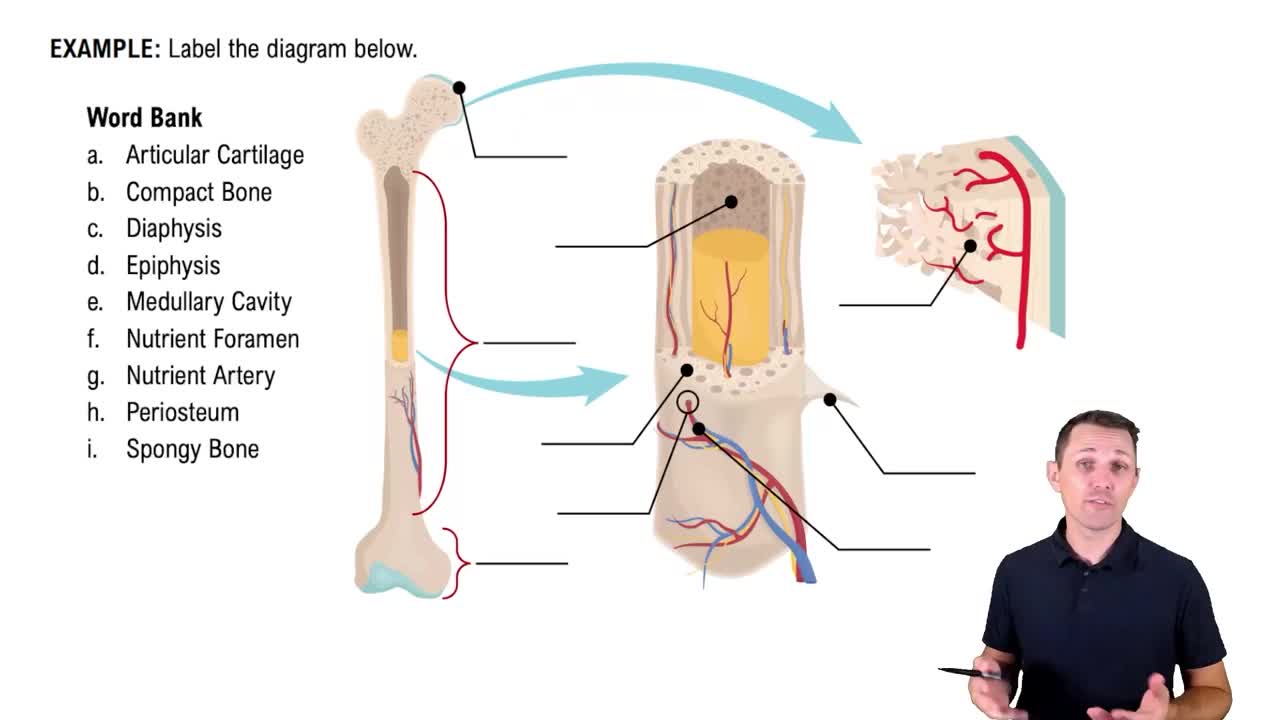
Understand the anatomy of a long bone: The epiphysis is the rounded end of a long bone, which is involved in joint articulation and growth during development. It contains regions such as the articular cartilage, secondary ossification center, and other structures.
Recall the process of ossification: Ossification is the process by which bone tissue forms. Most parts of the epiphysis ossify during development, except for specific regions that remain as cartilage for functional purposes.
Identify the role of the articular surface: The articular surface is covered by articular cartilage, which does not ossify. This cartilage remains throughout a person's lifetime to provide a smooth, low-friction surface for joint movement.
Eliminate incorrect options: The secondary ossification center ossifies during development, the diaphyseal notch is not a standard anatomical term, and the nutrient foramen is a passage for blood vessels and does not involve ossification.
Conclude that the correct answer is the articular surface, as it remains as cartilage and does not ossify during a person's lifetime.

Verified video answer for a similar problem:

This video solution was recommended by our tutors as helpful for the problem above.
Was this helpful?

Key Concepts

Here are the essential concepts you must grasp in order to answer the question correctly.

Epiphysis

The epiphysis is the rounded end of a long bone, which is involved in joint formation and is typically covered by articular cartilage. It plays a crucial role in bone growth and development, particularly during childhood and adolescence. Understanding the structure and function of the epiphysis is essential for identifying which parts remain unossified throughout life.
Recommended video:
Guided course
2:37
Gross Anatomy of Bones - Structure of a Long Bone Example 2

Ossification

Ossification is the process by which bone tissue is formed, involving the transformation of cartilage or other tissues into bone. There are two main types: intramembranous ossification, which occurs in flat bones, and endochondral ossification, which is responsible for the formation of long bones. Recognizing the stages and types of ossification helps in understanding which parts of the epiphysis remain unossified.
Recommended video:
02:23
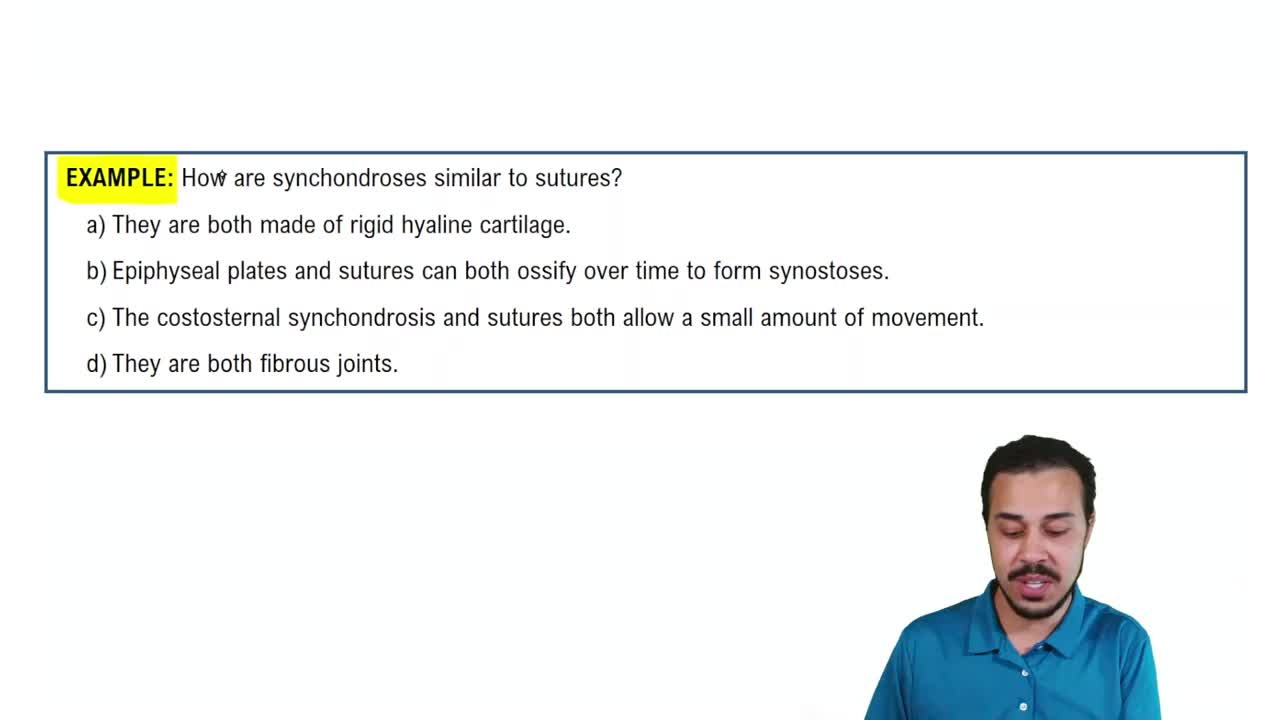
Structural Class: Cartilaginous Joints Example 1

Articular Cartilage

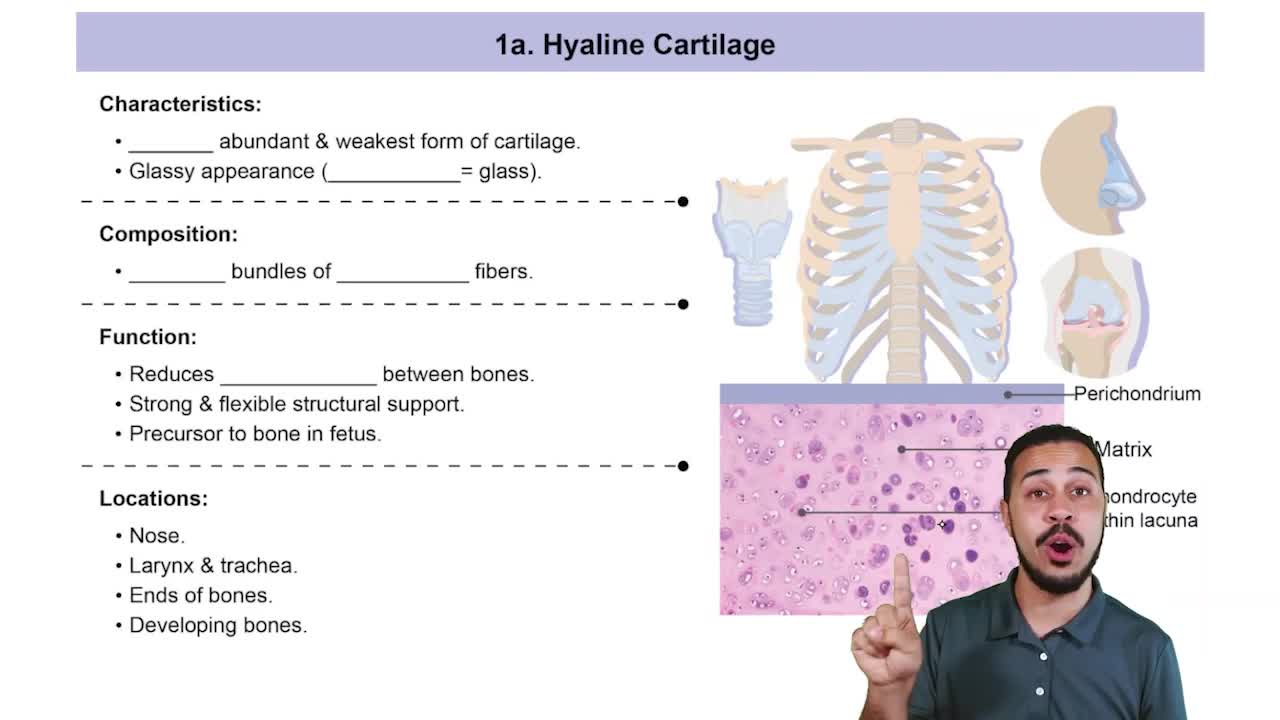
Articular cartilage is a smooth, white tissue that covers the ends of bones in joints, providing a cushion and reducing friction during movement. It is crucial for joint function and health, and unlike other bone tissues, it does not ossify. This characteristic is important for answering the question regarding which part of the epiphysis remains unossified throughout a person's life.
Recommended video:
Guided course
05:36
Hyaline Cartilage