Ch. 6 Bones and Bone Tissue
Amerman- Human Anatomy & Physiology 3e
Amerman3rd EditionHuman Anatomy & PhysiologyISBN: 9780138247201, 9780138247928, 9780138201814Not the one you use?Change textbook
Chapter 6, Problem 13a

Explain the effect that the following hormones have on the growth of bone tissue:
a. Growth hormone

Verified step by step guidance
1
Understand the role of growth hormone (GH): Growth hormone, also known as somatotropin, is a peptide hormone secreted by the anterior pituitary gland. It plays a critical role in stimulating growth, cell reproduction, and cell regeneration in the body, including bone tissue.
Recognize the target tissues of GH: Growth hormone primarily acts on the liver and bones. In the liver, it stimulates the production of insulin-like growth factor 1 (IGF-1), which is a key mediator of GH's effects on bone growth.
Explain the effect of GH on bone growth: GH directly stimulates the activity of osteoblasts (bone-forming cells) and chondrocytes (cartilage-forming cells) in the epiphyseal (growth) plates of long bones. This promotes the elongation of bones during childhood and adolescence.
Describe the role of IGF-1: IGF-1, produced in response to GH, enhances the proliferation and differentiation of chondrocytes in the growth plates. This further contributes to the lengthening of bones and overall skeletal growth.
Discuss the regulation of GH: The secretion of GH is regulated by the hypothalamus through growth hormone-releasing hormone (GHRH) and somatostatin (inhibitory hormone). Factors such as sleep, exercise, and nutrition can influence GH levels, which in turn affect bone growth.

Verified video answer for a similar problem:

This video solution was recommended by our tutors as helpful for the problem above.
Was this helpful?

Key Concepts

Here are the essential concepts you must grasp in order to answer the question correctly.

Growth Hormone (GH)

Growth hormone, produced by the pituitary gland, plays a crucial role in growth and development. It stimulates the liver and other tissues to produce insulin-like growth factors (IGFs), which promote the growth of bone and cartilage. GH also enhances protein synthesis and the mobilization of fat, contributing to overall growth and metabolic regulation.
Recommended video:
Guided course
4:31
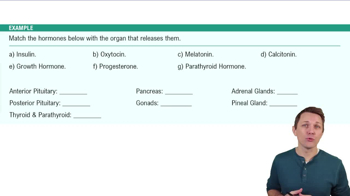
Hormone Review Table Example 1

Bone Tissue Growth

Bone tissue growth, or ossification, involves the formation of new bone material through the activity of osteoblasts, which are cells responsible for bone formation. This process is influenced by various factors, including hormones like GH and IGFs, which stimulate the proliferation and differentiation of osteoblasts, leading to increased bone density and strength.
Recommended video:
Guided course
02:48
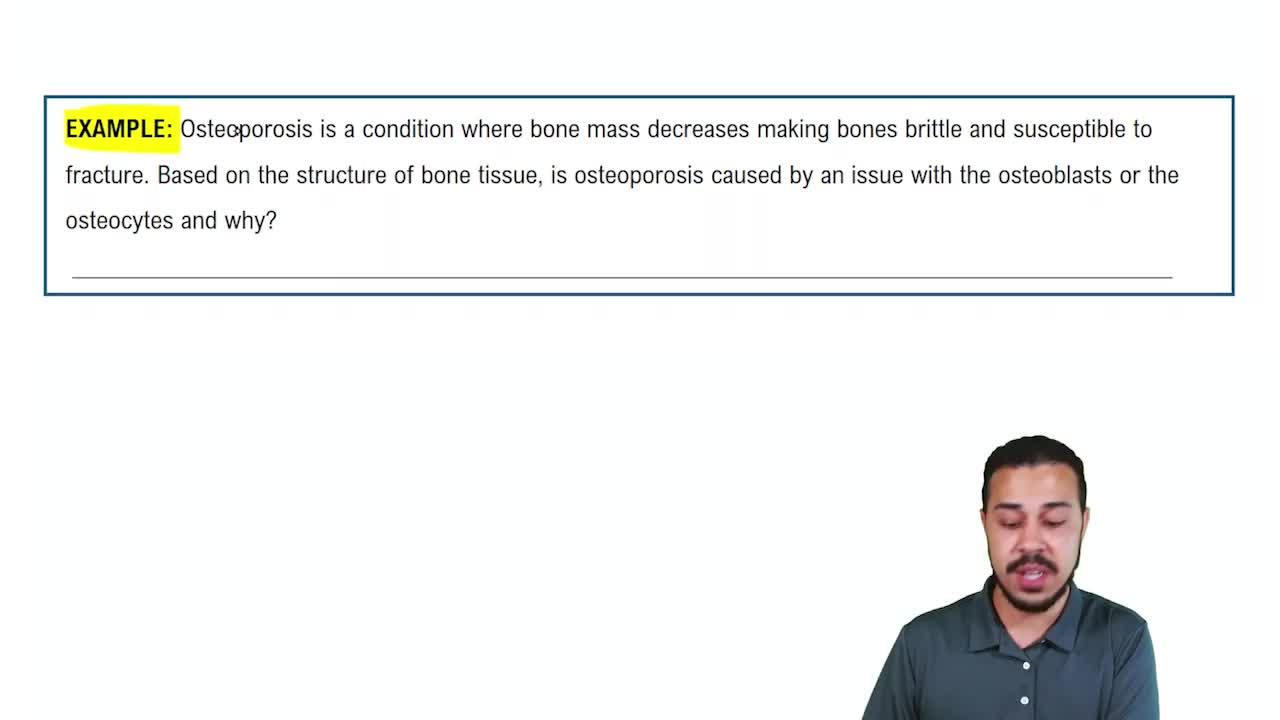
Specialized Connective Tissue: Bone Example 1

Insulin-like Growth Factors (IGFs)

Insulin-like growth factors, primarily IGF-1, are proteins that mediate many of the growth-promoting effects of growth hormone. They are produced in response to GH stimulation and play a vital role in bone growth by promoting the proliferation of chondrocytes in the growth plates of bones, enhancing the overall process of bone elongation and maturation.
Recommended video:
03:49
Enzyme-Substrate Complex