Ch. 24 The Urinary System
Amerman- Human Anatomy & Physiology 3e
Amerman3rd EditionHuman Anatomy & PhysiologyISBN: 9780138247201, 9780138247928, 9780138201814Not the one you use?Change textbook
Chapter 24, Problem L2.1b

Predict the effects the following scenarios would have on glomerular filtration:
b. Having low arterial blood pressure (hypotension)

Verified step by step guidance
1
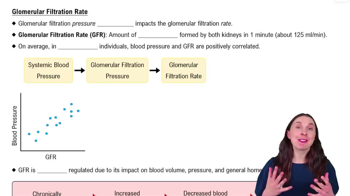
Understand the role of arterial blood pressure in glomerular filtration: Glomerular filtration is the process by which the kidneys filter blood to form urine. This process depends on the glomerular filtration rate (GFR), which is influenced by the hydrostatic pressure in the glomerular capillaries. Arterial blood pressure is a key factor in maintaining this pressure.
Recognize the relationship between blood pressure and glomerular filtration: Low arterial blood pressure (hypotension) reduces the hydrostatic pressure in the glomerular capillaries. This decrease in pressure can lead to a reduction in the glomerular filtration rate (GFR), potentially impairing the kidney's ability to filter blood effectively.
Consider the role of autoregulation mechanisms: The kidneys have intrinsic mechanisms, such as the myogenic response and tubuloglomerular feedback, to maintain GFR despite changes in blood pressure. However, if blood pressure drops below a critical threshold (e.g., below 80 mmHg systolic), these mechanisms may fail to compensate, leading to a significant decrease in GFR.
Evaluate the potential consequences of prolonged hypotension: If low blood pressure persists, it can result in inadequate filtration of waste products and toxins from the blood, potentially leading to conditions such as acute kidney injury (AKI). Additionally, reduced blood flow to the kidneys can impair oxygen delivery, further damaging renal tissues.
Identify possible compensatory responses: The body may activate the renin-angiotensin-aldosterone system (RAAS) in response to hypotension. This system increases blood pressure by promoting vasoconstriction and sodium and water retention, which can help restore GFR to normal levels. However, the effectiveness of this response depends on the severity and duration of the hypotension.

Verified video answer for a similar problem:

This video solution was recommended by our tutors as helpful for the problem above.
Was this helpful?

Key Concepts

Here are the essential concepts you must grasp in order to answer the question correctly.

Glomerular Filtration Rate (GFR)

Glomerular Filtration Rate (GFR) is the rate at which blood is filtered through the glomeruli in the kidneys. It is a crucial indicator of kidney function, reflecting how well the kidneys are able to filter waste and excess substances from the blood. A normal GFR is essential for maintaining homeostasis, and any significant deviation can indicate potential kidney issues.
Recommended video:
3:15
Glomerular Filtration Rate

Arterial Blood Pressure

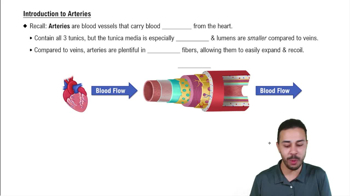
Arterial blood pressure is the force exerted by circulating blood on the walls of blood vessels, particularly arteries. It is vital for ensuring adequate blood flow to organs, including the kidneys. Low arterial blood pressure, or hypotension, can lead to reduced perfusion of the kidneys, which may decrease GFR and impair kidney function.
Recommended video:
3:23
Introduction to Arteries

Renal Autoregulation

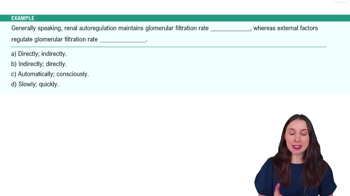
Renal autoregulation refers to the kidneys' ability to maintain a relatively constant GFR despite fluctuations in systemic blood pressure. This mechanism involves adjustments in the diameter of afferent and efferent arterioles to regulate blood flow into the glomeruli. However, if blood pressure falls below a certain threshold, autoregulation may fail, leading to a significant drop in GFR.
Recommended video:
1:11
Renal Physiology: Regulation of Glomerular Filtration Example 1