
Ch. 21 The Respiratory System
Amerman- Human Anatomy & Physiology 3e
Amerman3rd EditionHuman Anatomy & PhysiologyISBN: 9780138247201, 9780138247928, 9780138201814Not the one you use?Change textbook
Chapter 21, Problem L3.6

What happens to the metabolic rate of skeletal muscle tissue during exercise? What waste products are produced from metabolic reactions? How and why does this affect your rate of ventilation during exercise?

Verified step by step guidance
1
During exercise, the metabolic rate of skeletal muscle tissue increases significantly. This is because the muscles require more energy (in the form of ATP) to sustain contraction and movement. The energy demand is met by increasing the rate of cellular respiration, which occurs in the mitochondria of muscle cells.
As a result of increased cellular respiration, waste products such as carbon dioxide (CO₂) and lactic acid are produced. Carbon dioxide is a byproduct of aerobic respiration, while lactic acid is produced during anaerobic respiration when oxygen supply is insufficient to meet the energy demands.
The accumulation of carbon dioxide in the blood leads to a decrease in blood pH (making it more acidic), as CO₂ reacts with water to form carbonic acid (H₂CO₃), which dissociates into hydrogen ions (H⁺) and bicarbonate ions (HCO₃⁻). This process is represented by the equation: CO2+H2O2H2CO3H+HCO3.
To counteract the drop in pH and remove excess CO₂, the respiratory system increases the rate and depth of ventilation (hyperventilation). This process is regulated by chemoreceptors in the brainstem and blood vessels, which detect changes in CO₂ levels and pH.
The increased ventilation rate during exercise ensures that more CO₂ is exhaled and oxygen is delivered to the muscles to support aerobic respiration. This helps maintain homeostasis and meets the metabolic demands of the exercising muscles.

Verified video answer for a similar problem:

This video solution was recommended by our tutors as helpful for the problem above.
Was this helpful?

Key Concepts

Here are the essential concepts you must grasp in order to answer the question correctly.

Metabolic Rate

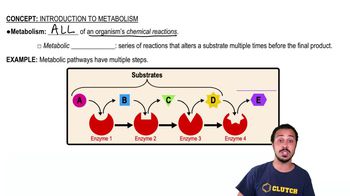
Metabolic rate refers to the rate at which the body converts food into energy. During exercise, the metabolic rate of skeletal muscle tissue increases significantly to meet the heightened energy demands. This increase is primarily due to enhanced ATP production through aerobic and anaerobic pathways, allowing muscles to sustain prolonged activity.
Recommended video:
02:17
Introduction to Metabolism

Waste Products of Metabolism

During metabolic reactions, particularly in skeletal muscle during exercise, waste products such as carbon dioxide (CO2) and lactic acid are produced. CO2 is generated from aerobic respiration, while lactic acid is a byproduct of anaerobic metabolism when oxygen levels are insufficient. The accumulation of these waste products can influence muscle fatigue and performance.
Recommended video:
02:17
Introduction to Metabolism

Ventilation Rate

Ventilation rate refers to the frequency and depth of breathing, which increases during exercise to meet the body's oxygen demands and expel excess CO2. As metabolic activity rises, the production of CO2 stimulates chemoreceptors that signal the respiratory center to enhance ventilation. This response is crucial for maintaining acid-base balance and ensuring adequate oxygen supply to working muscles.