Ch. 21 The Respiratory System
Amerman- Human Anatomy & Physiology 3e
Amerman3rd EditionHuman Anatomy & PhysiologyISBN: 9780138247201, 9780138247928, 9780138201814Not the one you use?Change textbook
Chapter 21, Problem L2.2

If you swallow a large bite of food without properly chewing it first, you will feel discomfort during ventilation. Explain this, considering the arrangement of the trachea and the esophagus.

Verified step by step guidance
1
Understand the anatomy of the trachea and esophagus: The trachea (windpipe) is part of the respiratory system and is located anterior (in front of) the esophagus, which is part of the digestive system. Both structures share a close anatomical relationship in the neck and thoracic region.
Recognize the role of the epiglottis: During swallowing, the epiglottis, a flap of cartilage, closes over the trachea to prevent food from entering the airway. However, if a large piece of food is swallowed without proper chewing, it can cause temporary pressure or obstruction in the esophagus.
Consider the shared space in the neck: The trachea and esophagus are confined within a limited space. A large bolus of food in the esophagus can press against the trachea, reducing its diameter and making ventilation (breathing) feel uncomfortable or restricted.
Relate this to the mechanics of ventilation: The trachea must remain open for air to flow freely into the lungs. Any external pressure from the esophagus due to a large food bolus can interfere with this process, leading to a sensation of discomfort or difficulty breathing.
Emphasize the importance of proper chewing: Chewing food thoroughly breaks it into smaller pieces, reducing the likelihood of esophageal pressure on the trachea and ensuring smoother swallowing and less interference with ventilation.

Verified video answer for a similar problem:

This video solution was recommended by our tutors as helpful for the problem above.
Was this helpful?

Key Concepts

Here are the essential concepts you must grasp in order to answer the question correctly.

Trachea and Esophagus Anatomy

The trachea and esophagus are two distinct tubes in the throat. The trachea, or windpipe, is responsible for carrying air to and from the lungs, while the esophagus is a muscular tube that transports food from the mouth to the stomach. Their close proximity means that any obstruction in one can affect the other, particularly during swallowing.
Recommended video:
Guided course
01:58
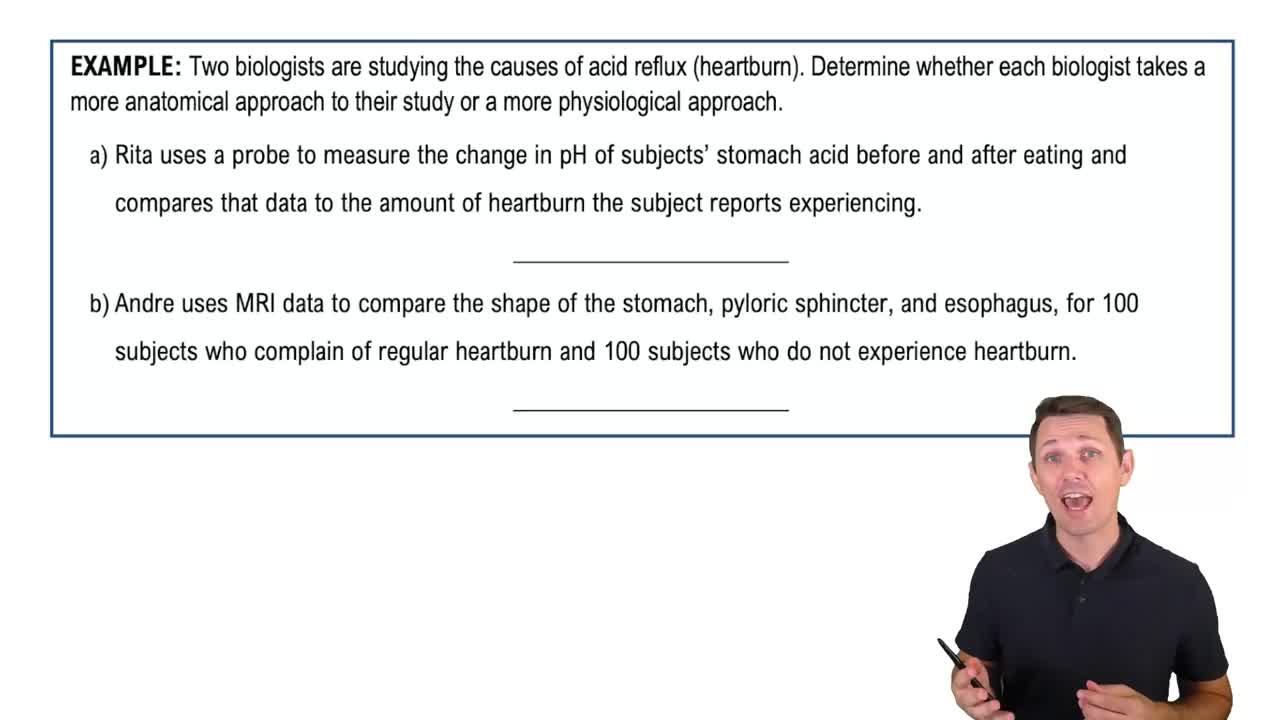
What is Anatomy & Physiology? Example 2

Swallowing Mechanism

Swallowing is a complex process that involves the coordinated action of muscles in the mouth, throat, and esophagus. When food is swallowed, it passes through the pharynx, where the epiglottis closes off the trachea to prevent food from entering the airway. If food is not chewed properly, it can create a larger bolus that may lead to discomfort or choking during this process.
Recommended video:
3:02
Internal Regulation - The Myogenic Mechanism

Ventilation and Airway Obstruction

Ventilation refers to the process of moving air in and out of the lungs. If a large piece of food obstructs the trachea, it can hinder airflow, leading to discomfort or difficulty breathing. This is particularly critical during swallowing, as the body prioritizes protecting the airway to prevent aspiration, which can cause serious respiratory issues.
Recommended video:
Guided course
4:23
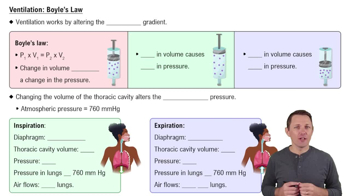
Ventilation: Boyle’s Law