Ch. 16 The Endocrine System
Amerman- Human Anatomy & Physiology 3e
Amerman3rd EditionHuman Anatomy & PhysiologyISBN: 9780138247201, 9780138247928, 9780138201814Not the one you use?Change textbook
Chapter 16, Problem 16

Which of the following hormones is not an integral part of the stress response?
a. Epinephrine
b. Cortisol
c. Insulin
d. Glucagon

Verified step by step guidance
1
Step 1: Begin by understanding the stress response, which is the body's physiological reaction to stressors. It involves the activation of the hypothalamus-pituitary-adrenal (HPA) axis and the sympathetic nervous system.
Step 2: Identify the key hormones involved in the stress response. These include epinephrine (adrenaline), cortisol, and glucagon, which help the body respond to stress by increasing energy availability and preparing for 'fight or flight.'
Step 3: Recall the role of insulin in the body. Insulin is primarily responsible for lowering blood glucose levels by promoting glucose uptake into cells. It is not typically associated with the stress response, as stress hormones generally work to increase blood glucose levels.
Step 4: Compare the functions of the listed hormones (epinephrine, cortisol, insulin, and glucagon) to determine which one does not align with the physiological mechanisms of the stress response.
Step 5: Conclude that the hormone not integral to the stress response is the one whose primary function contradicts the body's need to mobilize energy during stress.

Verified video answer for a similar problem:

This video solution was recommended by our tutors as helpful for the problem above.
Was this helpful?

Key Concepts

Here are the essential concepts you must grasp in order to answer the question correctly.

Stress Response

The stress response, also known as the fight-or-flight response, is a physiological reaction that occurs in response to perceived threats. It involves the release of hormones such as epinephrine and cortisol, which prepare the body to either confront or flee from danger. Understanding this concept is crucial for identifying which hormones are involved in this process.
Recommended video:
9:59
Steps of the Interferon Response

Hormones Involved in Stress

Key hormones involved in the stress response include epinephrine (adrenaline), which increases heart rate and energy availability, and cortisol, which helps regulate metabolism and immune response. Glucagon also plays a role in increasing blood sugar levels during stress. Recognizing these hormones helps differentiate them from those that are not directly involved in stress responses.
Recommended video:
Guided course
13:06
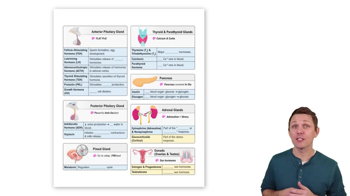
Review of Major Hormones

Insulin's Role

Insulin is a hormone produced by the pancreas that regulates blood sugar levels by facilitating the uptake of glucose into cells. Unlike the other hormones listed, insulin is not part of the stress response; in fact, its action is often inhibited during stress to ensure that energy is available for immediate use. Understanding insulin's function is essential for identifying it as the correct answer to the question.
Recommended video:
Guided course
4:37
Introduction to the Endocrine System Example 2